Short Answer
What Is Bigoli? Italian Pasta Explained
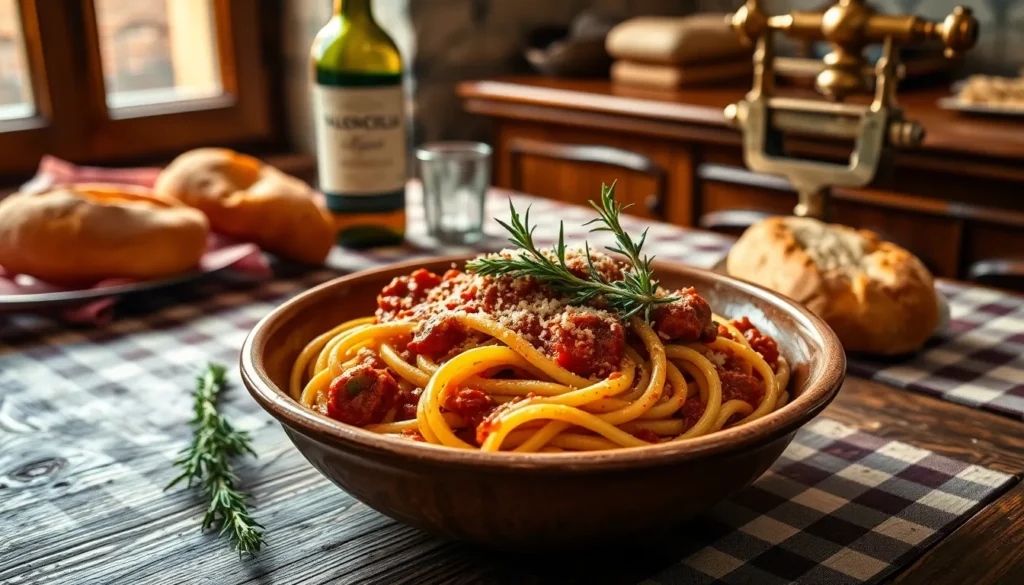
Bigoli (pronounced BEE-goh-lee) is a thick, long, and slightly rough pasta originating from the Veneto region of northeastern Italy. Unlike the smooth, uniform spaghetti, bigoli is extruded through a bronze die, giving it a porous surface that clings to sauces. Traditionally made with whole wheat flour (farina integrale) or buckwheat flour (farina di grano saraceno), it has a nutty, earthy flavor. The dough is mixed with eggs and water, then pressed through a special press called a bigolaro to form thick strands. Bigoli is most famously paired with bigoli in salsa (anchovy and onion sauce) or bigoli con l’anatra (duck ragù). It is a staple of Venetian home cooking and is rarely found outside the region.
Origin & History
Bigoli has deep roots in the culinary history of the Veneto, particularly in the provinces of Vicenza, Padua, and Venice. The earliest documented references date to the 16th century, when the pasta was made by hand using a simple press. The name likely derives from the Venetian word bigà meaning ‘to press’ or from the Latin bis coctus (twice cooked), though the latter is debated. Unlike many Italian pastas that were shaped by hand, bigoli was always extruded, a method that became mechanized in the 19th century with the invention of the bigolaro press. A popular anecdote claims that the pasta was created to use up leftover buckwheat flour, a common crop in the mountainous areas of Veneto. Historically, bigoli was a peasant food, but it gained favor among the nobility when paired with rich game sauces. Today, it is celebrated as a symbol of Venetian culinary heritage.
What’s In It
The core ingredients of bigoli are simple: flour, eggs, water, and salt. The traditional recipe uses whole wheat flour (farina integrale) or a blend of white and buckwheat flour. The dough is kneaded until smooth, then rested before being extruded through a bronze die. The resulting pasta is thick (about 2-3 mm in diameter) and slightly chewy. Key preparation nuances include using a bigolaro press (or a modern pasta extruder with a bronze die) to achieve the characteristic rough texture. Unlike spaghetti, bigoli is not dried for long; it is often cooked fresh or semi-dried. The dish is differentiated from similar pastas like bucatini (which is hollow) or pici (which is hand-rolled and thinner). Bigoli’s coarse surface is essential for trapping thick sauces, making it ideal for ragùs and oil-based condiments.
Regional Variations
While bigoli is primarily associated with Veneto, variations exist across the region and in neighboring areas. Below is a comparison of three major styles:
| Region | Flour Type | Traditional Sauce | Notes |
|---|---|---|---|
| Vicenza | Whole wheat (farina integrale) | Bigoli in salsa – anchovies, onions, olive oil | Often served on Fridays or during Lent; a classic of Vicentine cuisine. |
| Padua | Buckwheat (grano saraceno) | Bigoli con l’anatra – duck ragù with red wine and rosemary | Buckwheat gives a darker color and earthy flavor; duck is a local specialty. |
| Venice | White flour (farina 00) | Bigoli con le sarde – sardines, pine nuts, raisins (sweet-sour) | Influenced by Venetian trade with the East; a less common but historic preparation. |
Other variations include bigoli con la nana (with goose) in Treviso and bigoli con i funghi (with mushrooms) in the Alpine foothills. The choice of flour and sauce reflects local agriculture and historical trade routes.
How It’s Traditionally Eaten
Bigoli is always served as a primo piatto (first course) in a traditional Italian meal. It is never a side dish or a main course on its own. The pasta is typically dressed with a sauce that is either oil-based (like bigoli in salsa) or a slow-cooked ragù. It is often paired with a light red wine such as a Valpolicella or a Bardolino from the Veneto region. Bigoli is an everyday dish in Venetian homes, but it also appears on holiday tables, especially during the Feast of the Assumption (August 15) when duck is in season. In restaurants, it is a marker of authenticity; a menu offering bigoli signals a commitment to regional tradition. The pasta is never served with cheese when the sauce contains fish (anchovies or sardines), but with meat ragù, a grating of aged Parmigiano-Reggiano or Grana Padano is acceptable.
Common Mistakes / What It’s Not
Many American-Italian restaurants confuse bigoli with spaghetti or bucatini. Bigoli is not spaghetti; it is thicker and has a rough texture. It is not bucatini, which is hollow. Another common mistake is serving bigoli with a tomato-based sauce; traditional bigoli sauces are either oil-based or meat ragùs without heavy tomato. Some recipes call for cream, which is an Americanization. Authentic bigoli is never served with Alfredo sauce or meatballs. Additionally, bigoli should be cooked al dente; overcooking makes it mushy. When making bigoli at home, avoid using a smooth Teflon die; the bronze die is essential for texture. Finally, do not confuse bigoli with pici (a hand-rolled Tuscan pasta) or strozzapreti (a twisted pasta from Emilia-Romagna).
Where to Try It / What to Order
To experience authentic bigoli, head to the Veneto region. In Vicenza, visit Osteria al Duca for their famous bigoli in salsa. In Padua, Trattoria da Bepi serves exceptional bigoli con l’anatra. In Venice, Osteria alle Testiere offers a refined version with sardines. For travelers, look for the phrase bigoli fatti in casa (homemade bigoli) on menus. Order bigoli in salsa as a classic starter, or bigoli con l’anatra for a heartier dish. Avoid ordering bigoli with seafood unless it is specifically a Venetian recipe (like with sardines). The best time to try bigoli is during autumn, when duck and game are in season, or during Lent for the anchovy version. Many local festivals (sagre) celebrate bigoli, such as the Sagra del Bigolo in Breganze (Vicenza) in September.
Related Dishes
FAQ
What is Bigoli pasta?
Bigoli is a thick, long pasta from the Veneto region of Italy, made from whole wheat or buckwheat flour. It has a rough texture from being extruded through a bronze die, making it ideal for hearty sauces like duck ragù or anchovy sauce.
How is Bigoli different from spaghetti?
Bigoli is thicker (about 2-3 mm in diameter) and has a rough, porous surface, while spaghetti is thinner and smooth. Bigoli is also traditionally made with whole wheat or buckwheat flour, giving it a nuttier flavor, and is extruded rather than rolled and cut.
What is the traditional sauce for Bigoli?
The two most traditional sauces are 'bigoli in salsa' (anchovies, onions, and olive oil) from Vicenza, and 'bigoli con l'anatra' (duck ragù with red wine and rosemary) from Padua. In Venice, a sweet-sour sauce with sardines, pine nuts, and raisins is also historic.
Can I make Bigoli without a bigolaro press?
While a bigolaro press is traditional, you can use a modern pasta extruder with a bronze die attachment. Alternatively, you can hand-roll the dough into thick strands, but the texture will be smoother and less authentic.
Is Bigoli gluten-free?
Traditional bigoli contains wheat flour (whole wheat or white) and is not gluten-free. However, buckwheat flour is naturally gluten-free, but it is often mixed with wheat flour to improve elasticity. Pure buckwheat bigoli is rare and may require a binder like xanthan gum.
Leave a Reply