Short Answer
What Is Braciola? Italian Second Course Explained
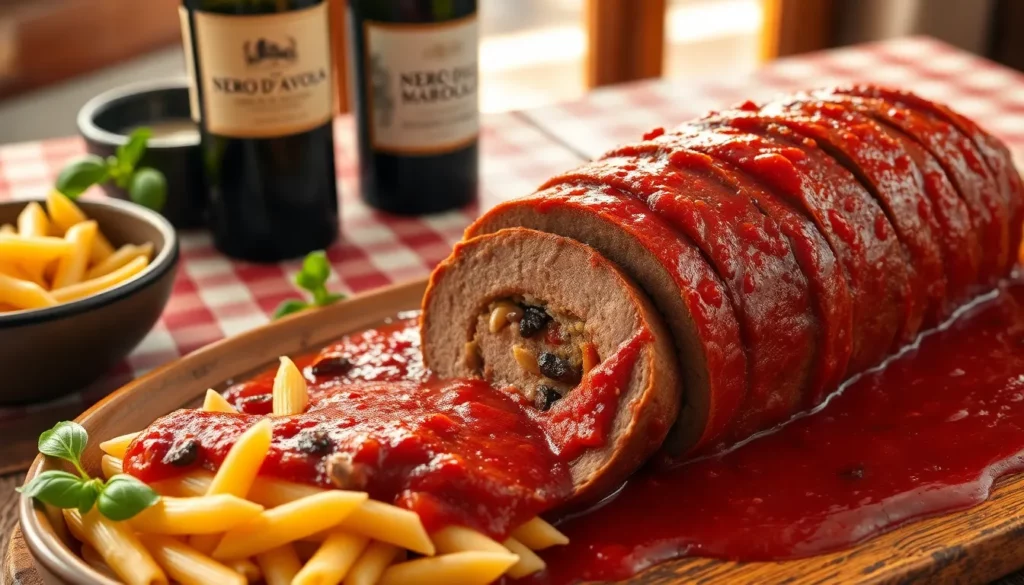
Braciola (plural: braciole) is a traditional Italian secondo piatto (main course) consisting of a thin slice of meat—usually beef, pork, or sometimes veal—that is pounded flat, stuffed with a savory filling, rolled, and secured with kitchen twine or toothpicks. The rolls are then browned and slowly braised in a tomato-based sauce until tender. While the dish is most closely associated with the regions of Sicily and Campania (especially Naples), variations exist throughout Southern Italy and even in Italian-American communities. Key ingredients for the stuffing often include breadcrumbs, grated cheese (Pecorino or Parmesan), garlic, parsley, pine nuts, raisins, and sometimes hard-boiled eggs or cured meats like prosciutto. The braising sauce, typically a simple tomato sauce (sugo), becomes richly flavored from the meat and stuffing, and is often served alongside pasta as a first course or used to dress the braciola itself.
Origin & History
The exact origins of braciola are debated, but the dish is firmly rooted in the cucina povera (poor kitchen) traditions of Southern Italy. The word braciola itself derives from the Italian brace (hot coals), suggesting that the earliest versions were grilled over embers rather than braised. However, the modern braciola—stuffed and simmered in tomato sauce—likely emerged in the 18th or 19th century, when tomatoes became a staple of Italian cooking. In Sicily, the dish is often called involtini (little bundles) or braciole, and it is a festive meal, especially for Sunday dinners or holidays like Easter. In Naples, braciola refers to a large, single rolled piece of beef, sometimes called braciola di manzo, which is slow-cooked in a rich tomato sauce. Historical records from the 19th-century cookbook La Cucina Teorico-Pratica by Ippolito Cavalcanti describe a similar preparation, indicating that the dish was already well-established by that time. Unlike some myths, braciola is not a pasta dish; it is a meat course, though its sauce is often used to dress pasta as a primo.
What’s In It
The core components of braciola are the meat, the stuffing, and the sauce. The meat is typically a lean cut such as top round, sirloin, or pork loin, pounded to an even thinness. The stuffing varies by region but commonly includes:
- Breadcrumbs (often stale, soaked in milk or broth)
- Grated cheese (Pecorino Romano, Parmigiano-Reggiano, or a mix)
- Garlic (minced or whole cloves)
- Fresh parsley (or other herbs like oregano or basil)
- Pine nuts and raisins (especially in Sicilian versions, adding sweetness)
- Hard-boiled eggs (sliced or quartered, placed inside the roll)
- Cured meats (prosciutto, salami, or pancetta for extra flavor)
- Salt and black pepper
The rolls are browned in olive oil, then simmered in a tomato sauce made from crushed tomatoes, onion, garlic, and sometimes red wine. The long, slow cooking tenderizes the meat and melds the flavors. Braciola is distinct from similar dishes like saltimbocca (which is not rolled and uses veal with prosciutto and sage) or involtini (which can be smaller and sometimes baked). The key difference is the braising in tomato sauce, which gives braciola its characteristic richness.
Regional Variations
Braciola varies significantly across Italy. Below is a comparison of three major regional styles:
| Region | Meat | Stuffing | Sauce | Notes |
|---|---|---|---|---|
| Sicily | Beef (top round) or pork | Breadcrumbs, Pecorino, garlic, parsley, pine nuts, raisins, sometimes hard-boiled egg | Tomato sauce (often with onion and basil) | Often called involtini; smaller rolls; served as a secondo or with pasta |
| Naples (Campania) | Beef (large slice, e.g., from the round) | Breadcrumbs, Parmesan, garlic, parsley, raisins, pine nuts, sometimes prosciutto | Rich tomato sauce (sugo), sometimes with red wine | Larger single roll; often sliced after cooking; sauce used for pasta (e.g., ziti) |
| Calabria | Pork or beef | Breadcrumbs, Pecorino, garlic, chili flakes (peperoncino), parsley, sometimes capocollo | Spicy tomato sauce with chili | Spicier version; often includes local cured meats; smaller rolls |
Other regions like Puglia and Basilicata have their own versions, sometimes using lamb or goat, and incorporating local cheeses like ricotta or caciocavallo.
How It’s Traditionally Eaten
In Italy, braciola is served as a secondo piatto (main course), often preceded by a primo (pasta or soup) and followed by contorno (side dish) and dolce (dessert). The braising sauce is so flavorful that it is commonly used to dress a pasta course—typically ziti, rigatoni, or spaghetti—served before the meat. This two-course approach is a hallmark of Italian Sunday dinners. Braciola is considered a festive dish, often prepared for holidays, family gatherings, and special occasions. It is less common as an everyday meal due to the time required for preparation and cooking. In Sicily, it is a staple of Easter and Christmas tables. The meat is sliced into rounds before serving, and the sauce is spooned over the top. Pairings include a robust red wine like Nero d’Avola (Sicily) or Aglianico (Campania), and a simple side of sautéed greens or roasted potatoes.
Common Mistakes / What It’s Not
A frequent misconception, especially in the United States, is that braciola (often spelled braciole) is a pasta dish or a type of meatball. In Italian-American cuisine, braciole are often large, thin cuts of beef rolled with a stuffing and simmered in a red sauce, but they are sometimes served over pasta as a one-dish meal. In Italy, the meat and sauce are separate courses. Another mistake is confusing braciola with involtini: while similar, involtini can be smaller, may be baked instead of braised, and are not always associated with tomato sauce. Additionally, some recipes call for cooking braciola in a pressure cooker for speed, but traditionalists insist on slow braising to achieve the proper tenderness. Finally, braciola is not a polpetta (meatball) or a frittata; it is a distinct rolled meat dish.
Where to Try It / What to Order
For an authentic experience, travelers should seek out trattorie and osterie in Southern Italy. In Palermo, try braciole alla palermitana at a family-run restaurant like Osteria dei Vespri. In Naples, look for braciola di manzo at a traditional trattoria such as Trattoria da Nennella. In Calabria, visit a festa paesana (village festival) where braciola is often grilled over coals. When ordering, ask for braciola al sugo (with sauce) and specify if you want it as a secondo. If you see braciola di maiale (pork) or di vitello (veal), those are also common. In Italian-American restaurants, braciole are often listed as an entrée; ask if the sauce is served separately or over pasta. For home cooks, sourcing high-quality meat from a butcher and using authentic Italian ingredients (like real Pecorino Romano) is key.
Related Dishes
FAQ
What is the difference between braciola and involtini?
Braciola is typically a larger, single rolled meat dish braised in tomato sauce, while involtini are smaller rolls that can be made with various fillings and cooking methods (baked, grilled, or braised). In some regions, the terms are used interchangeably, but involtini are often served as an antipasto or light secondo.
Can braciola be made with chicken or fish?
Traditionally, braciola is made with beef or pork. However, modern variations sometimes use chicken or turkey, but these are not considered authentic. Fish versions (like braciola di pesce spada) exist in Sicily, using swordfish slices rolled with a stuffing, but they are a distinct dish.
Is braciola the same as Italian-American braciole?
Italian-American braciole are derived from the Italian dish but often differ in size, stuffing, and serving style. In the US, braciole are frequently served over pasta as a one-dish meal, whereas in Italy, the meat and sauce are separate courses. The stuffing in Italian-American versions may also include more cheese and herbs, and the meat is sometimes cooked in a pressure cooker.
What is the best cut of meat for braciola?
Top round, bottom round, or sirloin are ideal for beef braciola because they are lean and can be pounded thin. For pork, loin or shoulder work well. The key is to have a thin, even slice that can be rolled easily.
How long does braciola need to cook?
Braciola requires slow braising for 1.5 to 2.5 hours, depending on the size and thickness of the roll. The meat should be fork-tender. Some recipes use a pressure cooker to reduce time, but traditional slow cooking yields the best flavor and texture.
Leave a Reply