
Short Answer
What Is Capocollo? Italian Salumi Explained
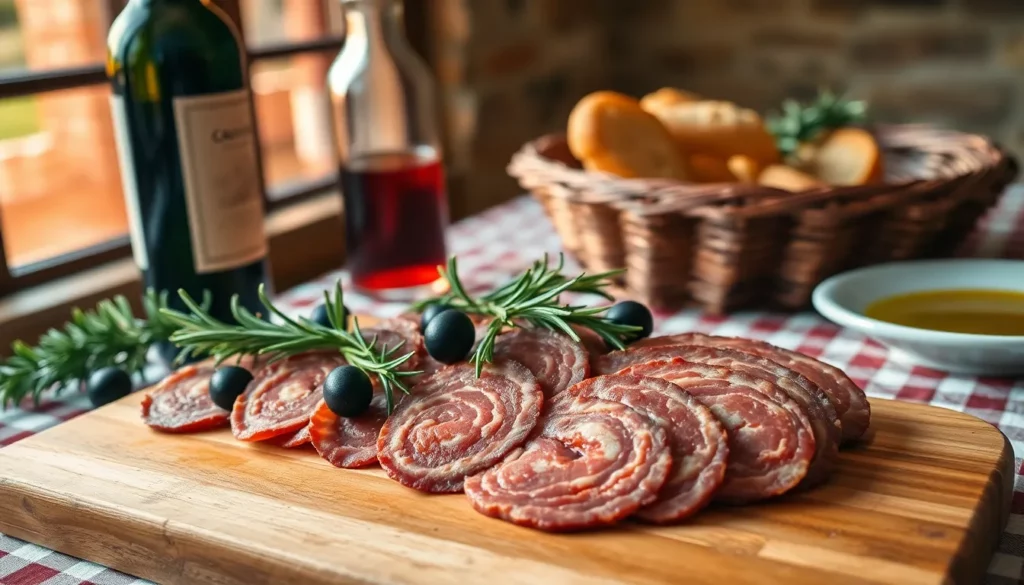
Capocollo (also called coppa or capicola) is a traditional Italian dry-cured pork product made from the muscle that runs from the neck to the shoulder of the pig. It is one of the most esteemed salumi (cured meats) in Italy, prized for its delicate balance of lean meat and fat, and its rich, savory flavor. The name derives from capo (head) and collo (neck), literally meaning “head of the neck.” Capocollo is typically seasoned with red or white wine, garlic, salt, and a blend of herbs and spices such as black pepper, fennel, or chili, then dry-cured and aged for several months. It is often sliced paper-thin and served as part of an antipasto platter, or used to add depth to sandwiches and cooked dishes. Unlike prosciutto, which comes from the leg, capocollo offers a more tender, marbled texture and a slightly sweeter, more aromatic taste.
Origin & History
Capocollo has deep roots in the culinary traditions of Calabria, the southern Italian region known for its bold, spicy flavors. Historical records suggest that the technique of dry-curing pork neck dates back to ancient Roman times, when salting and air-drying meat were essential for preservation. However, the modern version of capocollo as a distinct salumi emerged during the Middle Ages, particularly in the mountainous areas of Calabria, where the cool, dry climate was ideal for aging. The practice spread to neighboring regions such as Basilicata, Campania, and Lazio, each developing its own variations. A popular anecdote tells of shepherds and farmers who would prepare capocollo during the winter pig slaughter (maialata) to sustain themselves through the lean months. Today, capocollo is protected under the Indicazione Geografica Protetta (IGP) status for certain varieties, such as Capocollo di Calabria IGP, ensuring authenticity and traditional production methods.
What’s In It
The core ingredients of capocollo are simple but carefully selected:
- Pork neck or shoulder – the cut must have a good balance of lean meat and intramuscular fat (marbling).
- Salt – for curing and flavor.
- Wine – typically red or white wine, which adds acidity and helps tenderize the meat.
- Garlic – crushed or minced, for pungency.
- Herbs and spices – common additions include black pepper, fennel seeds, chili flakes, rosemary, and bay leaf.
The preparation process involves trimming the meat, massaging it with the seasoning mixture, and then placing it in a natural casing (often the pig’s own bladder or synthetic). The capocollo is then hung to dry in a controlled environment for a period ranging from 3 to 6 months, depending on the size and desired texture. During aging, the meat loses about 30% of its weight, concentrating flavors and developing a firm yet tender consistency. It is important to differentiate capocollo from salami, which is ground and fermented, and from prosciutto, which is a whole leg cured with a different technique. Capocollo is a whole-muscle cure, similar to bresaola or lonza, but with a higher fat content and distinct seasoning.
Regional Variations
While capocollo is produced throughout Italy, regional differences in seasoning and aging create distinct profiles. The table below highlights three major regional styles:
| Region | Key Characteristics | Seasoning | Aging Time |
|---|---|---|---|
| Calabria | Spicy, robust, with a deep red color from chili peppers; often smoked lightly. | Red wine, garlic, hot chili flakes, fennel seeds | 4–6 months |
| Emilia-Romagna | Milder, sweeter, with a delicate aroma; known as coppa piacentina (PDO). | White wine, garlic, black pepper, nutmeg | 3–5 months |
| Lazio | Balanced, with a subtle herbaceous note; often used in Roman cuisine. | Red wine, garlic, rosemary, bay leaf | 3–4 months |
Other notable variations include Capocollo di Basilicata, which is similar to Calabrian but with a milder heat, and Capocollo di Umbria, which often incorporates local black truffle. Each region’s microclimate and traditions influence the final product, making capocollo a versatile and regionally expressive salumi.
How It’s Traditionally Eaten
Capocollo is most commonly served as part of an antipasto (appetizer) course, sliced thinly and arranged on a platter with other cured meats, cheeses, olives, and marinated vegetables. It is also a key ingredient in panini and tramezzini, where its rich flavor complements fresh bread, mozzarella, and roasted peppers. In Calabria, it is sometimes used to add depth to pasta sauces or as a topping for pizza. Capocollo is typically enjoyed at room temperature, which allows its fat to soften and release its full aroma. It pairs well with medium-bodied red wines like Cirò or Montepulciano d’Abruzzo, as well as with crisp white wines such as Verdicchio. While it can be eaten year-round, capocollo is especially popular during holidays and festivals, when families gather to share traditional cured meats. It is not typically cooked, as heat can toughen the meat and diminish its delicate flavor.
Common Mistakes / What It’s Not
One of the most frequent misconceptions about capocollo is confusing it with prosciutto cotto (cooked ham) or prosciutto crudo (dry-cured ham). Unlike prosciutto, which comes from the hind leg, capocollo is from the neck and has a higher fat content and a different texture. Another common error is treating capocollo like a salami: it is a whole-muscle cure, not ground, so it should be sliced across the grain to maximize tenderness. In American-Italian contexts, capocollo is often called “gabagool” (a phonetic rendering of the Neapolitan pronunciation) and is frequently used as a generic term for any Italian cold cut, which is incorrect. Authentic capocollo should not be overly salty or dry; a well-aged piece will be supple and aromatic. Avoid buying pre-sliced capocollo that appears pale or has a rubbery texture—these are signs of poor quality or insufficient aging. Finally, capocollo is not a substitute for bacon or pancetta in cooking; its delicate flavor is best appreciated raw or lightly warmed.
Where to Try It / What to Order
For the most authentic experience, visit Calabria and seek out Capocollo di Calabria IGP at local salumerie or during the Sagra del Capocollo festival in towns like Acri or Mormanno. In Rome, head to Antico Forno Roscioli or Volpetti for high-quality capocollo from Lazio. In Emilia-Romagna, look for Coppa Piacentina DOP in Piacenza. When ordering, ask for affettato al coltello (sliced by knife) rather than machine-sliced, as this preserves texture. If you’re outside Italy, reputable Italian delis or online retailers like Gustiamo or Eataly offer imported capocollo. For a quick taste, order a panino con capocollo at any authentic Italian sandwich shop. Remember to let the meat come to room temperature before eating for the best flavor.
Related Dishes
FAQ
What is the difference between capocollo and prosciutto?
Capocollo comes from the pork neck/shoulder, while prosciutto is from the hind leg. Capocollo has more marbling and a sweeter, spicier flavor, whereas prosciutto is leaner and saltier. They are also cured differently: capocollo is dry-cured with wine and spices, while prosciutto is salt-cured and air-dried.
Is capocollo the same as coppa?
Yes, capocollo and coppa are essentially the same product, but the name varies by region. In northern Italy, especially Emilia-Romagna, it is called coppa, and the Piacenza variety has PDO status. In the south, it is known as capocollo.
How should capocollo be stored?
Whole capocollo should be wrapped in parchment paper or a clean cloth and stored in a cool, dry place (like a cellar) or in the refrigerator. Once sliced, it should be consumed within a few days. Avoid plastic wrap, which can trap moisture and cause spoilage.
Can capocollo be cooked?
While it can be used in cooking (e.g., in pasta sauces or on pizza), it is traditionally eaten raw. Cooking can toughen the meat and diminish its delicate flavor. If used in a hot dish, add it at the very end.
What wine pairs best with capocollo?
Medium-bodied red wines like Cirò (Calabria), Montepulciano d'Abruzzo, or Chianti Classico complement the richness of capocollo. A crisp white like Verdicchio also works well, especially with milder versions.


Leave a Reply