Short Answer
What It Is
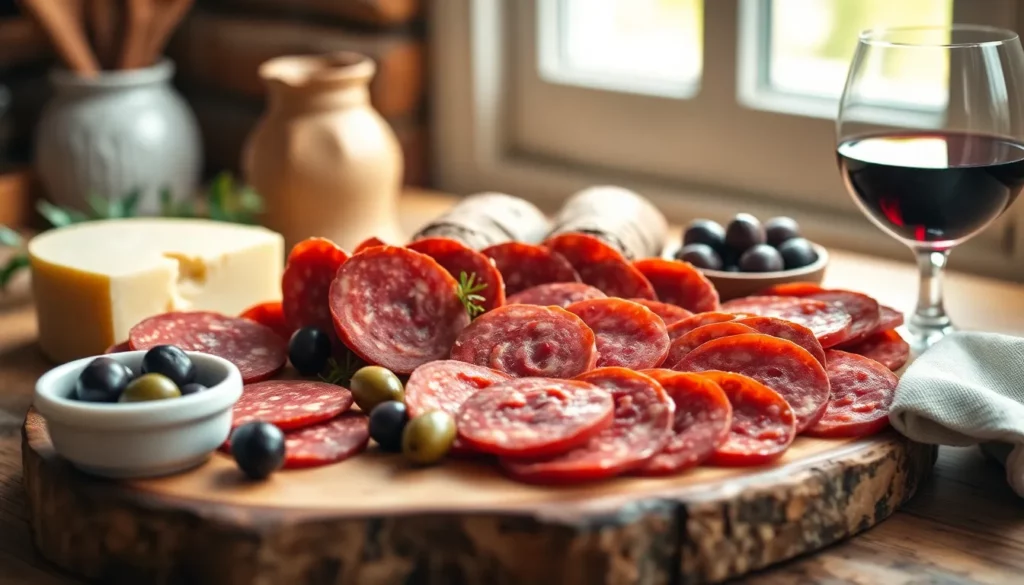
Salami is a cured sausage made from fermented and air-dried meat, typically pork. Originating in Italy, it is produced by grinding meat (often with fat), mixing with salt, spices, and sometimes wine or garlic, then stuffing into a casing and undergoing fermentation and drying. The process varies by region, resulting in distinct flavors and textures. Many Italian salami have Protected Designation of Origin (DOP) or Protected Geographical Indication (PGI) status, such as Salame Milano, Salame Felino, and Salame di Varzi. These certifications ensure traditional methods and local ingredients.
Types & Grades
Salami is classified by aging, grind size, and seasoning. Common types include:
| Type | Aging | Characteristics |
|---|---|---|
| Salame Milano | 60-90 days | Fine grind, mild flavor, often with garlic |
| Salame Felino | 30-60 days | Medium grind, sweet and delicate |
| Salame di Varzi | 90-120 days | Coarse grind, robust, peppery |
| Salame di Calabria | 30-60 days | Spicy, with chili pepper |
Grades often refer to aging: dolce (sweet, mild), piccante (spicy), and stagionato (aged longer, firmer).
How It’s Used in Cooking
Salami is versatile. It can be sliced thin for antipasti, paired with cheeses and olives. In cooking, it adds depth to pasta sauces, pizzas, and risottos. Traditional dishes include Pasta alla Norma with salami, Pizza con Salame, and Risotto al Salame. It can also be diced into frittatas or used as a filling for stuffed vegetables. The fat content ensures moisture and flavor when cooked.
How to Choose/Identify Authentic SALAMI
Look for DOP or PGI labels on the packaging. Check the ingredient list: authentic salami should have minimal additives, no artificial colors, and use natural casings. The texture should be firm but sliceable, with visible fat particles. Avoid overly uniform or bright red salami, which may indicate artificial curing. Smell: it should be aromatic, not sour. Buy from reputable producers or Italian delis.
Substitutes
If salami is unavailable, consider soppressata (similar but coarser), finocchiona (fennel-flavored), or chorizo (Spanish, spicier). For milder options, use mortadella or cotto salami. In cooking, pancetta or guanciale can replace salami for fat and flavor, though they are not fermented.
“Salami is the poetry of Italian charcuterie, each slice telling a story of tradition and terroir.” – Italian culinary proverb
In conclusion, salami is a cornerstone of Italian cuisine, with diverse regional expressions. Understanding its types, authenticity markers, and culinary applications enhances appreciation and selection.
FAQ
What is the difference between salami and pepperoni?
Pepperoni is an American variant of salami, typically made from a mixture of pork and beef, seasoned with paprika and chili, and has a finer grind. Italian salami is more diverse, often coarser, and uses traditional spices like garlic, fennel, or black pepper.
How long does salami last?
Whole, uncut salami can last for several months in a cool, dry place. Once sliced, it should be consumed within 2–3 weeks if refrigerated and wrapped tightly. Vacuum-sealed salami lasts longer, but always check the expiration date.
Is salami healthy?
Salami is high in protein and fat, and contains sodium and preservatives. It can be part of a balanced diet in moderation. Look for artisanal salami with fewer additives and lower sodium. The fermentation process may provide probiotics, but most commercial salami is pasteurized.

Leave a Reply