
Short Answer
What It Is
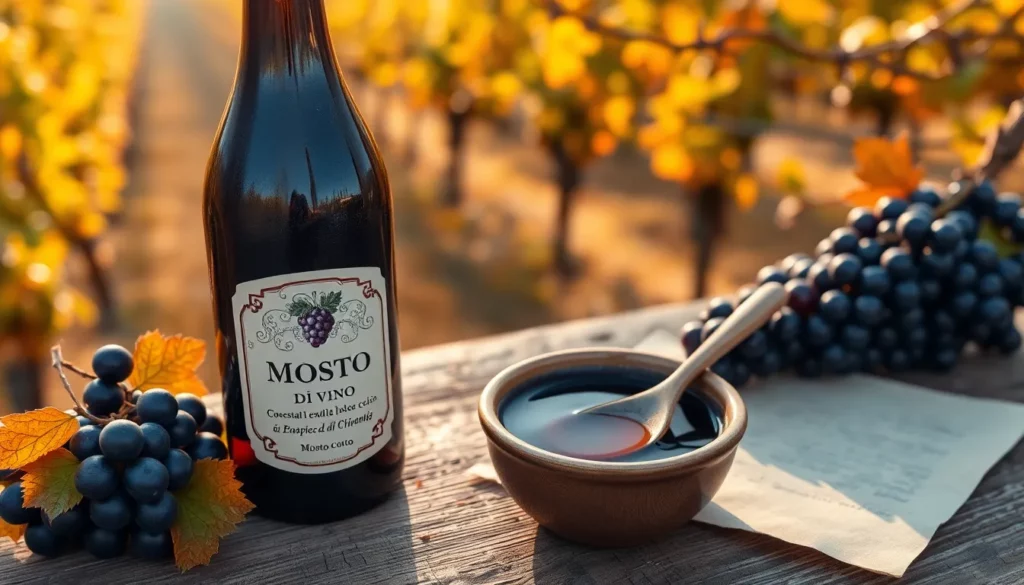
Mosto di Vino, commonly known as grape must, is the freshly pressed juice of wine grapes that has not yet undergone fermentation. It contains the skins, seeds, and pulp, giving it a rich concentration of sugars, acids, tannins, and aromatic compounds. In Italy, mosto is both the starting point for winemaking and a cherished ingredient in traditional cuisine, particularly in regions such as Emilia-Romagna, Marche, Tuscany, and Puglia.
The production of mosto begins with the harvest of ripe grapes, typically varieties like Trebbiano, Sangiovese, or Montepulciano. The grapes are crushed and pressed, and the resulting liquid is filtered to remove large solids. For mosto destinato alla cucina (culinary must), the juice is often cooked down to concentrate its sugars and develop complex caramelized flavors. This cooked version, known as mosto cotto, has been produced for centuries as a way to preserve the grape harvest and create a natural sweetener.
While mosto di vino does not hold a specific DOP (Denominazione di Origine Protetta) status as a standalone product, certain traditional preparations are recognized under the Italian PAT (Prodotto Agroalimentare Tradizionale) scheme. For example, Mosto Cotto di Romagna and Saba (a concentrated cooked must from the Marche region) are listed as PAT products, ensuring their production follows historical methods. The European Union also protects Mosto d’Uva as a PGI (Indicazione Geografica Protetta) in some contexts, though this is less common.
“Il mosto è il sangue della vite, il primo dono della vendemmia.” – Traditional Italian saying
Types & Grades
Mosto di Vino is classified primarily by its processing method and sugar concentration. The table below outlines the main types and their characteristics.
| Type | Description | Common Uses | Typical Sugar Content |
|---|---|---|---|
| Mosto Fresco | Fresh, unfermented grape juice, often cloudy with suspended solids. | Winemaking, immediate consumption as a beverage, base for vinegar. | 15–25% (natural grape sugars) |
| Mosto Cotto | Fresh must slowly cooked (often for 12–24 hours) until reduced by 50–70%, resulting in a dark, syrupy liquid. | Sweetener for desserts, glazes for meats, ingredient in traditional cakes (e.g., torta di mosto). | 50–70% (concentrated) |
| Saba | A type of mosto cotto from the Marche and Emilia-Romagna regions, made from Trebbiano or Sangiovese grapes. It is cooked over a wood fire and aged in wooden barrels. | Drizzled over cheese (Parmigiano-Reggiano), used in piadina, or as a condiment for roasted vegetables. | 60–75% |
| Mosto Concentrato | Must concentrated under vacuum at low temperatures to preserve fresh grape flavors. Often used in the wine industry to boost alcohol or sweetness. | Winemaking (chaptalization), production of sweet wines, industrial food applications. | 40–68% |
Grades are not officially standardized, but artisanal producers often label their mosto with the grape variety, vintage, and cooking method. Higher-quality mosto cotto is made from single-variety grapes and cooked in open copper pots over a wood fire, yielding a more complex flavor profile.
How It’s Used in Cooking
Mosto di Vino, especially in its cooked forms, is a versatile ingredient in Italian cuisine. Its natural sweetness and grape-forward character make it a substitute for sugar, honey, or balsamic vinegar in many dishes.
Traditional Applications
- Desserts: Mosto cotto is a key component in torta di mosto (grape must cake), cavallucci (Sienese cookies), and panpepato (spiced fruitcake). It is also used to sweeten panna cotta or drizzled over gelato.
- Cheese Pairings: Saba is famously served with aged cheeses like Parmigiano-Reggiano, Pecorino, or Gorgonzola. The sweet, tangy syrup balances the saltiness and umami of the cheese.
- Savory Dishes: Mosto cotto glazes roasted meats (pork, duck) and vegetables (pumpkin, onions). It is also stirred into risotto or used as a finishing touch on pizza bianca.
- Preserves and Vinegars: Mosto is the base for aceto balsamico tradizionale (traditional balsamic vinegar) and vincotto (cooked wine must). In these applications, the must is aged for years in wooden barrels to develop acidity and complexity.
Signature Dishes
- Piadina con Saba: A flatbread from Romagna, filled with soft cheese and drizzled with saba.
- Mosto Cotto Glazed Pork Ribs: A modern take on maiale al mosto, where ribs are slow-cooked with mosto cotto, rosemary, and garlic.
- Torta di Mosto: A dense, moist cake from Emilia-Romagna, made with mosto cotto, flour, eggs, and olive oil, often studded with walnuts or raisins.
“Il mosto cotto è la memoria dell’estate in una bottiglia.” – Chef Massimo Bottura
How to Choose/Identify Authentic Mosto di Vino
When purchasing mosto di vino for culinary use, especially mosto cotto or saba, look for the following authenticity cues:
- Labeling: Authentic products will state the grape variety (e.g., 100% Trebbiano), region of origin, and production method (e.g., “cotto a fuoco lento” – slow-cooked). Look for PAT certification or references to traditional production.
- Ingredients: The only ingredient should be grape must. Avoid products with added sugars, preservatives, or artificial colors. Some commercial versions may include glucose syrup or caramel color – these are not authentic.
- Color and Consistency: Genuine mosto cotto is dark brown to almost black, with a syrupy, viscous texture. It should not be watery or overly thin. Saba is typically slightly thicker and may have a hint of wood smoke.
- Aroma and Flavor: Authentic mosto has a concentrated grape aroma with notes of caramel, dried fruit, and a slight acidity. It should not taste like artificial grape candy or have a burnt, bitter finish.
- Price: High-quality mosto cotto requires many kilograms of grapes to produce a single liter, so expect a premium price (€15–€30 per 500 ml for artisanal products). Very cheap options are likely adulterated.
- Packaging: Traditional producers often use dark glass bottles or ceramic containers to protect the must from light. Look for a seal or cork that indicates careful storage.
For professional kitchens, sourcing directly from Italian producers or specialty importers ensures traceability. Reputable brands include Acetaia di Giorgio, Fattoria di Fèlsina, and Consorzio del Mosto Cotto di Romagna.
Substitutes
If mosto di vino is unavailable, several Italian alternatives can be used, each with distinct characteristics:
- Vincotto: A cooked wine must similar to mosto cotto but often made from a blend of grapes and sometimes includes wine. It is slightly less sweet and more acidic, making it a good substitute in savory dishes and vinaigrettes.
- Saba: As mentioned, saba is a regional variant of mosto cotto. It can be used interchangeably in most recipes, though its smoky notes may alter the final flavor.
- Miele (Honey): For sweetening, honey provides a different floral profile but works well in desserts and glazes. Use a mild honey like acacia to avoid overpowering the dish.
- Sciroppo d’Uva (Grape Syrup): A commercial product made from concentrated grape juice, often with added sugar. It is less complex than mosto cotto but can be used in baking or as a pancake syrup.
- Aceto Balsamico Tradizionale: While vinegar, its sweet-sour complexity can mimic mosto cotto in glazes and reductions, though it adds acidity. Use sparingly.
When substituting, consider the intended use: for desserts, honey or vincotto work best; for cheese pairings, saba is ideal; for savory reductions, balsamic vinegar can be adjusted with a pinch of sugar.
Conclusion
Mosto di Vino is a cornerstone of Italian culinary heritage, bridging the worlds of winemaking and gastronomy. From the fresh, vibrant juice of the harvest to the deeply concentrated syrups of mosto cotto and saba, this ingredient offers a unique sweetness and complexity that cannot be replicated by modern substitutes. Understanding its production, grades, and authentic markers empowers chefs and home cooks to use it with confidence, whether in a traditional torta di mosto or a contemporary glazed dish. As interest in artisanal Italian products grows, mosto di vino deserves a place in every serious kitchen.
FAQ
What is mosto di vino?
Mosto di vino, or grape must, is the unfermented juice obtained from crushing wine grapes. It contains the skins, seeds, and pulp, and is used both as the starting point for winemaking and as a culinary ingredient, especially in its cooked form (mosto cotto).
How is mosto cotto made?
Mosto cotto is made by slowly cooking fresh grape must over a wood fire or in copper pots for 12–24 hours, reducing it by 50–70% until it becomes a dark, syrupy liquid. The process concentrates the sugars and develops caramelized, complex flavors.
Can I substitute mosto di vino with something else?
Yes, suitable Italian substitutes include vincotto (cooked wine must), saba (a regional variant of mosto cotto), honey, or grape syrup. For savory dishes, balsamic vinegar can be used with a pinch of sugar to mimic the sweet-sour balance.
Is mosto di vino the same as grape juice?
Not exactly. While both are pressed from grapes, mosto di vino is specifically the must intended for fermentation or culinary use, often with higher solids and tannins. Commercial grape juice is typically filtered and pasteurized, lacking the complexity of artisanal mosto.


Leave a Reply