Short Answer
What It Is
Paglia e Fieno (pronounced PAH-lyah eh FYEH-noh) translates literally to “straw and hay” in Italian, a poetic name that perfectly describes its appearance: thin, delicate ribbons of pasta in two contrasting colors. The “straw” is the classic golden-yellow egg pasta, while the “hay” is the same dough enriched with finely puréed spinach or nettles, giving it a vibrant green hue. This pasta is a specialty of the Emilia-Romagna region, particularly the provinces of Bologna, Modena, and Reggio Emilia, where fresh egg pasta (pasta all’uovo) is a cornerstone of the culinary tradition.
Unlike many industrial pastas, authentic Paglia e Fieno is made fresh, using soft wheat flour (farina di grano tenero), fresh eggs, and spinach. The dough is rolled thin and cut into narrow ribbons, typically about 3–4 mm wide, similar to tagliolini or fettuccine. The two colors are not mixed; instead, they are layered or placed side by side before cutting, so that each serving contains both green and yellow strands. This pasta does not hold a DOP (Denominazione di Origine Protetta) or IGP (Indicazione Geografica Protetta) status, but it is recognized as a traditional regional product (Prodotto Agroalimentare Tradizionale – PAT) in several Italian regions, including Emilia-Romagna and Lombardy.
The historical roots of Paglia e Fieno are tied to the resourcefulness of Italian home cooks. Spinach was often added to pasta dough not only for color but also to incorporate more vegetables into the diet, especially during the Renaissance when the Medici court popularized spinach. The name itself evokes the rustic imagery of a farm, where straw and hay are stored together. Today, it remains a beloved pasta shape, celebrated for its visual appeal and delicate texture.
Types & Grades
While Paglia e Fieno is not a DOP product, it can be categorized by production method and quality. The following table outlines the main types available:
| Type | Description | Typical Use |
|---|---|---|
| Fresh Artisanal | Handmade or small-batch production using fresh eggs, spinach, and soft wheat flour. No preservatives. Sold refrigerated or frozen. | Best for traditional recipes; cooks in 2–3 minutes. |
| Fresh Industrial | Machine-made but still fresh, often with added stabilizers. May use spinach powder instead of fresh purée. | Convenient for home cooking; slightly longer cooking time. |
| Dried | Commercially dried pasta, usually made with durum wheat semolina and spinach powder. Less common for Paglia e Fieno. | Long shelf life; suitable for pantry storage; texture differs from fresh. |
| Whole Wheat / Gluten-Free | Modern variations using whole wheat flour or gluten-free flours (e.g., rice, corn). Spinach color may be artificial. | Dietary alternatives; flavor and texture vary significantly. |
When selecting Paglia e Fieno, look for the following quality indicators:
- Color: The green should come from real spinach or nettles, not artificial coloring. The yellow should be a natural egg-yolk shade.
- Texture: Fresh pasta should feel supple and slightly moist, not dry or brittle.
- Ingredients: Authentic versions list only flour, eggs, spinach, and salt. Avoid products with added water, preservatives, or artificial flavors.
- Origin: Ideally from Emilia-Romagna or a region with a strong pasta-making tradition.
How It’s Used in Cooking
Paglia e Fieno is prized for its delicate texture and ability to absorb sauces without becoming mushy. Its two-tone appearance makes it a favorite for presentations. Traditional pairings include:
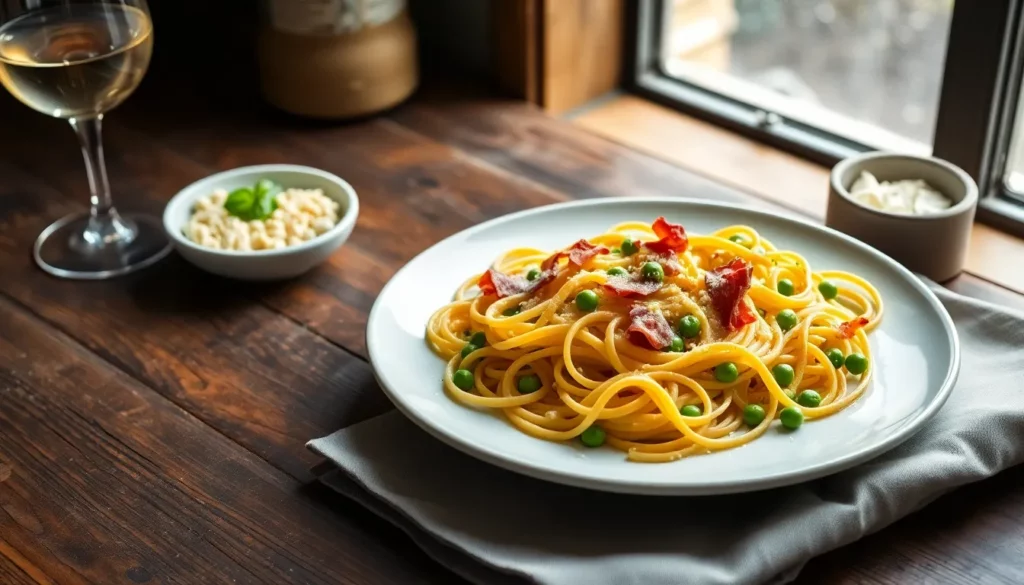
- Panna, Prosciutto e Piselli – A classic cream sauce with diced prosciutto cotto (cooked ham) and fresh peas. The cream binds to the pasta, while the ham adds saltiness and the peas a sweet pop.
- Funghi e Tartufo – Sautéed mushrooms (porcini, champignons) finished with a touch of truffle oil or shaved black truffle. Earthy flavors complement the spinach notes.
- Burro e Salvia – Simple butter and sage sauce, allowing the pasta’s natural flavors to shine. Often finished with grated Parmigiano-Reggiano.
- Ragù Bianco – A white meat ragù (without tomato) made with ground veal or chicken, white wine, and cream. Lighter than traditional Bolognese.
Because fresh Paglia e Fieno cooks very quickly (2–4 minutes), it is essential to have the sauce ready before boiling the pasta. Reserve some pasta water to adjust sauce consistency. The pasta should be served al dente, with a slight resistance to the bite.
“La pasta fresca all’uovo è la regina della cucina emiliana, e Paglia e Fieno ne è la dama di compagnia.”
— Traditional saying from Bologna
In professional kitchens, Paglia e Fieno is often used in primi piatti for banquets because of its visual impact. Chefs may also incorporate it into baked pasta dishes, such as pasta al forno, though care must be taken not to overcook it.
How to Choose/Identify Authentic Paglia e Fieno
For commercial buyers (restaurateurs, retailers) and home cooks seeking authenticity, here is a practical buying guide:
- Check the label for PAT recognition: In Italy, many artisanal producers list “Prodotto Agroalimentare Tradizionale” on the packaging. This indicates the product follows traditional methods.
- Look for fresh pasta in the refrigerated section: Authentic Paglia e Fieno is almost always sold fresh. Dried versions exist but are less common and often lack the same texture.
- Examine the color separation: In high-quality pasta, the green and yellow strands are distinct, not blended. The green should be a natural, muted green, not neon.
- Ask about the spinach source: Reputable producers use fresh spinach purée, not powder. Some even use nettles for a more intense green.
- Verify the egg content: Traditional recipes use at least 4–5 eggs per kilogram of flour. The ingredient list should show eggs as a primary component.
- Consider the producer’s origin: Small pasta makers in Emilia-Romagna (e.g., in Bologna, Modena) are more likely to produce authentic versions. Look for names like “Pasta Fresca Gualtieri” or “Fabbri.”
If buying online, read reviews and ask for photos of the actual product. Avoid packages that list “spinach flavor” or “natural color” without specifying the source.
Substitutes
If Paglia e Fieno is unavailable, several Italian pasta varieties can serve as substitutes, depending on the dish:
- Tagliolini all’uovo – The same shape but without spinach. Use if you want a similar thin ribbon but don’t need the two-tone effect. Add a handful of fresh spinach to the sauce for color.
- Fettuccine verdi – Green fettuccine made with spinach. This is essentially the “hay” component alone. Pair with yellow tagliatelle to mimic the mix.
- Pappardelle – Wider ribbons that work well with hearty sauces. Not a direct substitute but can replace Paglia e Fieno in ragù dishes.
- Spaghetti alla chitarra – Square-cut egg pasta from Abruzzo. Its texture is similar, though the shape is different. Use in cream-based sauces.
For a quick homemade alternative, you can make a simple egg pasta dough and divide it: add spinach purée to half, then roll and cut both together. This is the most authentic substitute.
Conclusion
Paglia e Fieno is more than a visually striking pasta; it is a testament to Emilia-Romagna’s rich culinary heritage, combining simplicity with elegance. Whether you are a professional chef or a home cook, understanding its origins, production, and proper use will elevate your pasta dishes. When shopping, prioritize fresh, artisanal versions with real spinach and eggs. And remember: the best Paglia e Fieno is made with love, served with a sauce that respects its delicate nature, and enjoyed in good company.
FAQ
Is Paglia e Fieno the same as tagliatelle?
No, though both are ribbon-shaped egg pastas. Paglia e Fieno is narrower (3–4 mm) and always made in two colors (yellow and green). Tagliatelle is typically 6–8 mm wide and usually a single color (yellow).
Can I make Paglia e Fieno at home without a pasta machine?
Yes, but it requires patience. Roll the dough very thin with a rolling pin, then cut into strips with a sharp knife. The key is to keep the two colored doughs separate until cutting, then mix the strands.
Why is my Paglia e Fieno turning brown after cooking?
This can happen if the spinach is not blanched before puréeing, or if the pasta is overcooked. Always blanch spinach in boiling water for 30 seconds, then shock in ice water to preserve the green color. Cook fresh pasta only until al dente.
Leave a Reply