
Short Answer
What Is Grana Padano? Italian Grana Cheese Explained
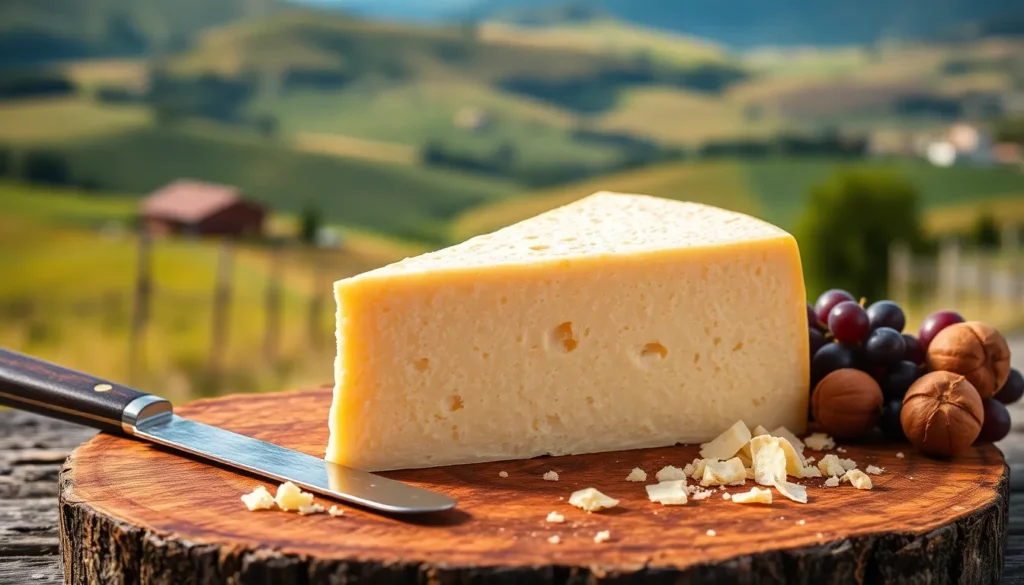
Grana Padano is a hard, granular cheese originating from the Po Valley in northern Italy. It is one of Italy’s most famous grana cheeses, named for its characteristic grainy texture. Produced from partially skimmed cow’s milk, it undergoes a slow aging process that develops its savory, nutty, and slightly fruity flavor. Grana Padano has been protected by the European Union’s Protected Designation of Origin (PDO) since 1996, ensuring that only cheese made in the designated provinces of the Po Valley—including parts of Piedmont, Lombardy, Veneto, Emilia-Romagna, and Trentino-Alto Adige—can bear the name. Its key ingredients are raw cow’s milk, natural whey starter, calf rennet, and salt. Unlike its close cousin Parmigiano-Reggiano, Grana Padano allows for slightly different production rules, such as the use of lysozyme from egg whites as a preservative and a shorter minimum aging period of 9 months.
Origin & History
The origins of Grana Padano date back to the 12th century, when Cistercian monks in the Po Valley began creating a hard, long-lasting cheese from surplus milk. The name “Grana” derives from the Italian word grana, meaning “grain,” referring to the cheese’s characteristic grainy texture. Historical records from the Abbey of Chiaravalle near Milan describe a cheese remarkably similar to modern Grana Padano. By the 13th century, this cheese was being traded across Italy and beyond. The monks developed techniques to produce a cheese that could be aged for months, allowing it to travel and be stored without spoiling. Over centuries, production spread throughout the Po Valley, and in 1954 the Grana Padano Protection Consortium was formed to safeguard quality and origin. A key historical anecdote: during the Renaissance, Grana Padano was often grated over pasta and used in wealthy households, while the rinds were boiled to make a nutritious broth for the poor.
What’s In It
Grana Padano is made from just three core ingredients: raw cow’s milk (partially skimmed), calf rennet, and salt. A natural whey starter culture is added to acidify the milk. The production process involves heating the milk, adding rennet to coagulate it, then cutting the curd into tiny granules. The curds are cooked, stirred, and left to settle before being placed in molds. After a brief brining, the wheels are aged for a minimum of 9 months, with longer aging (up to 20+ months) producing a more intense flavor and crumblier texture. What differentiates Grana Padano from similar cheeses like Parmigiano-Reggiano is the allowance of lysozyme (an enzyme from egg whites) to prevent gas formation during aging, and the fact that the cows may be fed silage (fermented fodder), which is prohibited for Parmigiano-Reggiano. The result is a slightly milder, more consistent cheese that is still deeply savory.
Regional Variations
While Grana Padano is a single PDO cheese, subtle variations arise from the different provinces within the Po Valley. The table below highlights key differences:
| Region | Characteristics | Typical Aging |
|---|---|---|
| Lombardy (e.g., Cremona, Mantua) | Often slightly sweeter and more buttery; cows graze on rich lowland pastures. | 9–16 months |
| Emilia-Romagna (e.g., Piacenza, Parma) | Closer in style to Parmigiano-Reggiano; more granular and nutty. | 12–20 months |
| Veneto (e.g., Padua, Verona) | Milder and creamier; often used for grating over risotto. | 9–12 months |
| Piedmont (e.g., Alessandria) | Fruity notes with a firmer texture; popular for eating in chunks. | 12–18 months |
These differences are subtle and often depend on the specific dairy and aging techniques. The Consortium ensures a baseline quality, but local terroir and tradition impart unique nuances.
How It’s Traditionally Eaten
Grana Padano is incredibly versatile. In Italian cuisine, it is most commonly grated over pasta dishes, risotto, and soups, serving as a primo course enhancement. It is also eaten as a table cheese, served in chunks with fruit (especially pears and grapes) or drizzled with balsamic vinegar. In the secondo course, it can be shaved over salads or melted into sauces. The cheese is a staple of the Italian aperitivo hour, paired with cured meats and olives. For special occasions, aged Grana Padano (over 16 months) is often presented as a centerpiece on cheese boards. The rind, though inedible, can be added to soups and broths to impart flavor. Unlike Parmigiano-Reggiano, which is often reserved for special dishes, Grana Padano is an everyday cheese in northern Italian households.
Common Mistakes / What It’s Not
A frequent misconception is that Grana Padano is simply a cheaper version of Parmigiano-Reggiano. While it is generally more affordable, it is a distinct cheese with its own PDO status and flavor profile. Another mistake is assuming all grated cheese labeled “Parmesan” is Grana Padano; in many countries, “Parmesan” is a generic term for hard grating cheeses, but authentic Grana Padano must come from the Po Valley. Additionally, some cooks use Grana Padano in recipes that call for Parmigiano-Reggiano without adjusting for its milder taste—this can result in a less complex dish. Grana Padano is not a melting cheese like mozzarella; it becomes stringy when overheated. It is also not suitable for vegetarians if made with calf rennet, though some producers use microbial rennet (check labels). Finally, avoid buying pre-grated Grana Padano, as it often contains anti-caking agents and loses its aromatic qualities.
Where to Try It / What to Order
To experience authentic Grana Padano, visit the Po Valley regions of Italy. In Lombardy, the town of Cremona hosts the annual Fiera del Grana Padano in September, where you can taste different ages. In Emilia-Romagna, many caseifici (dairies) offer tours and tastings. For a classic dish, order Risotto alla Milanese with Grana Padano grated on top, or Pasta e Fagioli with a generous dusting. In restaurants, ask for “Grana Padano stagionato” (aged) for a more intense flavor. When buying, look for the PDO logo and the Consortium’s fire-branded rind. Outside Italy, specialty Italian delis often carry wheels from specific regions. For travelers, a visit to a malga (mountain dairy) in Trentino offers a glimpse into traditional production.
Related Dishes
- Parmigiano-Reggiano
- Risotto alla Milanese
- Pasta e Fagioli
- Traditional Balsamic Vinegar of Modena
- Italian Cheese Board
FAQ
What is the difference between Grana Padano and Parmigiano-Reggiano?
Both are hard grana cheeses from northern Italy, but they have different PDO regulations. Grana Padano allows the use of lysozyme (from egg whites) and silage-fed cows, and has a minimum aging of 9 months, resulting in a slightly milder and more consistent flavor. Parmigiano-Reggiano is aged at least 12 months, uses only raw milk from grass-fed cows, and has a more complex, nutty taste.
Is Grana Padano vegetarian?
Traditional Grana Padano uses calf rennet, making it not suitable for vegetarians. However, some producers offer versions with microbial rennet; check the label for 'caglio microbico' or 'vegetarian rennet'.
Can I use Grana Padano instead of Parmigiano-Reggiano in recipes?
Yes, but expect a milder flavor. It works well in dishes where the cheese is not the star, such as in sauces or baked dishes. For recipes where Parmigiano-Reggiano is key (e.g., authentic Carbonara), the difference may be noticeable.
How should I store Grana Padano?
Wrap it in wax paper or parchment, then place in a loosely sealed plastic bag in the refrigerator. Avoid airtight containers, as the cheese needs to breathe. It can last for weeks if stored properly.
What does 'Grana Padano Riserva' mean?
Riserva indicates extra aging, typically over 20 months. These wheels have a more intense, crumbly texture and are often enjoyed as a table cheese rather than grated.


Leave a Reply