Short Answer
What Is Casatiello? Italian Savory Easter Bread Explained
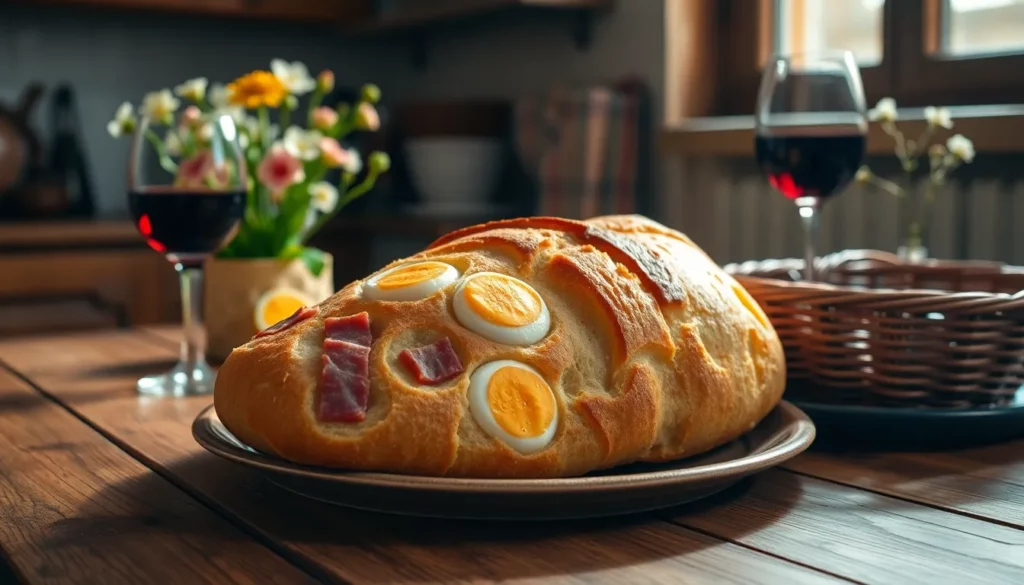
Casatiello is a traditional savory bread from Naples, in the Campania region of southern Italy, that is prepared and consumed during the Easter period. Its defining characteristics include a rich dough made with lard (or sometimes olive oil), generous amounts of grated pecorino and Parmigiano-Reggiano cheeses, pieces of salami or other cured meats, and whole eggs that are both incorporated into the dough and placed on top of the loaf before baking. The bread is typically shaped into a ring or a round loaf, and the eggs on top are often arranged in a cross pattern, symbolizing the resurrection of Christ. Casatiello is distinct from sweet Easter breads like Panettone or Colomba; it is unabashedly savory, dense, and deeply satisfying.
Origin & History
Casatiello originates from Naples and the surrounding Campania region, with documented references dating back to at least the 16th century. The name likely derives from the Neapolitan word casatiello or casatella, which itself comes from casa (house) or caso (cheese), reflecting the bread’s humble, homey origins. Historically, Casatiello was a way to use up rich ingredients that were forbidden during Lent—such as lard, cheese, and eggs—before the Easter feast. The bread was also a symbol of prosperity: the more eggs and meat it contained, the wealthier the family. Unlike some myths that claim Casatiello was invented by nuns, it is more likely a peasant dish that evolved in Neapolitan homes. The tradition of blessing the bread in church on Easter Saturday is still observed in some villages.
What’s In It
The core ingredients of Casatiello are simple but specific: flour (usually all-purpose or bread flour), lard (strutto) as the primary fat, grated pecorino Romano and Parmigiano-Reggiano, salami (often Neapolitan salami or soppressata), whole eggs (both in the dough and as decoration), yeast (fresh or dry), salt, and black pepper. Some modern versions substitute butter for lard, but purists insist on lard for the authentic texture and flavor. The dough is enriched with cheese and cured meat, then shaped into a ring or round. The eggs placed on top are often left whole in their shells, which bake into the bread and become hard-cooked; they are meant to be eaten as part of the bread. Casatiello is sometimes confused with Torta Pasqualina (a Ligurian savory pie with spinach and eggs) or Pizza di Pasqua (an Umbrian cheese bread), but Casatiello is distinct in its use of lard and its ring shape.
Regional Variations
While Casatiello is quintessentially Neapolitan, similar breads exist across Italy, each with local twists. Below is a comparison of three major regional versions:
| Region | Name | Key Differences |
|---|---|---|
| Campania (Naples) | Casatiello | Ring-shaped, lard-based dough, pecorino and Parmigiano, salami, whole eggs on top. Rich and savory. |
| Lazio (Rome) | Pizza di Pasqua Romana | More bread-like, often made with olive oil instead of lard, less cheese and meat, sometimes sweetened with sugar. Not always ring-shaped. |
| Sicily | Casatiello Siciliano / Cuddruruni | Sweet version with sugar, candied fruit, and sometimes chocolate. Often filled with ricotta. Eaten as a dessert. |
Other variations include the Casatiello di Sorrento, which adds provolone cheese, and the Casatiello di Procida, which includes anchovies. The common thread is the use of eggs as a symbol of rebirth.
How It’s Traditionally Eaten
Casatiello is not a pasta or a main course in the Italian meal structure; it is typically served as a street food, a snack, or part of an Easter breakfast or picnic. In Naples, it is often eaten on Easter morning with a glass of red wine or a local sparkling wine like Falanghina. It can also be served as an antipasto, sliced and accompanied by cured meats and cheeses. The bread is meant to be enjoyed at room temperature, and the eggs on top are peeled and eaten alongside the bread. Casatiello is not a primo or secondo; it is a pane speciale (special bread) that stands alone. It is almost exclusively a holiday food, prepared only during the Easter season, though some bakeries now offer it year-round.
Common Mistakes / What It’s Not
One of the most frequent misconceptions, especially in American-Italian contexts, is that Casatiello is a sweet bread similar to Panettone or Colomba. In reality, it is savory and should not be confused with sweet Easter breads. Another mistake is using butter instead of lard; while butter can be used, it changes the texture and flavor significantly. Some recipes also omit the whole eggs on top, which is a defining feature. Casatiello is not a pie (like Torta Pasqualina) nor a stuffed bread (like focaccia with toppings); it is a leavened bread with ingredients kneaded into the dough. Finally, it is not a quick bread; it requires a long rise (at least 4-6 hours) to develop its characteristic airy yet dense crumb.
Where to Try It / What to Order
To experience authentic Casatiello, visit Naples during the Easter season. Look for it in traditional bakeries (panetterie) such as Pasticceria Poppella or Antico Forno delle Sfogliatelle in the historic center. Many families still make it at home, but you can also find it at Easter markets and food festivals in Campania. When ordering, ask for Casatiello Napoletano to ensure you get the savory version. If you are outside Italy, seek out Italian specialty stores or bakeries that import from Naples. For travelers, the best time to try it is on Easter Sunday or the Monday after (Pasquetta), when Neapolitans traditionally picnic with Casatiello.
Related Dishes
FAQ
What is the difference between Casatiello and Panettone?
Casatiello is a savory bread made with lard, cheese, salami, and eggs, while Panettone is a sweet, light bread with candied fruit and raisins. They are both Easter breads but from different regions (Naples vs. Milan) and have opposite flavor profiles.
Can I make Casatiello without lard?
Yes, you can substitute butter or olive oil, but the texture and flavor will be different. Lard gives Casatiello its characteristic richness and tenderness. If you avoid pork, use a high-quality olive oil and increase the amount slightly.
Is Casatiello served warm or cold?
Casatiello is traditionally served at room temperature. It is often made the day before Easter and allowed to rest, which improves the flavor. The eggs on top become hard-cooked and are eaten cold or at room temperature.
What does the egg on top of Casatiello symbolize?
The whole egg, often placed in a cross pattern, symbolizes the resurrection of Christ and new life. It is a common Easter motif in many Italian breads.
How long does Casatiello keep?
Casatiello stays fresh for 3-4 days at room temperature, wrapped in a cloth. It can also be frozen for up to a month. The eggs on top should be removed before freezing.

Leave a Reply