
Short Answer
What It Is
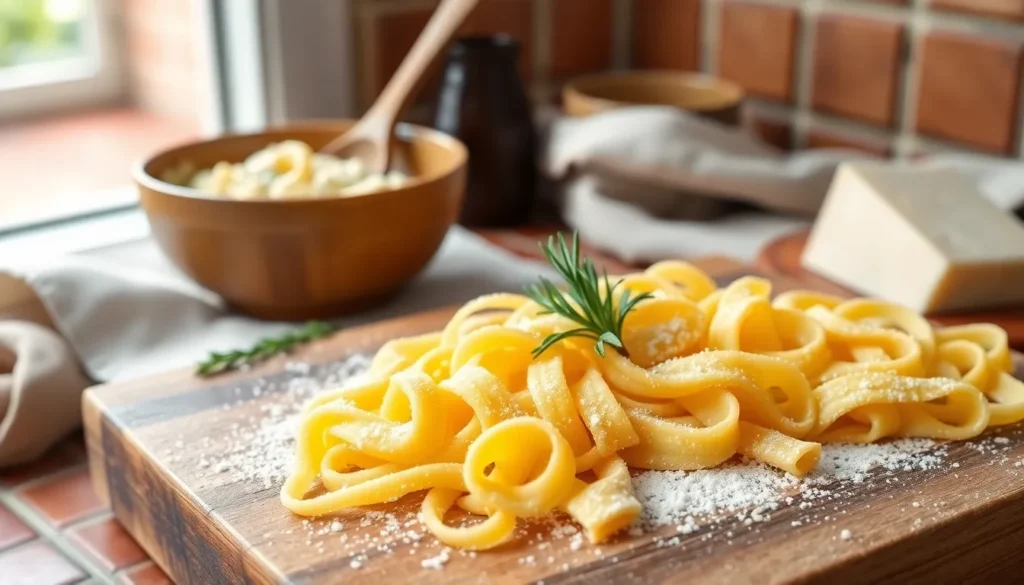
Tonnarelli is a traditional fresh pasta originating from the Lazio region of Italy, particularly Rome and the Castelli Romani area. It is characterized by its square cross-section, which distinguishes it from the round shape of spaghetti. The name “tonnarelli” is believed to derive from the Italian word tonnare (to cut) or possibly from tonno (tuna), as it was historically paired with tuna-based sauces. However, the most widely accepted etymology links it to the cutting method used in its production.
Authentic tonnarelli is made from durum wheat semolina and fresh eggs, giving it a rich yellow color and a firm, chewy texture. The dough is rolled into thin sheets, then cut into long, square-edged strips using a knife or a traditional chitarra (guitar) tool, which produces strands with a slightly rough surface that helps sauces cling. Unlike dried pasta, tonnarelli is a fresh product, typically consumed within a few days of production. It does not hold a DOP (Denominazione di Origine Protetta) or PGI (Indicazione Geografica Protetta) status, but it is recognized as a PAT (Prodotto Agroalimentare Tradizionale) by the Italian Ministry of Agricultural Policies, ensuring its traditional production methods are preserved.
Types & Grades
Tonnarelli is available in two main forms: fresh and dried. Each type has distinct characteristics suited to different culinary applications. The table below summarizes the key differences.
| Type | Ingredients | Texture | Best Use | Shelf Life |
|---|---|---|---|---|
| Fresh (Artisanal) | Durum wheat semolina, eggs, water, salt | Soft, porous, slightly rough surface | Classic Roman sauces (cacio e pepe, carbonara, gricia) | 2–3 days refrigerated |
| Fresh (Industrial) | Semolina, eggs, water, preservatives (optional) | Uniform, less porous | Quick meals, but less authentic | Up to 7 days refrigerated |
| Dried (Artisanal) | Durum wheat semolina, water (no eggs) | Hard, smooth, bronze-drawn | Long storage, suitable for hearty sauces | Up to 2 years |
| Dried (Industrial) | Semolina, water, additives | Very smooth, Teflon-drawn | General use, but lacks texture | Up to 2 years |
Within fresh tonnarelli, grades are determined by the quality of ingredients and the production method. Artisanal versions use high-protein semolina and farm-fresh eggs, often from free-range hens, and are cut by hand or with a chitarra. Industrial fresh pasta may include pasteurized eggs and preservatives, resulting in a less flavorful product. For dried tonnarelli, the key grade indicator is the extrusion method: trafilata al bronzo (bronze-drawn) creates a rough, porous surface that holds sauce better, while Teflon-drawn pasta is shiny and slippery.
How It’s Used in Cooking
Tonnarelli is the pasta of choice for several iconic Roman dishes, where its square shape and firm texture play a crucial role. The rough surface of artisanal tonnarelli allows sauces to adhere perfectly, creating a harmonious bite.
Signature Dishes
- Cacio e Pepe – A simple yet sublime combination of pecorino Romano cheese, black pepper, and pasta cooking water. The tonnarelli’s texture helps emulsify the cheese into a creamy sauce.
- Carbonara – Made with guanciale (cured pork cheek), eggs, pecorino, and black pepper. Tonnarelli’s firmness stands up to the rich, velvety sauce without becoming mushy.
- Gricia – Similar to carbonara but without egg, using guanciale, pecorino, and pepper. The pasta’s square edges catch the rendered fat and cheese.
- Amatriciana – While traditionally paired with bucatini, tonnarelli is a common substitute, especially in home cooking, with its tomato, guanciale, and pecorino sauce.
Cooking Technique
To cook tonnarelli properly, bring a large pot of generously salted water to a rolling boil. Fresh tonnarelli cooks in 3–5 minutes; dried takes 8–10 minutes. Always reserve at least a cup of pasta water before draining, as the starchy water is essential for emulsifying sauces. Toss the pasta with the sauce in a hot pan, adding pasta water gradually until the sauce coats each strand evenly. Serve immediately with extra grated cheese.
“Tonnarelli is the soul of Roman pasta. Its square cut is not just aesthetic; it’s a functional design that captures every bit of sauce.” – Ada Boni, Italian cookbook author
How to Choose/Identify Authentic Tonnarelli
For home cooks and professionals seeking genuine tonnarelli, several cues indicate authenticity:
- Shape: Look for a square or rectangular cross-section, not round. The strands should be slightly thicker than spaghetti, about 2–3 mm wide.
- Color: Fresh tonnarelli should be a pale, golden yellow from the eggs. Dried versions without eggs are more beige.
- Surface: Artisanal fresh pasta feels slightly rough and porous. Dried pasta labeled trafilata al bronzo will have a matte, rough surface; avoid shiny, smooth pasta.
- Ingredients: For fresh, the list should include semolina and eggs, with no added water or preservatives. For dried, only semolina and water are traditional.
- Packaging: Authentic Italian producers often indicate “pasta fresca all’uovo” (fresh egg pasta) and the region of origin (e.g., “Lazio”). Look for PAT certification or references to traditional methods.
- Smell: Fresh tonnarelli has a mild, eggy aroma. Dried pasta should smell of toasted wheat.
When buying online or in specialty stores, check for reviews and producer transparency. Avoid generic “spaghetti” labeled as tonnarelli; the shape is the most obvious giveaway.
Substitutes
If tonnarelli is unavailable, several Italian pasta shapes can serve as substitutes, though each alters the dish slightly:
- Spaghetti alla Chitarra – The closest substitute, also square-cut and from Lazio, but slightly thinner. Made with eggs and semolina, it works perfectly in all Roman recipes.
- Spaghetti – Round and often dried, spaghetti lacks the square edges but is a common pantry alternative. Use bronze-drawn spaghetti for better sauce adhesion.
- Linguine – Flat and slightly wider, linguine can replace tonnarelli in seafood dishes but is less ideal for cacio e pepe due to its smooth surface.
- Fettuccine – A flat ribbon pasta, fettuccine is too wide for traditional Roman sauces; it is better suited to creamy or ragù-based dishes.
- Bucatini – Hollow and thick, bucatini is the classic choice for amatriciana but can be used in carbonara if tonnarelli is absent, though the texture differs.
For the most authentic results, seek out fresh egg pasta made with semolina and cut into square strips. Dried substitutes should always be bronze-drawn to mimic the rough surface of tonnarelli.
Conclusion
Tonnarelli is more than a pasta shape; it is a testament to Lazio’s culinary heritage, designed to elevate simple, high-quality ingredients into iconic dishes. Its square cross-section, firm texture, and ability to hold sauces make it indispensable for cacio e pepe, carbonara, and gricia. By understanding its production, grades, and authenticity cues, cooks can confidently select and prepare tonnarelli that honors tradition. Whether fresh from a local pastificio or dried from a reputable producer, tonnarelli remains a cornerstone of Roman pasta culture.
FAQ
What is the difference between tonnarelli and spaghetti?
Tonnarelli has a square cross-section, while spaghetti is round. Tonnarelli is traditionally made fresh with eggs and semolina, giving it a firmer, more porous texture that holds sauces better. Spaghetti is often dried and made only from semolina and water.
Can I use tonnarelli for carbonara?
Yes, tonnarelli is the traditional pasta for carbonara in Rome. Its square shape and firm texture allow it to support the rich egg and cheese sauce without becoming mushy.
Where can I buy authentic tonnarelli?
Look for fresh tonnarelli in Italian specialty stores, pastifici, or online retailers that source from Lazio. For dried, choose brands that indicate 'trafilata al bronzo' and list only semolina and water. Check for PAT certification or region of origin on the package.


Leave a Reply