
Short Answer
What Is Capesante alla Veneziana? Italian {{category}} Explained
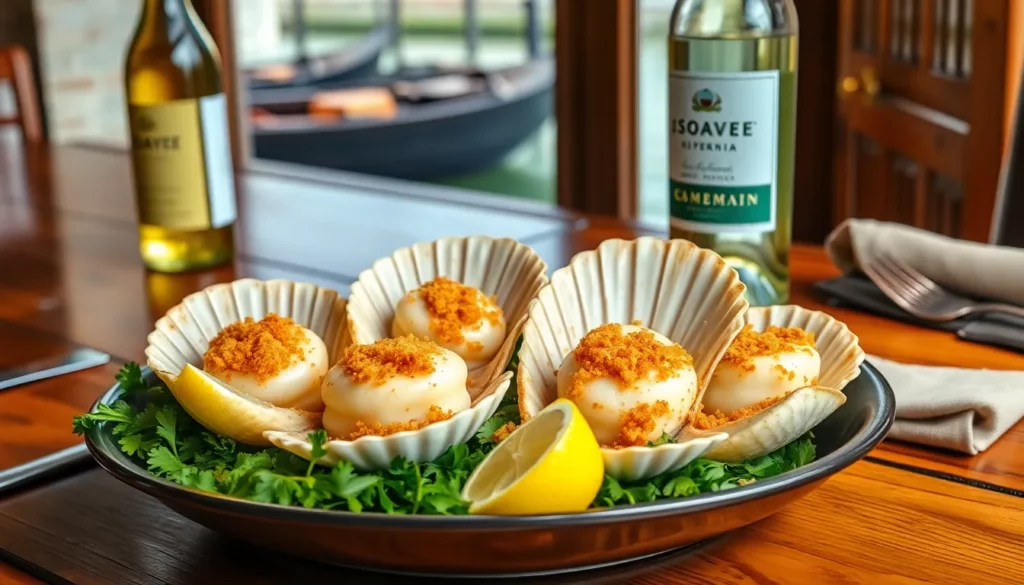
Capesante alla Veneziana is a classic Venetian seafood dish consisting of scallops (capesante) baked or gratinated with a simple yet flavorful topping of butter, white wine, garlic, parsley, and breadcrumbs. It is typically served as a secondo (main course) or as a luxurious antipasto in the Veneto region, especially in and around Venice. The dish highlights the natural sweetness of fresh scallops, enhanced by the richness of butter and the brightness of lemon. Unlike many other Italian scallop preparations, Capesante alla Veneziana avoids heavy sauces or cheese, letting the quality of the seafood shine.
Origin & History
Capesante alla Veneziana originates from the Veneto region, particularly the city of Venice and its lagoon. While scallops have been harvested in the Adriatic Sea for centuries, the specific preparation of baking them with breadcrumbs and butter likely emerged in the mid-20th century, when Venetian home cooks and trattorias began adapting French-influenced gratin techniques to local seafood. Historical records from Venetian cookbooks of the 1950s and 1960s show similar recipes for capesante gratinate, but the term “alla Veneziana” became standardized to distinguish the Venetian style from other Italian versions. The dish reflects Venice’s historical role as a maritime republic, where simple, high-quality ingredients from the lagoon were celebrated. Anecdotal tradition holds that Venetian fishermen would prepare scallops directly on their boats, using butter and herbs to complement the fresh catch.
What’s In It
The core ingredients of Capesante alla Veneziana are few and precise:
- Scallops (capesante): Fresh, large sea scallops, preferably from the Adriatic, with the roe often left attached for extra flavor.
- Butter: Unsalted butter provides richness and helps create a golden crust.
- White wine: A dry Venetian white such as Soave or Pinot Grigio adds acidity and depth.
- Garlic: Finely minced or crushed, used sparingly to avoid overpowering the scallops.
- Fresh parsley: Chopped flat-leaf parsley for freshness and color.
- Breadcrumbs: Fine, unseasoned breadcrumbs (often homemade) create a crisp topping.
- Lemon: Lemon wedges served on the side for squeezing.
- Salt and pepper: To taste.
Preparation involves cleaning the scallops, arranging them in a buttered baking dish, topping with a mixture of breadcrumbs, garlic, parsley, and melted butter, then drizzling with white wine and baking until the scallops are just cooked and the topping is golden. The dish is distinct from Capesante gratinate (which may include cheese) and Capesante al forno (which often uses tomato sauce).
Regional Variations
While Capesante alla Veneziana is firmly rooted in Veneto, other Italian regions have their own scallop preparations. The table below compares the Venetian style with those from three other regions:
| Region | Key Ingredients | Cooking Method | Distinctive Feature |
|---|---|---|---|
| Veneto (Venice) | Butter, white wine, garlic, parsley, breadcrumbs | Baked/gratinated | No cheese; simple, buttery crust |
| Liguria | Olive oil, pesto, pine nuts, breadcrumbs | Baked | Pesto replaces butter; aromatic and green |
| Campania (Naples) | Tomato, garlic, oregano, olive oil, breadcrumbs | Baked or pan-seared | Tomato-based sauce; more rustic |
| Sicily | Olive oil, lemon, capers, breadcrumbs, sometimes cheese | Baked or grilled | Sweet and sour notes; often includes raisins or pine nuts |
These variations reflect local ingredient availability and culinary traditions, but the Venetian version remains the most delicate and pure.
How It’s Traditionally Eaten
In Venetian homes and trattorias, Capesante alla Veneziana is served as a secondo piatto (main course) after a primo of pasta or risotto, or as a refined antipasto for special occasions. It is typically accompanied by a crisp green salad or steamed vegetables, and a glass of the same white wine used in cooking. The dish is not considered everyday fare; it appears on menus during festive seasons, especially Christmas and New Year’s Eve, when seafood is traditional. In Venice, it is also popular during the Festa della Sensa (Ascension Day) celebrations. When eating, locals squeeze fresh lemon over the scallops and enjoy them with crusty bread to soak up the buttery juices.
Common Mistakes / What It’s Not
Many American-Italian adaptations of scallop dishes add heavy cream, mozzarella, or Parmesan, which mask the delicate flavor of the scallops. Capesante alla Veneziana is not a creamy gratin; it relies on butter and breadcrumbs for texture. Another misconception is that it can be made with frozen or pre-cooked scallops—fresh, dry-packed scallops are essential. The dish is also not a pasta sauce; it is a standalone seafood course. Avoid overcooking the scallops, as they become rubbery; the goal is a tender, just-cooked center. Finally, do not confuse it with Coquilles Saint-Jacques, the French version that often includes mushrooms and cheese.
Where to Try It / What to Order
For the most authentic Capesante alla Veneziana, visit traditional trattorie and osterie in Venice, especially those near the Rialto Market or in the Cannaregio district. Recommended restaurants include Trattoria Al Gatto Nero on Burano, Osteria alle Testiere in Venice, and Ristorante Da Ivo. When ordering, ask for “Capesante alla Veneziana” and specify that you want them prepared with butter and breadcrumbs, not cheese. The dish is often listed under Antipasti di Mare or Secondi di Pesce. If visiting during the Venice Biennale or Carnevale, many restaurants feature it on special menus. For a home version, source fresh scallops from a trusted fishmonger and follow a traditional recipe from Venetian cookbooks.
Related Dishes
FAQ
What is the difference between Capesante alla Veneziana and Capesante Gratinate?
Capesante Gratinate is a broader term for any gratinated scallops, often including cheese. Capesante alla Veneziana is a specific Venetian version that uses only butter, breadcrumbs, garlic, and white wine, without cheese.
Can I use frozen scallops for Capesante alla Veneziana?
Fresh, dry-packed scallops are strongly recommended. Frozen scallops often contain added water and phosphates, which can make them release too much liquid during baking, resulting in a soggy texture.
What wine pairs best with Capesante alla Veneziana?
A dry, crisp white wine from the Veneto region, such as Soave, Pinot Grigio, or a Vermentino, complements the buttery, garlicky scallops without overpowering them.
Is Capesante alla Veneziana served as a main course or appetizer?
It can be served either as a secondo (main course) or as an antipasto, depending on the portion size. In Venetian trattorias, it is often listed under both sections.
What is the origin of the name 'Capesante alla Veneziana'?
The name means 'Venetian-style scallops,' indicating the preparation method typical of Venice and the Veneto region. It distinguishes the dish from other regional scallop recipes.
Leave a Reply