
Short Answer
What Is Arrosticini? Italian Lamb Skewers Explained
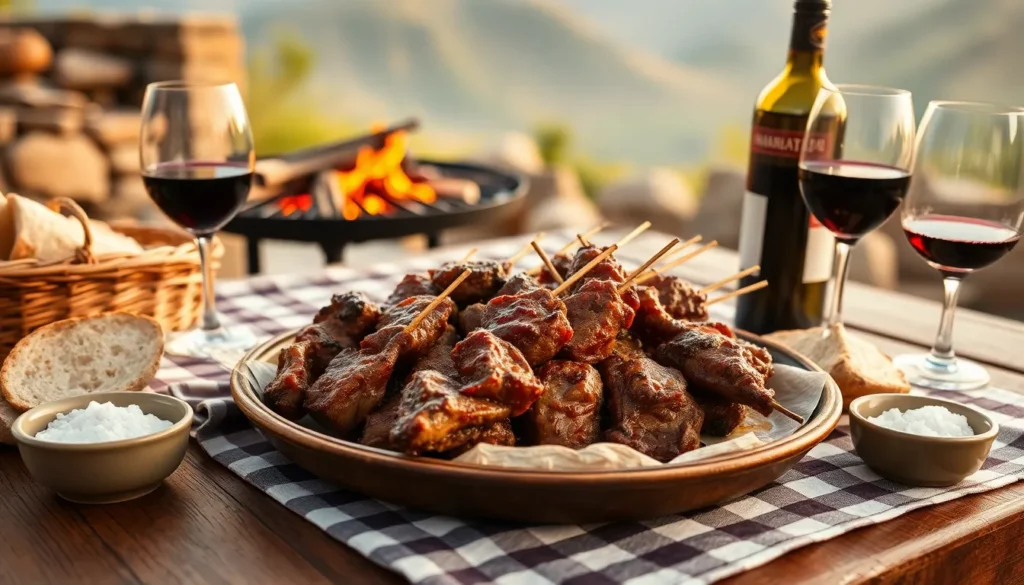
Arrosticini (pronounced ah-roh-STEE-chee-nee) are small skewers of lamb or mutton, traditionally cooked over a charcoal fire and seasoned only with salt. Originating from the Abruzzo region in central Italy, particularly the provinces of Teramo, Pescara, and L’Aquila, these skewers are a staple of cucina povera (peasant cooking). The meat is cut into bite-sized cubes, threaded onto wooden or metal skewers, and grilled until charred on the outside while remaining tender inside. Arrosticini are typically served as a secondo (main course) or as a street food, accompanied by crusty bread and a glass of Montepulciano d’Abruzzo wine. Unlike other Italian skewered meats, arrosticini rely on the purity of the lamb flavor, with no marinade or herbs beyond salt.
Origin & History
The history of arrosticini is deeply intertwined with the transhumance (transumanza) of shepherds in Abruzzo. For centuries, shepherds moved their flocks of sheep from the high pastures of the Gran Sasso and Maiella mountains to the lowlands of Puglia during winter. This nomadic lifestyle required portable, simple meals. Arrosticini were born from necessity: shepherds would slaughter an old sheep or lamb, cut the meat into small pieces, skewer them on green branches (often from the olive or myrtle tree), and cook them over an open fire. The first written references appear in the 19th century, but the practice is undoubtedly much older, rooted in the ancient Roman tradition of spinae (spit-roasted meats). A popular myth claims that arrosticini were invented by a shepherd named Pancrazio in the 1800s, but this is likely apocryphal; the dish evolved organically across the region. Today, arrosticini are celebrated at festivals like the Sagra della Porchetta in Campli and the Festa degli Arrosticini in many Abruzzese towns.
What’s In It
The core ingredients of arrosticini are remarkably minimal: lamb or mutton (typically from adult sheep for a stronger flavor), salt, and fire. The meat is cut into cubes of about 2–3 cm, skewered tightly (usually 4–5 pieces per skewer), and cooked over a brace (glowing embers) of beech or olive wood. No oil, lemon, herbs, or spices are added; the fat from the meat bastes the skewers naturally. The key nuance is the cut: arrosticini use a mix of lean and fatty parts, often from the shoulder, leg, or belly. The skewers are turned frequently to ensure even cooking and a slight char. This simplicity differentiates arrosticini from other Italian skewered dishes like spiedini alla romana (which include bread and cheese) or involtini (rolled meats with fillings).
Regional Variations
While arrosticini are quintessentially Abruzzese, subtle variations exist within the region and neighboring areas. The table below highlights key differences:
| Area | Meat Type | Skewer Material | Seasoning | Cooking Style |
|---|---|---|---|---|
| Teramo (classic) | Mutton (adult sheep) | Wooden (olive or myrtle) | Coarse salt only | Over embers, slow |
| Pescara | Lamb (younger) | Metal skewers | Salt + optional rosemary | Hotter fire, faster |
| L’Aquila | Mixed lamb and pork | Wooden | Salt + black pepper | Charcoal grill |
| Molise (neighboring) | Lamb with pancetta | Metal | Salt + garlic | Grilled over vine cuttings |
Outside Abruzzo, you may find arrosticini served as a street food in Rome or Milan, but these often use lamb only and may include a drizzle of olive oil. The authentic version remains strictly salt-only.
How It’s Traditionally Eaten
Arrosticini are almost always served as a secondo (main course) in a traditional Abruzzese meal, following a primo like spaghetti alla chitarra or scrippelle. They are eaten with the hands, holding the skewer and pulling the meat off with the teeth. The typical accompaniment is pane casereccio (rustic bread), often used to soak up the juices. A side of grilled vegetables (verdure grigliate) or a simple salad may be added. The wine of choice is a robust red, such as Montepulciano d’Abruzzo or Cerasuolo d’Abruzzo (rosé). Arrosticini are also a popular street food, sold by the dozen at festivals, fairs, and arrosticcerie (specialty shops). They are an everyday dish for shepherds and farmers, but also appear at celebrations like Pasquetta (Easter Monday) and summer sagre.
Common Mistakes / What It’s Not
Many American-Italian adaptations misinterpret arrosticini. Common mistakes include marinating the meat in olive oil, lemon, or herbs; using beef or chicken instead of lamb; or adding vegetables like peppers and onions to the skewer. Arrosticini are not spiedini (which often include bread, cheese, or vegetables), nor are they kebabs (which are marinated and often served with sauce). They are not cooked on a gas grill; the smoky flavor from charcoal or wood embers is essential. Another misconception is that arrosticini are always made from lamb; traditional versions use mutton for a stronger, gamier taste. Finally, arrosticini should never be served with ketchup or heavy sauces—the purity of the meat is paramount.
Where to Try It / What to Order
For the most authentic experience, visit Abruzzo during the summer festival season. Key locations include:
- Teramo – The heartland; try Arrosticini di Pecora at La Locanda del Pettirosso or any arrosticceria in the historic center.
- Pescara – Ristorante La Barcaccia serves excellent lamb arrosticini with a view of the port.
- L’Aquila – Trattoria del Pesce offers a mixed version with pork.
- Festivals – The Sagra degli Arrosticini in Civitella del Tronto (August) and Festa della Transumanza in various towns.
When ordering, ask for “un piatto di arrosticini” (a plate of skewers) – typically 10–12 skewers per person. Specify “di pecora” (mutton) for traditional flavor or “di agnello” (lamb) for a milder taste. Pair with a Montepulciano d’Abruzzo and finish with parrozzo (almond cake) for dessert.
Related Dishes
FAQ
What is the difference between arrosticini and spiedini?
Arrosticini are pure lamb or mutton skewers seasoned only with salt, while spiedini are Italian skewers that often include bread, cheese, vegetables, or other meats, and are typically marinated or breaded.
Can arrosticini be made with other meats?
Authentic arrosticini are made exclusively with lamb or mutton. Using beef, chicken, or pork would result in a different dish, though some modern variations in L'Aquila mix lamb with pork.
What wine pairs best with arrosticini?
A robust red wine like Montepulciano d'Abruzzo is the classic pairing. A Cerasuolo d'Abruzzo rosé also works well. Avoid light or oaky wines.
Are arrosticini healthy?
Arrosticini are relatively lean when made with lamb, and the simple preparation adds no extra fats or sugars. However, they are high in protein and saturated fat, so moderation is key.
Where can I buy arrosticini outside Italy?
Specialty Italian butchers or online retailers may offer frozen arrosticini. Look for 'arrosticini di pecora' or 'agnello'. Some Italian restaurants in the US serve them, but authenticity varies.
Leave a Reply