
Short Answer
What Is Carpaccio? Italian Appetizer Explained
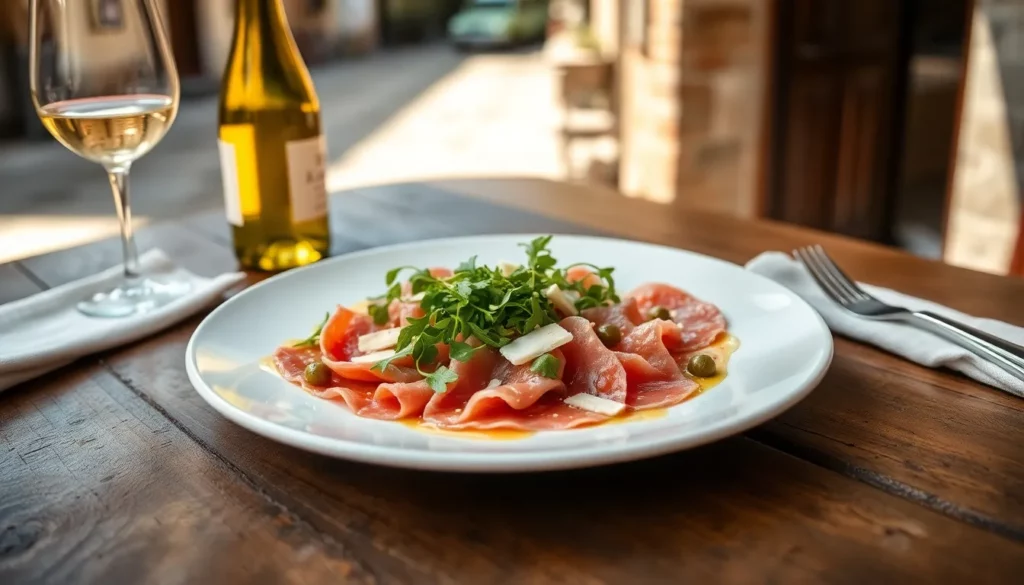
Carpaccio is a refined Italian antipasto consisting of paper-thin slices of raw beef or fish, typically dressed with a simple emulsion of lemon juice, extra virgin olive oil, salt, and pepper, and garnished with arugula, shaved Parmesan cheese, and capers. Originating in Venice, this dish highlights the purity and quality of its main ingredient, offering a delicate, melt-in-the-mouth texture. It is served cold and is prized for its minimalist elegance, making it a staple of modern Italian cuisine.
Origin & History
Carpaccio was invented in 1950 at Harry’s Bar in Venice by Giuseppe Cipriani, the bar’s founder. The dish was created for Countess Amalia Nani Mocenigo, who was on a doctor-prescribed raw diet. Cipriani thinly sliced raw beef tenderloin and dressed it with a creamy sauce (originally a mayonnaise-based sauce with mustard and Worcestershire). The name was inspired by the Venetian painter Vittore Carpaccio, whose paintings featured vivid red and white tones reminiscent of the dish’s colors. Contrary to popular myth, Carpaccio is not an ancient Roman recipe; it is a mid-20th-century invention that quickly gained international fame. The original recipe has evolved, but the core concept of ultra-thin raw meat remains unchanged.
What’s In It
The essential ingredients for classic beef Carpaccio are: high-quality beef tenderloin (filet mignon), sliced to near-transparency; a dressing of fresh lemon juice, extra virgin olive oil, sea salt, and cracked black pepper; and garnishes such as arugula, shaved Parmigiano-Reggiano, and capers. Some variations include truffle oil or shaved white truffles. It is crucial to differentiate Carpaccio from similar dishes: beef tartare is chopped or minced raw beef, often mixed with capers, onions, and egg yolk; crudo di pesce is raw fish served with olive oil and citrus but typically sliced thicker and without the same dressing. Carpaccio’s hallmark is its extreme thinness and the simplicity of its seasoning, which allows the natural flavor of the meat or fish to shine.
Regional Variations
While the original Venetian Carpaccio is made with raw beef, Italian regions have adapted the concept using local ingredients. The table below compares three major regional interpretations:
| Region | Main Ingredient | Typical Dressing | Notable Characteristics |
|---|---|---|---|
| Venice (Veneto) | Raw beef tenderloin | Lemon, olive oil, Parmesan, arugula | Original version; often served with shaved truffles |
| Rome (Lazio) | Bresaola (air-dried beef) | Lemon, olive oil, rocket, Parmesan | Uses cured beef instead of raw; more intense flavor |
| Sicily | Raw swordfish (pesce spada) or tuna | Lemon, olive oil, capers, oregano | Fish version; often marinated briefly in citrus |
Other notable variations include Carpaccio di salmone (salmon) in coastal areas, Carpaccio di polpo (octopus) in Puglia, and even vegetarian versions using thinly sliced zucchini or artichokes. Each region emphasizes local produce and traditions, but the technique of ultra-thin slicing remains constant.
How It’s Traditionally Eaten
Carpaccio is served as an antipasto (starter) in Italian meals, never as a primo or secondo. It is typically placed at the beginning of a multi-course meal to awaken the palate. The dish is best paired with light, crisp white wines such as Pinot Grigio, Soave, or a Vermentino. In Venice, it is often enjoyed as a refined appetizer during festive occasions or at upscale restaurants. While not an everyday dish due to the cost of high-quality raw meat, it is a popular choice for special dinners and celebrations. The key to proper enjoyment is to let the meat come to room temperature briefly before serving, and to eat it immediately after dressing to preserve texture.
Common Mistakes / What It’s Not
Many misconceptions surround Carpaccio, especially outside Italy. First, it is not a cooked dish; the meat or fish is served completely raw. Second, it is not a main course; it is a light starter. Third, it should not be drowned in heavy sauces or excessive toppings; the dressing should be minimal. Fourth, it is not the same as beef tartare (which is chopped) or crudo (which is thicker and often marinated). Fifth, using low-quality or improperly handled meat is dangerous; only the freshest, highest-grade beef or fish from a trusted source should be used. Finally, Carpaccio is not an ancient dish; it is a modern creation from the 1950s. Understanding these distinctions ensures an authentic experience.
Where to Try It / What to Order
For the most authentic Carpaccio, visit Harry’s Bar in Venice (Calle Vallaresso, 1323), where it was invented. Other excellent Venetian restaurants include Trattoria alla Madonna and Osteria alle Testiere. In Rome, try Carpaccio di bresaola at traditional trattorias. In Sicily, seek out Carpaccio di pesce spada in coastal towns like Taormina or Cefalù. When ordering, specify “carpaccio di manzo” for beef or “carpaccio di pesce” for fish. Ask if the meat is freshly sliced to order. Avoid places that serve pre-sliced, refrigerated Carpaccio; it should be prepared just before serving. For home preparation, invest in a sharp slicer or freeze the meat briefly to achieve paper-thin slices.
Related Dishes
FAQ
Is Carpaccio safe to eat raw?
Yes, when prepared with high-quality, fresh beef or fish from a trusted source and handled with proper hygiene. The meat should be sliced just before serving and kept cold.
Can Carpaccio be made with fish?
Absolutely. Fish carpaccio (carpaccio di pesce) is common, especially with tuna, salmon, or swordfish. It is often marinated briefly in citrus juice.
What is the difference between Carpaccio and beef tartare?
Carpaccio is sliced paper-thin, while tartare is chopped or minced. Tartare also typically includes additional ingredients like capers, onions, and egg yolk mixed in.
Is Carpaccio a main course?
No, it is traditionally served as an antipasto (starter) due to its light, delicate nature.
What wine goes best with Carpaccio?
Light, crisp white wines such as Pinot Grigio, Soave, or Vermentino complement the dish without overpowering the subtle flavors.

Leave a Reply