
Short Answer
Eggplant (Solanum melongena), known as melanzana in Italian, is a cornerstone of Mediterranean gastronomy. Though native to the Indian subcontinent, it was introduced to Italy by Arab traders in the Middle Ages and quickly became integral to regional cuisines, especially in the South. Today, Italy boasts several protected varieties under the European Union’s DOP (Denominazione di Origine Protetta) and PGI (Indicazione Geografica Protetta) systems, ensuring authenticity and quality. This article delves into the botanical, historical, and culinary dimensions of eggplant, offering a comprehensive guide for professionals and enthusiasts alike.
What It Is
Eggplant is a fruit botanically classified as a berry, but culinarily treated as a vegetable. It belongs to the nightshade family (Solanaceae), alongside tomatoes, peppers, and potatoes. The plant is a perennial in tropical climates but grown as an annual in temperate regions. Italian eggplants are prized for their thin skins, dense flesh, and minimal bitterness, a result of centuries of selective breeding and terroir-driven cultivation.
Production Method and Region of Origin
Italian eggplant cultivation is concentrated in the southern regions: Sicily, Calabria, Campania, and Puglia. The warm, sunny climate and fertile volcanic soils produce eggplants with intense flavor and firm texture. Traditional farming methods often include crop rotation and organic practices, though many producers now follow integrated pest management. Harvesting occurs from June to October, with peak season in August. The fruit is hand-picked at optimal ripeness to avoid over-maturity and seediness.
DOP/PGI Status
Two Italian eggplants have received EU protected status:
- Melanzana di Rotonda (PGI) – Grown in the Pollino National Park area of Basilicata, this small, round, purple-black eggplant is known for its sweet, delicate flavor and thin skin. It is often preserved in oil or vinegar.
- Melanzana di Siracusa (Traditional Specialty) – While not DOP/PGI, this Sicilian variety from the Syracuse area is recognized as a Prodotto Agroalimentare Tradizionale (PAT). It is elongated, light purple, and used in caponata and pasta alla Norma.
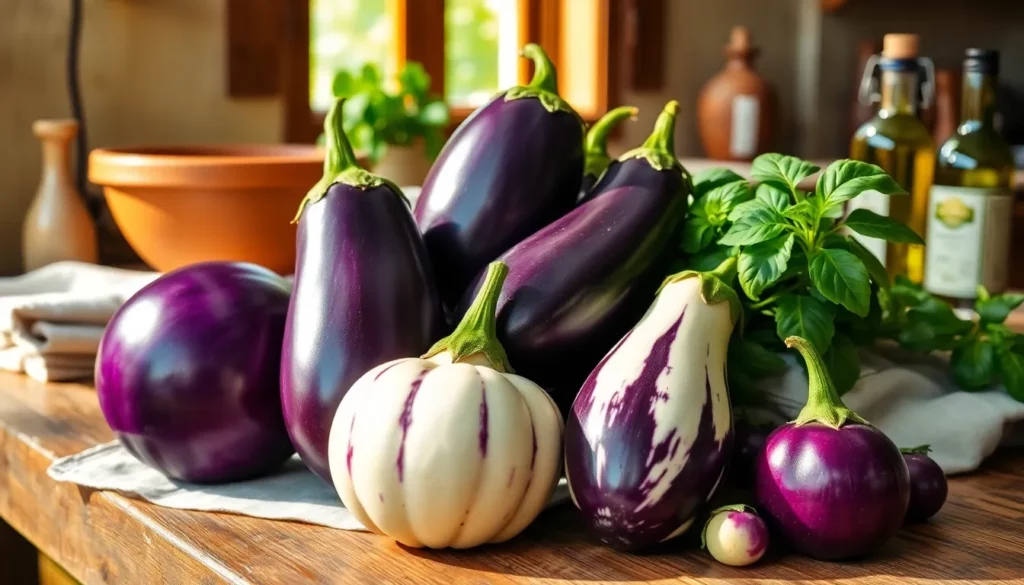
Other notable regional varieties include Violetta di Firenze (Tuscany), Rosa Bianca (round, white-and-purple), and Lunga di Napoli (long, dark purple).
Types & Grades
Italian eggplants are categorized by shape, size, and color, each suited to specific culinary applications. The following table summarizes the main types:
| Type | Shape | Color | Typical Use |
|---|---|---|---|
| Globe (Americana) | Large, round | Deep purple | Grilling, baking, Parmigiana |
| Italian (Lunga) | Elongated, slender | Dark purple | Frying, stewing, caponata |
| Rosa Bianca | Round, flattened | White with purple streaks | Roasting, stuffing |
| Violetta di Firenze | Round, medium | Light purple | Grilling, sautéing |
| Melanzana di Rotonda | Small, round | Purple-black | Preserving, pickling |
Grades are based on size, uniformity, and absence of blemishes. Premium eggplants are harvested young (6–8 inches long for elongated types) with glossy skin and a green calyx. Overripe fruits are seedy and bitter, often downgraded for processing.
How It’s Used in Cooking
Eggplant’s spongy texture absorbs flavors beautifully, making it a versatile ingredient in Italian cuisine. Traditional preparations often involve salting (to draw out bitterness and moisture) before cooking, though modern varieties require less treatment.
Signature Dishes
- Parmigiana di Melanzane – Layered fried eggplant with tomato sauce, mozzarella, and Parmesan, baked until golden. A classic of Campania and Sicily.
- Caponata – Sicilian sweet-and-sour eggplant stew with tomatoes, olives, capers, and celery, served as a side or antipasto.
- Pasta alla Norma – Pasta with fried eggplant, tomato sauce, ricotta salata, and basil, originating from Catania.
- Melanzane sott’olio – Eggplant preserved in olive oil with garlic and herbs, a staple of southern Italian pantries.
- Involtini di Melanzane – Rolled eggplant slices stuffed with ricotta, herbs, and sometimes meat, baked in tomato sauce.
“The eggplant is like a sponge for the sun and the soil; it carries the essence of the Mediterranean in every bite.” – Traditional Sicilian saying
Eggplant also appears in ciambotta (vegetable stew), frittate, and as a pizza topping. Its ability to pair with bold flavors like garlic, basil, oregano, and pecorino makes it indispensable.
How to Choose/Identify Authentic Eggplant
For commercial buyers and home cooks, selecting authentic Italian eggplant involves several cues:
- Appearance: Look for smooth, taut, glossy skin without wrinkles or soft spots. The stem and calyx should be bright green and fresh.
- Weight: A heavy eggplant indicates high moisture content and freshness. Lightness suggests dehydration or age.
- Firmness: Gently press the skin; it should spring back. If it remains indented, the fruit is overripe.
- Size: Smaller eggplants (4–6 inches) tend to be sweeter and less seedy. Large globes are better for stuffing or Parmigiana.
- Color: Uniform, deep color (purple, white, or striped) without green patches (except for varieties like Rosa Bianca where green is natural).
- Origin Labeling: For PGI Melanzana di Rotonda, look for the EU PGI logo and producer information. Other Italian eggplants may carry “Prodotto in Italia” or regional PAT designations.
- Seasonality: Peak Italian eggplant is available June–October. Off-season imports may be less flavorful.
When buying for professional kitchens, request samples and check for bitterness by tasting a raw slice. Authentic Italian varieties should have a mild, slightly sweet flavor with no astringency.
Substitutes
While eggplant is unique, certain Italian vegetables can replace it in specific dishes, though the texture and flavor will differ:
- Zucchini (Courgette) – Similar spongy texture when cooked; works well in Parmigiana or grilled dishes. Use firm, medium-sized zucchini.
- Bell Peppers – Roasted or grilled peppers offer a sweet, smoky alternative in caponata or stews. They lack eggplant’s creamy interior.
- Porcini Mushrooms – For a rich, umami substitute in ragù or stuffed dishes, porcini provide a meaty texture. Rehydrate dried ones for intensity.
- Cardoon (Cardo) – A traditional Italian thistle, cardoon can be braised or fried and used in place of eggplant in some southern recipes, though it requires more preparation.
These substitutes are not exact matches but are authentic Italian ingredients that maintain regional character when eggplant is unavailable.
Conclusion
Eggplant is far more than a mere vegetable; it is a cultural icon of Italian cuisine, embodying centuries of agricultural refinement and culinary creativity. From the protected PGI fields of Rotonda to the bustling markets of Palermo, each variety tells a story of place and tradition. Whether you are crafting a classic Parmigiana or experimenting with modern techniques, understanding the nuances of Italian eggplant will elevate your dishes and connect you to the rich tapestry of Mediterranean gastronomy.
FAQ
What is the difference between DOP and PGI for eggplant?
DOP (Denominazione di Origine Protetta) requires that all production, processing, and preparation occur in a specific region. PGI (Indicazione Geografica Protetta) requires that at least one stage takes place in the region. Currently, no Italian eggplant holds DOP; Melanzana di Rotonda is PGI, meaning the cultivation and harvesting are in Rotonda, but processing may occur elsewhere.
Do I need to salt Italian eggplants before cooking?
Modern Italian varieties, especially those grown for DOP/PGI, are bred to be less bitter. However, salting (for 30 minutes) can still help draw out excess moisture, improve texture, and reduce oil absorption during frying. For grilling or roasting, salting is optional.
How can I tell if an eggplant is fresh and authentic?
Look for glossy, taut skin, a bright green calyx, and a heavy weight for its size. The flesh should be white to cream-colored with no brown spots. Authentic Italian eggplants often have a label indicating origin (e.g., 'Melanzana di Rotonda PGI' or 'Prodotto in Italia'). Avoid wrinkled or soft specimens.
What is the best Italian eggplant variety for Parmigiana?
The classic choice is the large globe eggplant (often called 'Americana' in Italy) because its wide slices layer well. However, Lunga (elongated) varieties also work if sliced lengthwise. For a traditional Sicilian Parmigiana, some cooks prefer the local Violetta di Firenze or even Rosa Bianca for a milder flavor.


Leave a Reply