Short Answer
Getting There
Parma is well-connected within the Emilia-Romagna region and serves as a strategic stop between Milan and Bologna. The nearest airport is Parma Giuseppe Verdi Airport (PMF), located just a few kilometers from the city center, offering seasonal and regional flights. However, for most international travelers, Bologna Guglielmo Marconi Airport (BLQ) is the primary hub, situated approximately one hour away by train or shuttle. Milan Malpensa and Linate airports are also viable options, roughly two hours away by high-speed rail.
Rail travel is often the most convenient method of arrival. Parma’s train station lies on the main Milan-Bologna line. Direct regional and high-speed trains connect Parma to Milan, Bologna, Florence, and Rome. Travelers arriving from Rome should expect a journey involving a transfer in Bologna or Milan unless catching a specific direct service, with total travel times ranging from three to four hours. From Milan, direct trains frequently depart from Milano Centrale, taking approximately one hour. Always verify current schedules and platform information with national rail operators before departure, as routes and frequencies can change seasonally.
Getting Around
Parma’s historic center is compact and highly walkable, making it ideal for exploring on foot. Most major attractions, including the Cathedral and Palazzo della Pilotta, are within a fifteen-minute walk of each other. Local buses operated by TEP serve the wider city and surrounding neighborhoods, useful for reaching accommodations outside the center or the university district. Taxis are available at designated ranks near the train station and Piazza Garibaldi, and ride-hailing services operate in the area, though availability may vary compared to larger metropolises.
Visitors driving should exercise caution regarding traffic restrictions. Parma enforces a Zona a Traffico Limitato (ZTL) in the historic center, where unauthorized vehicle access is prohibited and heavily fined. Parking is available in designated lots outside the ZTL boundaries, such as near the train station or Parco Ducale, often requiring a fee. Cycling is increasingly popular, with bike-sharing options available for short trips. For travelers with mobility issues, the flat terrain of the center is advantageous, though some historic sites may have limited elevator access due to preservation laws.
Best Time to Visit
The ideal time to visit Parma is during the spring (April to June) and early autumn (September to October). During these months, temperatures are mild, typically ranging from 15°C to 25°C, and the countryside is vibrant. These seasons coincide with key food production cycles, offering opportunities to see Parmigiano Reggiano and Prosciutto di Parma being made. Summer can be hot and humid, with temperatures occasionally exceeding 30°C, and many local businesses close for ferie (holiday) in August. While this reduces crowds, it may limit dining options.
Winter visits, from November to March, offer a quieter atmosphere and lower accommodation rates. This period is excellent for food-focused travelers, as the cold air is traditional for curing meats. However, daylight hours are shorter, and some outdoor attractions may have reduced hours. Major cultural events, such as the Verdi Festival, often occur in the autumn, drawing music enthusiasts. Travelers should check specific event dates annually, as schedules vary. Regardless of season, booking accommodation in advance is recommended during major trade fairs or university graduation periods.
Top Things to Do
Parma Cathedral and Baptistery
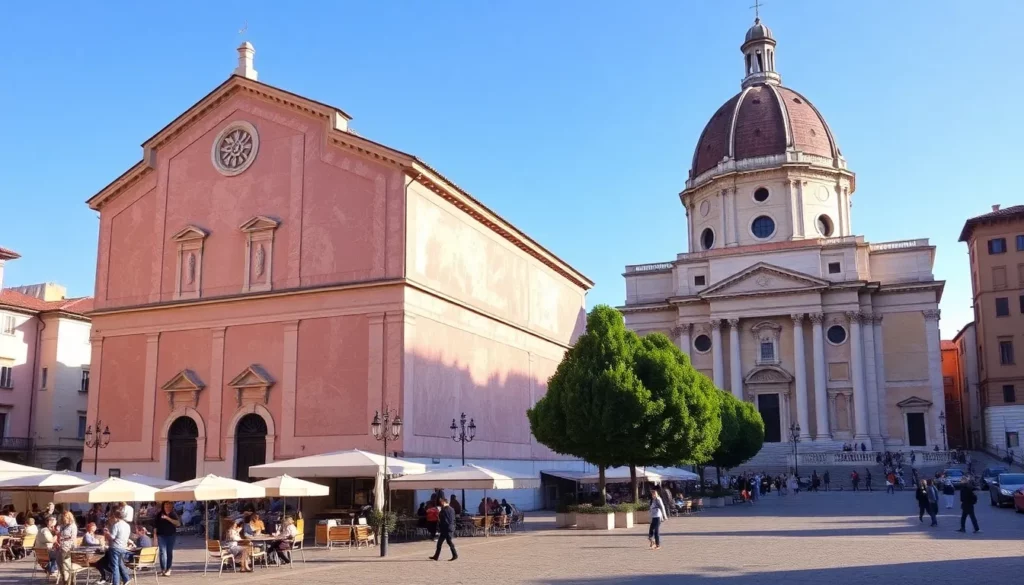
The religious heart of the city, the Cathedral features stunning frescoes by Correggio in the dome, depicting the Assumption of the Virgin. Adjacent stands the octagonal Baptistery, renowned for its pink Verona marble facade and interior medieval paintings. This complex is essential for art history enthusiasts. Visitors should check opening times as religious services may limit access during mass.
Palazzo della Pilotta
This massive palace complex houses several cultural institutions, including the National Gallery, the Archaeological Museum, and the Teatro Farnese. The Teatro Farnese is a highlight, a wooden theater built in 1618 that survived World War II bombing. It offers a rare glimpse into Renaissance stage design. Allow at least two hours to explore the galleries and theater adequately.
Parco Ducale
Located behind the Palazzo della Pilotta, this public park offers a green respite from the urban environment. Originally a private garden for the Dukes of Parma, it features tree-lined avenues, statues, and a small lake. It is suitable for families and those seeking a leisurely walk. The park also hosts occasional open-air events during warmer months.
Piazza Garibaldi
The main square of Parma is surrounded by historic buildings, including the Town Hall and the Post Palace. It serves as a central meeting point and is lined with cafes and shops. This area is ideal for people-watching and experiencing daily local life. Evening aperitivo culture is particularly vibrant here.
Santa Maria della Steccata
A Renaissance church known for its ornate interior and frescoes by Parmigianino. It serves as the burial place for many Dukes of Parma. The architecture represents a significant shift in religious design during the 16th century. Audio guides are often available to explain the artistic details.
Local Food Markets
Visiting a local market provides insight into the region’s gastronomic reputation. Look for stalls selling cured meats, cheeses, and fresh produce. This is the best place to purchase edible souvenirs or picnic supplies. Markets typically operate in the morning and close early afternoon, with reduced hours on Sundays.
Where to Eat
Parma is a UNESCO Creative City of Gastronomy, and dining here focuses on high-quality local ingredients. The cuisine is rich and butter-based, distinct from the olive oil-heavy dishes of southern Italy. Signature dishes include Tortelli d’erbetta, pasta filled with ricotta and herbs, and Culatello, a prized cured ham. Parmigiano Reggiano is used generously, often served in chunks as a starter. Lambrusco, a slightly sparkling red wine, is the traditional pairing to cut through the richness of the food.
Meal timing follows Italian customs, with lunch served between 12:30 PM and 2:30 PM and dinner starting around 7:30 PM. Many kitchens close between these periods. Travelers should look for Osterie or Trattorie for traditional home-style cooking rather than tourist-focused menus near major landmarks. Tasting menus featuring local cured meats and cheeses are widely available. Always verify if service charges are included in the bill, as tipping is not obligatory but rounding up is appreciated for good service.
Where to Stay
For first-time visitors, the Historic Center offers the highest convenience, placing you within walking distance of major sites and restaurants. This area is lively but can be noisy on weekend evenings. Budget travelers and students often prefer the Oltretorrente district, across the river, which offers a more authentic neighborhood feel and lower prices, though it requires a short walk to the center. Visitors arriving by car should look for accommodations near the train station or outside the ZTL boundaries to avoid parking fines and facilitate easy exit.
Families may prefer accommodations near Parco Ducale for green space access. Couples seeking romance might choose historic buildings near the Cathedral for atmosphere. Luxury options are often located in restored palazzos within the center, while chain hotels are more common near the highway exits. Regardless of the area, verify parking availability if driving, as street parking is scarce. Booking well in advance is crucial during the autumn food festivals and university terms.
Suggested Itinerary
Two-Day Highlights
Day 1: Start at Piazza Garibaldi for coffee, then visit the Cathedral and Baptistery. Walk through Palazzo della Pilotta to see the Teatro Farnese. Enjoy a traditional lunch featuring tortelli. Spend the afternoon in Parco Ducale. Dinner should focus on cured meats and Lambrusco.
Day 2: Visit Santa Maria della Steccata in the morning. Explore the local food markets for souvenirs. Spend the afternoon at the National Gallery. End with an aperitivo in the historic center before departing.
Four-Day Relaxed Stay
Day 1 and 2: Follow the two-day highlights itinerary at a slower pace, allowing time for museum deep dives.
Day 3: Dedicate this day to food culture. Visit a producer of Parmigiano Reggiano or Prosciutto di Parma in the surrounding countryside. Return for a cooking class or focused food tour in the evening.
Day 4: Use this day for a day trip to a nearby castle or dedicate it to shopping for local ceramics and linens. Enjoy a farewell dinner at a highly-rated traditional osteria.
Local Etiquette & Practical Tips
Dress codes are modest when entering religious sites; shoulders and knees should be covered. Italians greet with a handshake or cheek kisses among friends; a polite “Buongiorno” is expected when entering shops. Tipping is not mandatory as service is included, but leaving small change is common. Credit cards are widely accepted, but carrying some cash is advisable for small markets or older establishments.
Security is generally good, but standard precautions against pickpocketing apply in crowded tourist areas and train stations. The ZTL traffic zones are strictly enforced with cameras; do not enter restricted zones without a permit. Accessibility varies; while streets are flat, cobblestones can be challenging for wheelchairs, and historic buildings may lack ramps. Tap water is safe to drink, and public fountains are available throughout the center.
Day Trips from Parma
Bologna
Located 30 minutes away by high-speed train, Bologna offers a larger urban experience with renowned cuisine and medieval towers. It is suitable for a full-day trip to explore its distinct porticoes and markets.
Modena
Famous for balsamic vinegar and luxury cars, Modena is a short train ride away. Visitors can tour traditional vinegar attics or visit the historic cathedral. A half-day or full-day trip is sufficient.
Reggio Emilia
Another gastronomic hub nearby, known for its tricolor flag history and food markets. It is easily accessible by regional train and makes for a relaxed half-day excursion.
Fontanellato
A small town featuring a well-preserved moated castle, Rocca Sanvitale. It is accessible by bus or car and offers a glimpse into rural nobility. Best visited as a half-day trip.
FAQ
Is Parma worth visiting?
Yes, especially for food lovers and art enthusiasts. It offers a rich cultural experience with fewer crowds than Florence or Venice.
How many days do you need in Parma?
Two days are sufficient for main sights, but four days allow for a deeper dive into food workshops and day trips.
Is Parma safe and walkable?
Parma is generally safe with low crime rates. The historic center is flat and highly walkable, though drivers must respect ZTL restrictions.
Leave a Reply