Short Answer
What Is Sale? Italian Ingredient Explained
Sale is the Italian word for salt, a mineral compound primarily composed of sodium chloride (NaCl) that is fundamental to Italian cuisine. While salt is a universal seasoning, in Italy it takes on distinct regional identities through local harvesting methods, grain sizes, and culinary applications. From the coarse sale grosso used in pasta water to the delicate sale fino for table seasoning, and from the prized fleur de sel of Sicily to the smoked salts of the Alps, sale is both a preservative and a flavor enhancer that has shaped Italian gastronomy for millennia. Its role extends beyond taste: salt is integral to curing meats, making cheese, fermenting vegetables, and even baking bread. Understanding sale is key to mastering authentic Italian cooking.
Origin & History
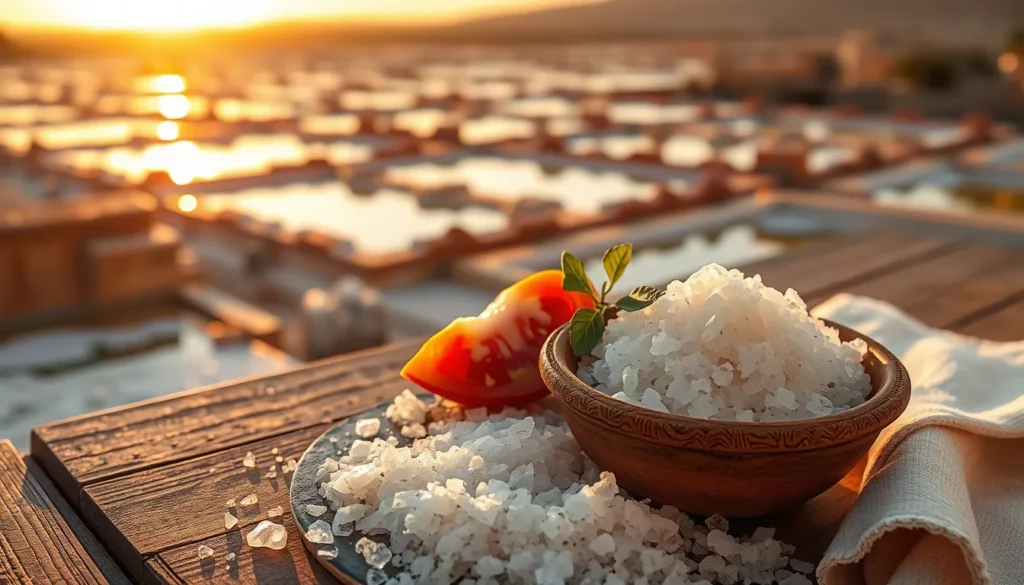
Salt has been central to Italian civilization since antiquity. The Romans built the Via Salaria (Salt Road) to transport salt from the salt pans of Ostia to the interior, and salt was often used as a form of payment (the origin of the word “salary”). In medieval times, salt production became a state monopoly in many Italian city-states, and the salt trade fueled the economies of Venice, Genoa, and Naples. The salt flats of Cervia (Emilia-Romagna) and Trapani (Sicily) have been active for centuries, producing sea salt through solar evaporation. A unique cultural anecdote: in the town of Cervia, the annual “Sposalizio del Mare” (Marriage to the Sea) ceremony reenacts the ancient ritual of blessing the salt pans. Contrary to myth, Italian salt was never exclusively imported; Italy has a long tradition of domestic salt production, especially along its coasts.
What’s In It
Sale is primarily sodium chloride, but its composition varies by source. Sea salt (sale marino) contains trace minerals like magnesium, calcium, and potassium, which affect flavor and color. Rock salt (sale gemma) is mined from ancient seabeds and is often less pure. The key preparation nuance is the grain size: sale grosso (coarse salt) is used for boiling pasta, preserving, and salt crusts; sale fino (fine salt) dissolves quickly and is used for table seasoning and baking. Italian salt is rarely iodized, unlike in many other countries. Differentiate from similar-sounding ingredients: sale is not to be confused with salamoia (brine) or salnitro (saltpeter, used in curing). Also, sale is distinct from the French sel, though both are salt; Italian salt often retains more moisture and mineral complexity due to traditional harvesting methods.
Regional Variations
Italy’s diverse geography yields several distinct types of sale, each with unique characteristics:
| Region | Type of Salt | Characteristics | Common Uses |
|---|---|---|---|
| Sicily | Sale di Trapani (fleur de sel) | Hand-harvested, delicate crystals, high moisture, rich in minerals | Finishing salt for grilled fish, vegetables, and chocolate |
| Emilia-Romagna | Sale di Cervia | Fine-grained, sweet flavor, low in bitterness | Bread baking, pasta water, preserving Parmigiano-Reggiano |
| Liguria | Sale di Sestri Levante | Coarse, grayish, from ancient salt pans | Preserving anchovies (acciughe sotto sale), seasoning pesto |
| Puglia | Sale di Margherita di Savoia | White, fine, high purity | Table salt, cheese making (mozzarella) |
| Alps (Trentino, Lombardy) | Smoked salt (affumicato) | Infused with smoke from local woods (beech, juniper) | Seasoning cured meats, game, and roasted potatoes |
How It’s Traditionally Eaten
Sale is not a dish itself but an essential component of nearly every Italian meal. It is used in the following ways: as a seasoning during cooking (e.g., adding sale grosso to pasta water, which should taste like the sea); as a finishing salt (e.g., sprinkling sale di Trapani on a slice of ripe tomato or grilled fish); in preserving (e.g., salt-cured anchovies, prosciutto, and capers); and in baking (e.g., adding sale fino to bread dough). Salt is also used in the production of many Italian cheeses, such as Parmigiano-Reggiano, where it is absorbed during brining. In terms of course placement, salt is not a course but a constant. It is used in primi (pasta, risotto), secondi (meat, fish), contorni (vegetables), and even dolci (some desserts like caramello salato). Salt is an everyday ingredient, but artisanal salts are often reserved for special occasions or as gifts.
Common Mistakes / What It’s Not
A frequent American-Italian misconception is that all salt is the same. In Italy, the type of salt matters greatly. Using fine table salt for pasta water is a mistake; coarse salt dissolves more slowly and seasons evenly. Another error is over-salting pasta water – the correct ratio is about 10 grams of salt per liter of water. Also, many believe that Italian salt is always iodized; in fact, iodized salt is rare in Italy, and most traditional recipes use natural sea salt. Sale is not a substitute for brine (salamoia) in preserving; brine is a solution of salt and water. Finally, sale is not the same as salnitro (potassium nitrate), which is used in some cured meats but is not a seasoning.
Where to Try It / What to Order
To experience authentic Italian sale, visit the salt pans of Trapani in Sicily, where you can tour the salt flats and purchase fleur de sel directly. In Cervia, the Salt Museum (Museo del Sale) offers tastings and historical exhibits. For travelers, ordering a dish that highlights salt is easy: ask for “pesce al sale” (fish baked in a salt crust) or “bistecca alla fiorentina” finished with coarse salt. In markets, look for “sale artigianale” from local producers. Festivals like the “Festa del Sale” in Cervia (September) celebrate the harvest with food stalls and demonstrations.
Related Dishes
FAQ
What is the difference between sale grosso and sale fino?
Sale grosso is coarse salt with larger crystals that dissolve slowly, ideal for pasta water and preserving. Sale fino is finely ground salt that dissolves quickly, used for table seasoning and baking.
Why is salt important in Italian cuisine?
Salt is essential for flavor enhancement, preservation of meats and cheeses, and texture in bread and pasta. It also plays a cultural role, with regional varieties reflecting local terroir.
What is the best salt for pasta water?
Coarse sea salt (sale grosso) is best because it dissolves evenly and seasons the pasta without making it overly salty. Use about 10 grams per liter of water.
Is Italian salt iodized?
No, most traditional Italian salt is not iodized. Iodized salt is uncommon in Italy; natural sea salt is preferred for its mineral complexity.
Can I substitute table salt for sale grosso in recipes?
Yes, but adjust the quantity. Table salt is denser and saltier by volume; use about half the amount. For pasta water, coarse salt is still recommended for even seasoning.


Leave a Reply