Short Answer
What Is Provola? Italian Cheese Explained
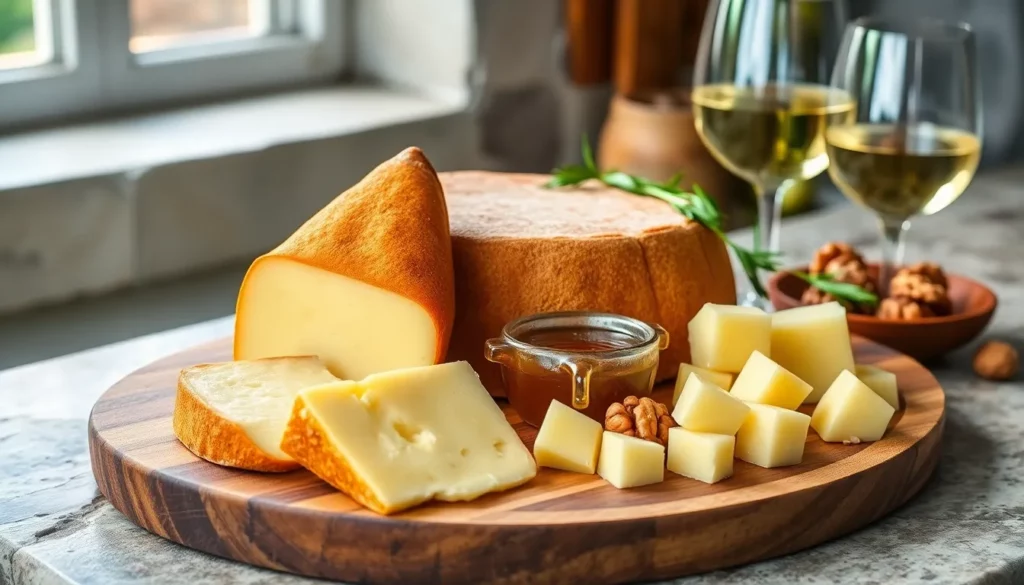
Provola is a semi-soft, stretched-curd cheese (pasta filata) originating from Southern Italy, primarily the regions of Campania, Sicily, and Calabria. It is made from cow’s milk, sometimes with added buffalo milk, and is known for its smooth, elastic texture and mild, buttery flavor. Provola is often smoked (affumicata) over straw or wood, giving it a distinctive golden rind and a subtle smoky aroma. It is typically shaped like a pear, a sausage, or a small melon, tied with string for hanging. Unlike its larger, aged cousin Provolone, Provola is usually consumed fresh or after a short aging period of a few weeks. It is a versatile table cheese, excellent for melting, and a staple in many Southern Italian antipasti and pasta dishes.
Origin & History
Provola has deep roots in the cheese-making traditions of Southern Italy, particularly in the regions of Campania (especially the province of Salerno) and Sicily. The name derives from the Latin provola, meaning “to roll,” referencing the technique of hand-stretching the curd into its characteristic shapes. Historical records suggest that stretched-curd cheeses have been produced in this area since at least the Middle Ages, with the method perfected by monks in monasteries. Unlike Provolone, which emerged later as a larger, aged cheese for export, Provola remained a local, artisanal product. Anecdotal evidence points to the town of Caserta as a historic center of Provola production, where it was often smoked using cherry wood or straw to preserve it before refrigeration. Today, Provola is protected under the Prodotto Agroalimentare Tradizionale (PAT) designation in several Italian regions, ensuring its traditional methods are maintained.
What’s In It
Provola is made from whole cow’s milk, though some artisanal versions incorporate buffalo milk for extra richness. The production process begins with the addition of rennet to warm milk, forming a curd that is then cut and left to acidify. The curd is heated in hot whey or water until it reaches a stretchable consistency, then hand-kneaded and pulled into the desired shape—often a pear, a sausage, or a small melon. The cheese is then brined for several hours to develop flavor and rind. For smoked Provola (Provola affumicata), the cheese is hung in a smokehouse and exposed to smoke from straw, hay, or wood chips for a period ranging from a few hours to several days. The key ingredients are simply milk, rennet, salt, and smoke (optional). No artificial additives are used. Provola is distinct from Provolone in its smaller size, shorter aging (typically 10–30 days), and softer texture. It is also different from Mozzarella, which is eaten very fresh and has a higher moisture content, while Provola is slightly drier and more flavorful.
Regional Variations
Provola varies significantly across Southern Italy, reflecting local milk sources, smoking techniques, and culinary traditions. Below is a comparison of the three main regional styles:
| Region | Milk Source | Shape & Size | Smoking | Flavor Profile | Typical Uses |
|---|---|---|---|---|---|
| Campania | Cow’s milk, sometimes with buffalo milk | Pear-shaped, 200–500 g | Often smoked with straw or cherry wood | Mild, buttery, with a delicate smoky finish | Table cheese, melted on pizza or pasta, in antipasti |
| Sicily | Cow’s milk (often from local breeds) | Sausage-shaped (salsiccia), 300–600 g | Frequently smoked with hay or wild fennel | More pronounced smoke, slightly tangy | Grilled, in pasta alla Norma, or as a snack |
| Calabria | Cow’s milk, sometimes with goat’s milk | Small melon or pear, 150–300 g | Smoked with peperoncino-infused wood | Spicy undertones, robust | Melted on bread, in spicy pasta dishes |
In addition, the Provola dei Nebrodi from Sicily is a specific PAT variety made from raw cow’s milk and aged for at least 20 days, often with a natural rind. The Provola affumicata di Cardito from Campania is another notable variant, smoked with straw and hay.
How It’s Traditionally Eaten
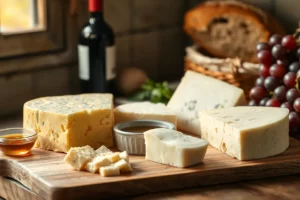
Provola is a versatile cheese that appears in multiple courses. As a table cheese, it is served in antipasti platters alongside cured meats, olives, and roasted vegetables. It can be sliced and eaten fresh, or grilled until soft and slightly charred. In primi piatti (first courses), Provola is often melted into pasta dishes such as pasta con la provola (pasta with melted Provola and tomato sauce) or used as a topping for pizza. In secondi, it may be baked with vegetables like eggplant or zucchini. Smoked Provola is particularly prized for its ability to add depth to sauces and risottos. It is also a common ingredient in frittate and panini. While it is an everyday cheese in Southern Italy, it also appears in festive dishes, especially during Easter and Christmas, when it is baked in bread or served with honey and nuts.
Common Mistakes / What It’s Not
Many American-Italian misconceptions surround Provola. First, it is not the same as Provolone. Provolone is a larger, aged cheese with a sharper flavor, while Provola is smaller, softer, and often smoked. Second, Provola is not a fresh cheese like Mozzarella; it has a lower moisture content and a firmer texture. Third, the smoked variety is not artificially flavored; the smoke is natural and integral to the cheese’s character. Fourth, Provola is not a cheese for long aging—it is best consumed within a few weeks of production. Finally, it is not a substitute for Parmesan in grating; it is a melting cheese. When buying, look for the PAT label to ensure authenticity. Avoid pre-shredded or plastic-wrapped versions that lack the traditional rind and aroma.
Where to Try It / What to Order
To experience authentic Provola, visit Southern Italy. In Campania, head to the Caseificio (dairy shops) in Salerno or Caserta, where you can buy fresh Provola directly from producers. In Sicily, the town of Nebrodi is famous for its Provola dei Nebrodi. Many trattorie in Naples serve Pasta con la Provola—ask for it with a simple tomato sauce and basil. In Rome, look for Provola affumicata in gastronomie (deli shops) and order it grilled as an antipasto. For travelers, the annual Sagra della Provola (Provola Festival) in Cardito, Campania, held in September, offers tastings and demonstrations. When ordering, specify whether you want dolce (mild) or affumicata (smoked). Pair it with a light red wine like Falanghina or a crisp Greco di Tufo.
Related Dishes
FAQ
What is the difference between Provola and Provolone?
Provola is smaller, softer, and often smoked, with a mild flavor and short aging (10–30 days). Provolone is larger, aged longer (2–12 months), and has a sharper, more pungent taste. Provola is typically eaten fresh or melted, while Provolone can be sliced or grated.
Is Provola a fresh cheese?
No, Provola is not a fresh cheese like Mozzarella. It is a semi-soft, stretched-curd cheese that undergoes a brief aging period (10–30 days), giving it a firmer texture and more concentrated flavor than fresh cheeses.
How should I store Provola?
Wrap Provola in wax paper or a damp cloth and store it in the refrigerator's cheese drawer. It is best consumed within a week of purchase. Smoked Provola can last slightly longer. Avoid plastic wrap, which can cause sweating and spoilage.
Can I use Provola in cooking?
Yes, Provola is an excellent melting cheese. It is commonly used in pasta dishes, on pizza, in frittatas, and for grilling. Smoked Provola adds a distinctive flavor to sauces and risottos.
Where can I buy authentic Provola?
Look for Provola with the PAT label in Italian specialty shops or online retailers. In Italy, visit caseifici (dairies) in Campania, Sicily, or Calabria. Avoid pre-packaged, shredded versions that lack traditional quality.
Leave a Reply