
Short Answer
What Is Pesca, pl. pesche? Italian Fruit Explained
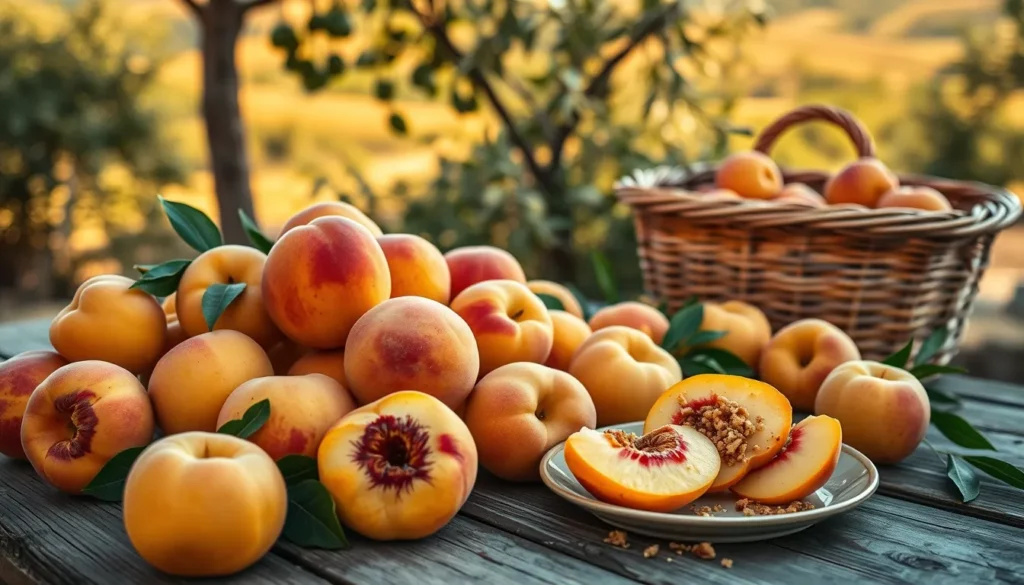
Pesca (plural pesche) is the Italian word for peach, a stone fruit belonging to the species Prunus persica. Native to China, the peach was introduced to Italy via Persia (modern-day Iran) and has become a beloved ingredient in Italian cuisine, particularly in regions such as Emilia-Romagna, Campania, and Sicily. Key ingredients: the fruit itself, often consumed fresh, poached, grilled, or preserved in jams and syrups. The peach is celebrated for its fragrant aroma, juicy flesh, and balance of sweetness and acidity.
Origin & History
The peach’s journey began in China over 8,000 years ago, where it was revered as a symbol of immortality and longevity. From China, it spread along the Silk Road to Persia, then to Greece and Rome. The Romans were instrumental in cultivating peaches throughout the Italian peninsula, and by the Renaissance, peaches were a prized feature of Italian gardens and orchards. Historical records from Pliny the Elder mention peaches as a luxury fruit. In Italy, the peach became associated with fertility and abundance, often appearing in still-life paintings and festive decorations. A notable anecdote: the Pesca di Verona (Verona peach) has been cultivated since the 16th century and now holds IGP (Indicazione Geografica Protetta) status, reflecting its deep regional roots.
What’s In It
Core ingredients: the peach itself, which comes in two main flesh types: yellow-fleshed (e.g., ‘Redhaven’, ‘Pesca di Verona’) and white-fleshed (e.g., ‘Pesca di Bivona’, ‘Pesca di Siano’). There are also donut peaches (Pesca tabacchiera), flat and sweet. Preparation nuances: peaches are often eaten raw, but they also shine in cooked dishes. They are poached in wine or syrup, grilled to caramelize sugars, or baked into desserts. A classic Italian preparation is Pesche ripiene (stuffed peaches), where halved peaches are filled with amaretti cookies and cocoa, then baked. Differentiate from Pesca noce (nectarine), which is a fuzzless mutation of the peach; both are botanically identical but differ in skin texture and slight flavor variations.
Regional Variations
Italy’s diverse climates and traditions give rise to distinct peach varieties and uses. Below is a comparison of three major regions:
| Region | Variety | Typical Use |
|---|---|---|
| Emilia-Romagna | Pesca di Verona (yellow) | Baked in Pesche ripiene; also used in jams and tarts. |
| Campania | Pesca di Siano (white) | Eaten fresh or preserved in syrup; known for intense aroma. |
| Sicily | Pesca di Bivona (white) | Primarily fresh consumption; also used in granita and gelato. |
Other notable variations include the Pesca di Leonforte (Sicily, late-ripening) and the Pesca di Bussolino (Piedmont, small and aromatic). Each region celebrates its peaches with local festivals, such as the Sagra della Pesca in Bivona.
How It’s Traditionally Eaten
In Italian cuisine, peaches are most often served as a dessert or snack. They are typically eaten fresh at the end of a meal, sometimes accompanied by a glass of Moscato or Prosecco. A classic pairing is prosciutto e pesca (prosciutto with peach), a summer antipasto that balances salty and sweet. Peaches also appear in savory salads with arugula, mozzarella, and balsamic vinegar. For special occasions, Pesca Melba (peach Melba) – invented by Auguste Escoffier for the Australian soprano Nellie Melba – is a refined dessert of poached peaches, vanilla ice cream, and raspberry sauce. Peaches are also preserved as pesche sciroppate (peaches in syrup) for year-round enjoyment.
Common Mistakes / What It’s Not
A frequent misconception is that peaches are only for sweet dishes. In fact, they work beautifully in savory contexts, such as grilled peach salads or paired with aged cheeses like Gorgonzola. Another error is confusing pesca with pesce (fish) – a simple spelling slip that changes the meaning entirely. American-Italian adaptations like peach cobbler or peach pie are not traditional Italian; Italy favors simpler preparations that highlight the fruit’s natural flavor. Also, note that Pesca noce (nectarine) is not a different fruit but a smooth-skinned peach; both are Prunus persica. When selecting peaches, avoid those that are rock-hard or have green undertones; they will not ripen properly off the tree.
Where to Try It / What to Order
To experience the best Italian peaches, visit during summer (June to September) and seek out local markets or sagre (festivals). In Sicily, the Sagra della Pesca di Bivona (late July) offers tastings of the prized white peach. In Emilia-Romagna, order Pesche ripiene at a trattoria in Verona or Modena. For a refined dessert, request Pesca Melba at a fine-dining restaurant. Travelers should look for DOP or IGP labels, such as Pesca di Verona IGP or Pesca di Bivona DOP, which guarantee authenticity. When ordering, ask for pesche fresche (fresh peaches) or pesche sciroppate (canned in syrup) if out of season.
Related Dishes
FAQ
What is the difference between a peach and a nectarine?
Botanically, nectarines (Pesca noce) are the same species as peaches (Prunus persica) but have a recessive gene that results in smooth skin instead of fuzz. Flavor-wise, nectarines are often slightly firmer and more aromatic, but both can be used interchangeably in recipes.
How do you choose a ripe peach?
Look for peaches that yield slightly to gentle pressure, have a fragrant aroma, and a deep color (yellow or white depending on variety). Avoid those with green undertones or rock-hard texture, as they will not ripen properly. Peaches ripen at room temperature; refrigerate only when fully ripe.
What are the best Italian peach varieties?
Top varieties include Pesca di Verona IGP (yellow, from Veneto), Pesca di Bivona DOP (white, from Sicily), and Pesca di Siano (white, from Campania). Each has a unique flavor profile and is celebrated in local cuisine.
Can you cook with peaches?
Absolutely. Peaches are excellent grilled, poached, baked, or used in savory dishes. In Italy, they are often stuffed and baked (Pesche ripiene), poached in wine, or made into jams and syrups. They pair well with prosciutto, cheese, and balsamic vinegar.
Are peaches native to Italy?
No, peaches originated in China and were introduced to Italy via Persia and Greece. However, Italy has a long history of peach cultivation dating back to Roman times, and many unique varieties have developed over centuries.




Leave a Reply