Short Answer
Getting There
Trieste is well-connected to major Italian and European hubs, primarily via air and rail. The nearest practical airport is Trieste Friuli Venezia Giulia Airport (TRS), located approximately 30 kilometers northwest of the city center. Travelers can reach the city via shuttle bus, taxi, or rental car, with transfer times typically ranging from 30 to 45 minutes depending on traffic. For those flying into larger international hubs, Venice Marco Polo (VCE) and Milan Malpensa (MXP) offer frequent connections, though reaching Trieste from these airports requires a combination of bus and train or a direct shuttle service.
Rail travel is a highly efficient option for visitors already in Italy. Direct high-speed and intercity trains connect Trieste Centrale station to Venice Santa Lucia, with journey times averaging around two to two and a half hours. Connections from Milan require a change in Venice or Verona and take approximately four to five hours total. Direct routes from Rome are less common and usually involve a transfer in Bologna or Venice, extending travel time to over six hours. Bus services operated by regional carriers also link Trieste to nearby cities like Udine, Gorizia, and Ljubljana in Slovenia. Travelers should verify current schedules and booking requirements with official rail and transport operators before departure, as frequencies may vary by season.
Getting Around
Trieste’s city center is compact and highly walkable, making pedestrian exploration the preferred method for most visitors. The main attractions, including Piazza Unità d’Italia and the Old Town, are clustered within manageable distances. Local public transport is managed by Trieste Trasporti, offering an extensive network of buses that cover the city and surrounding hills. Single tickets and daily passes are available and should be validated upon boarding. Taxis are readily available at designated ranks near the piazza and train station, and ride-hailing services may operate intermittently.
Visitors should be aware of the Bora, a strong northeasterly wind that can affect walking conditions, particularly along the waterfront and exposed hillsides. While a car is unnecessary for exploring the city center, it may be useful for day trips to nearby villages or wineries. However, parking in the historic center is limited and often restricted to residents, so visitors driving into the city should seek designated public parking garages. Cycling is possible along the waterfront promenade, but the hilly terrain inland can be challenging. Accessibility is generally good in the main squares, though some cobblestone streets in the Old Town may pose difficulties for wheelchairs.
Best Time to Visit
The ideal time to visit Trieste depends on weather preferences and crowd tolerance. Spring (April to June) and early autumn (September to October) offer mild temperatures, manageable tourist numbers, and vibrant cultural events. During these months, daylight hours are sufficient for extensive sightseeing, and outdoor cafes are pleasant without the peak summer humidity. Summer (July and August) brings warmer weather and a lively atmosphere, particularly along the Barcola waterfront, but accommodation prices rise, and the city can feel crowded with domestic tourists.
Winter (November to March) is quieter and often more affordable, appealing to travelers interested in museums and coffee culture without the crowds. However, visitors should prepare for cooler temperatures and the potential for the Bora wind, which can be intense during this season. Some outdoor attractions or boat services may operate on reduced schedules. Established festivals, such as the Barcolana regatta in October, draw significant crowds and should be booked well in advance. Travelers are advised to check current event dates and weather forecasts before finalizing plans, as local conditions can vary.
Top Things to Do
Piazza Unità d’Italia
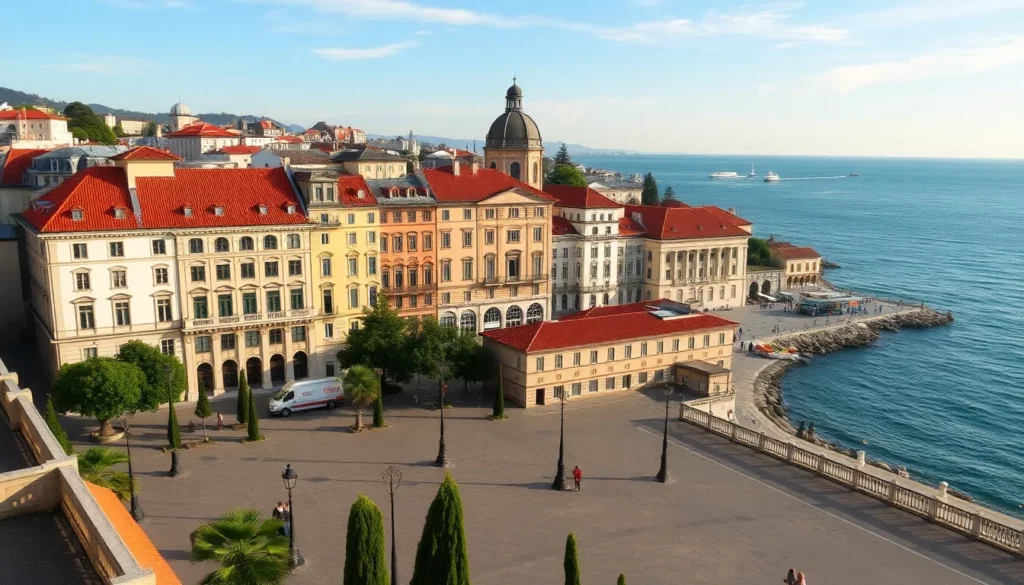
As the largest sea-facing square in Europe, this monumental space serves as the heart of Trieste. Flanked by grand Habsburg-era buildings, including the City Hall and the Lloyd Triestino headquarters, it offers a striking introduction to the city’s imperial history. Visitors should take time to admire the architecture, visit the fountain, and enjoy an aperitivo at one of the surrounding cafes. It is suitable for all travelers and serves as a central meeting point for orienting yourself in the city.
Castello di Miramare
Located on a rocky promenade a few kilometers from the center, this 19th-century castle was built for Archduke Ferdinand Maximilian. The site includes preserved interiors, extensive gardens, and a park overlooking the Adriatic. It is ideal for history enthusiasts and photographers. Reachable by bus or train, visitors should allocate at least half a day to explore the castle and grounds comfortably. Check opening hours in advance as they may change seasonally.
Castello San Giusto
Perched on the hill above the Old Town, this fortress offers panoramic views of the city and Gulf of Trieste. The complex includes a cathedral, a museum featuring historical weapons and artifacts, and peaceful courtyards. The climb up the hill provides exercise and vantage points, making it suitable for active travelers. It is less crowded than Miramare and offers a deeper dive into local medieval history.
Historic Coffee Houses
Trieste is renowned as the coffee capital of Italy, with a tradition dating back to the Austro-Hungarian Empire. Visiting historic cafes such as Caffè San Marco or Caffè Tommaseo provides insight into the literary and political history of the city. These venues maintain original decor and serve traditional Viennese-style pastries alongside espresso. This experience suits culture lovers and those seeking a relaxed break during sightseeing.
The Jewish Ghetto and Museum
Trieste hosts one of the most significant Jewish communities in Italy. The Old Ghetto area features synagogues and the Jewish Museum, which details the community’s history and the tragic events of the Holocaust at the nearby Risiera di San Sabba. This site is essential for understanding the city’s complex cultural layers. Visitors should check guided tour availability and dress modestly when entering religious sites.
Barcola Waterfront
For a taste of local leisure, the Barcola district offers a long promenade along the sea, lined with beaches, bars, and green spaces. It is where locals come to swim, jog, or enjoy sunset aperitivos. This area is perfect for families and travelers seeking a relaxed atmosphere away from the historic center. During summer, it becomes a hub of activity, while in winter, it offers brisk, scenic walks.
Where to Eat
Trieste’s cuisine reflects its position as a crossroads between Latin and Central European cultures. Seafood is prominent, with dishes like grilled calamari, baccalà (salt cod), and risotto al nero di seppia commonly found. Hearty meat dishes such as goulash and jota (a sauerkraut and bean soup) highlight the Austro-Hungarian influence. The city is also famous for its prosciutto, particularly Prosciutto di San Daniele from the nearby region.
Meal timing follows standard Italian customs, with lunch typically served between 12:30 PM and 2:30 PM and dinner starting around 7:30 PM or later. Many kitchens close between meals, so planning ahead is advisable. Wine lovers should explore local varieties like Terrano and Malvasia. Street food options include panini with porchetta or fresh fish from markets. Travelers should look for Osterie and Trattorias for authentic, home-style cooking rather than tourist-focused venues near the main square.
Where to Stay
First-time visitors should prioritize the City Center near Piazza Unità d’Italia for maximum walkability and access to major sights. This area offers a range of accommodations from luxury hotels to boutique guesthouses, though noise levels can be higher during events. Budget travelers might consider areas slightly further inland or near the train station, which offer good bus connections and lower rates.
Couples seeking romance may prefer the Old Town (Città Vecchia), characterized by narrow cobblestone streets and historic charm, though accessibility can be limited. Families might find the Barcola district appealing during summer months due to proximity to beaches and parks, but it requires transport to reach the center in other seasons. Visitors with cars should verify parking availability with their accommodation, as restricted traffic zones are common in the historic core. Generally, staying within the central grid ensures easy access to dining and transport hubs.
Suggested Itinerary
2-Day Highlights
Day 1: Start at Piazza Unità d’Italia for morning coffee and architecture viewing. Walk through the Old Town to Castello San Giusto for lunch and views. Spend the afternoon exploring the Jewish Ghetto and Museum. Enjoy dinner at a traditional Osteria near the canal.
Day 2: Take a morning bus or train to Castello di Miramare. Return to the city for lunch at a historic coffee house. Spend the late afternoon walking the Barcola waterfront. End with a sunset aperitivo back at the Piazza.
4-Day Relaxed Stay
Day 1: Arrival and orientation walk around Piazza Unità. Visit the Trieste Cathedral and browse local shops. Dinner in the center.
Day 2: Full morning at Miramare Castle and Park. Afternoon visit to the Revoltella Museum for modern art. Evening coffee at Caffè San Marco.
Day 3: Explore the Jewish heritage sites and the Risiera di San Sabba memorial. Late afternoon relaxation at Barcola. Seafood dinner near the port.
Day 4: Day trip to nearby Aquileia or local wineries. Return for final shopping and farewell dinner featuring regional specialties like jota or goulash.
Local Etiquette & Practical Tips
Visitors should dress modestly when entering churches and religious sites, covering shoulders and knees. Tipping is not mandatory but leaving small change or rounding up the bill in restaurants is appreciated for good service. Greetings are formal; use “Buongiorno” during the day and “Buonasera” in the evening. While Italian is the primary language, the local Triestino dialect and Slovenian influences are present; speaking slowly and clearly helps in communication.
Credit cards are widely accepted, but carrying some cash is useful for small cafes or markets. Be mindful of the Bora wind; secure hats and hold onto belongings when walking near the waterfront during windy periods. Personal security is generally good, but standard precautions against pickpocketing in crowded areas apply. Accessibility varies, with modern areas being wheelchair-friendly while historic zones may have steps or cobblestones. Check specific venue access details if mobility is a concern.
Day Trips from Trieste
Aquileia
This ancient Roman city features significant archaeological ruins and a stunning basilica with mosaics. It is reachable by train or bus in approximately one hour. Best visited as a full-day trip for history enthusiasts. Verify train schedules as frequency may be limited on weekends.
Grado
Known as the “Golden Island,” Grado is a nearby lagoon town with beaches and a historic center. It is about 30 to 40 minutes away by car or bus. Ideal for a half-day relaxation or swimming excursion during summer months. Public transport connections are reliable during peak season.
Ljubljana, Slovenia
The capital of Slovenia is less than two hours away by bus or car, offering a distinct Central European atmosphere. This trip requires a full day due to travel time and border crossings. Ensure you have necessary identification for border control. It provides a contrasting cultural experience to Trieste.
Vipava Valley
Located just across the border in Slovenia, this region is known for wine production and scenic landscapes. It is best explored by car for flexibility. Suitable for wine tourists and nature lovers. Plan for a full day to visit multiple wineries and enjoy local cuisine.
Prosecco Road
The hills near Trieste offer vineyards producing local wines similar to Prosecco. Driving tours allow visitors to sample wines and enjoy views of the Gulf. Best undertaken with a designated driver or guided tour. Check opening hours of wineries in advance as appointments may be required.
Gorizia
A border town split between Italy and Slovenia, offering unique historical insights and castles. It is a short train or bus ride from Trieste. Suitable for a half-day cultural excursion. The European Gorizia project highlights cross-border cooperation worth exploring.
FAQ
Is Trieste worth visiting?
Yes, Trieste offers a unique blend of Italian and Central European culture, historic architecture, and coastal scenery, making it ideal for culture and food lovers.
How many days do you need in Trieste?
Two days are sufficient for main highlights, but four days allow for a relaxed pace, museum visits, and local neighborhood exploration.
Is Trieste safe and walkable?
Trieste is generally safe with low crime rates and a highly walkable center, though visitors should remain aware of wind conditions and standard urban precautions.
Leave a Reply