
Short Answer
What It Is
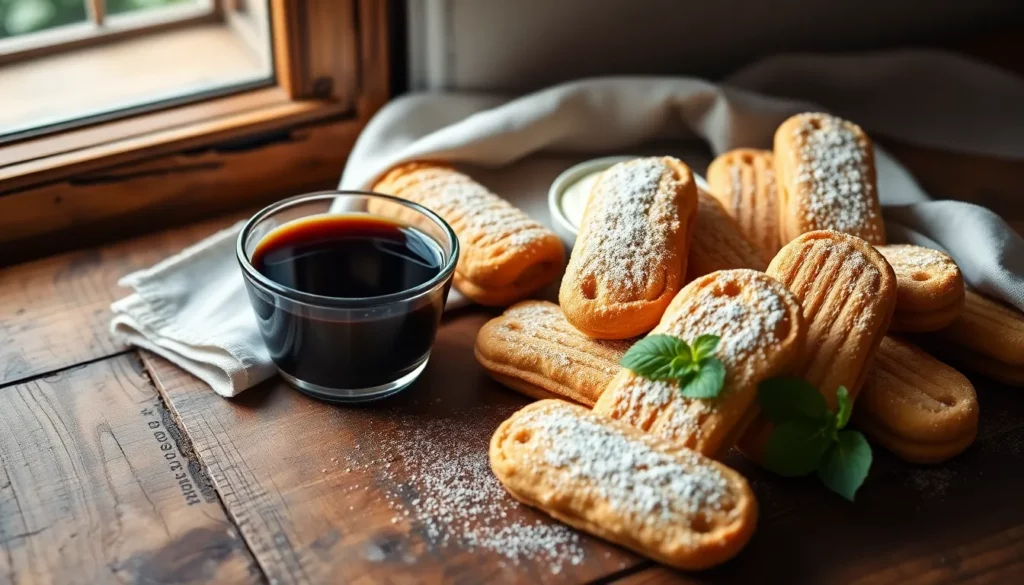
Savoiardi (Italian for “Savoyards”) are light, sponge-like biscuits made from egg yolks, sugar, and flour, with a characteristic elongated shape and a dusting of powdered sugar. They originated in the 14th century at the court of the Duchy of Savoy (now part of Italy and France) and were created to honor the visit of the King of France. The biscuit’s airy texture comes from the careful folding of stiffly beaten egg whites into the batter, a technique that predates modern chemical leavening.
Production follows a strict traditional method: fresh eggs are separated, yolks are whipped with sugar until pale and thick, then flour is gently folded in. Separately, egg whites are beaten to stiff peaks and incorporated. The batter is piped into finger-like shapes, dusted with powdered sugar, and baked at moderate heat until dry but not browned. Authentic Savoiardi have a crisp exterior and a soft, porous interior that readily absorbs liquids—a key property for layered desserts.
While Savoiardi are not protected under a European DOP or PGI designation, they are recognized as a Prodotto Agroalimentare Tradizionale (PAT) in several Italian regions, including Piedmont, Lombardy, and Veneto. This means that producers following traditional recipes can label them as such. The best Savoiardi are still made in Italy, often by artisanal bakeries or historic biscuit manufacturers.
Types & Grades
Savoiardi are generally classified by size, texture, and intended use. The table below outlines the main grades found in Italian professional kitchens and retail.
| Grade | Size | Texture | Common Use |
|---|---|---|---|
| Classic (standard) | ~10–12 cm long | Crisp outside, soft inside | Tiramisù, zuppa inglese |
| Mini (piccoli) | ~5–6 cm long | Same as classic | Individual desserts, garnishes |
| Extra-dry (secco) | ~10–12 cm | Very crisp, less porous | Longer shelf life, used for crumb crusts |
| Soft (morbido) | ~10–12 cm | Softer, more cake-like | Eaten as a snack, not ideal for soaking |
Artisanal producers may also offer aged Savoiardi (invecchiati), which are dried for several weeks to develop a deeper flavor and extra crispness, prized for certain desserts where a firmer structure is needed.
How It’s Used in Cooking
Savoiardi are most famous as the building block of tiramisù, the iconic Italian dessert from Veneto. The biscuits are briefly dipped in espresso and layered with mascarpone cream, cocoa, and sometimes liqueur. Their ability to absorb liquid without disintegrating is crucial. In zuppa inglese, Savoiardi are soaked in alkermes liqueur or rum and layered with custard and chocolate. They also appear in charlotte desserts, where they line the mold and hold fruit or cream fillings.
Beyond desserts, Savoiardi can be crushed into crumbs for crusts or used as a base for savoiardo pudding (budino di savoiardi). In some regions, they are served with sweet wine or as a simple snack with coffee. Professional chefs often use them to add structure to frozen desserts or as a textural element in parfaits.
“Savoiardi are the silent architects of Italian dolci—they provide the structure that allows cream and coffee to become a masterpiece.” – Traditional pastry chef saying
How to Choose/Identify Authentic Savoiardi
When buying Savoiardi, look for these authenticity cues:
- Origin: Authentic Savoiardi are made in Italy. Check the label for “Prodotto in Italia” or specific regions like Piedmont or Lombardy.
- Ingredients: The list should be short: wheat flour, eggs, sugar, and possibly natural flavorings (vanilla). Avoid hydrogenated fats, preservatives, or artificial leavening.
- Texture: A genuine Savoiardo should be light and porous, with a slight resistance when bitten. It should not be rock-hard or overly crumbly.
- Appearance: The biscuit should have a pale golden color, a dusting of powdered sugar, and a slight dome on top. The sides should be straight, not bulging.
- Certifications: Look for PAT (Traditional Italian Product) labels or indications of artisanal production. Some premium brands carry IFS or BRC certifications for quality.
For commercial buyers, consider the soaking test: dip a Savoiardo in coffee for 2–3 seconds; it should absorb quickly but hold its shape for at least 30 seconds before softening. Poor-quality biscuits turn to mush immediately.
Substitutes
While no substitute perfectly replicates Savoiardi, Italian cuisine offers alternatives for specific applications:
- Pavesini – Smaller, thinner, and more delicate biscuits from the same family. They are ideal for lighter desserts or when a less pronounced biscuit flavor is desired.
- Biscotti di Novara – A regional variation from Piedmont, slightly denser but with a similar sponge texture. They work well in tiramisù if Savoiardi are unavailable.
- Pan di Spagna (sponge cake) – Cut into strips or cubes, it can replace Savoiardi in layered desserts, though it absorbs liquid more slowly and may require longer soaking.
- Ladyfingers (generic) – Many countries produce their own version, but they often contain leavening agents or fats that alter texture. For authentic Italian recipes, stick to Italian imports.
In a pinch, homemade Savoiardi are simple to prepare and often superior to mass-produced alternatives.
Conclusion
Savoiardi are more than just a biscuit; they are a testament to Italian pastry craftsmanship. From their royal origins in Savoy to their starring role in tiramisù, these delicate sponge fingers embody the balance of simplicity and technique. Whether you are a professional chef or a home cook, understanding the grades, authenticity markers, and proper use of Savoiardi will elevate your desserts. Choose Italian-made, check the ingredients, and respect the biscuit’s ability to absorb—and you will create dolci that honor tradition.
FAQ
Are Savoiardi the same as ladyfingers?
Yes, Savoiardi are the Italian version of ladyfingers. The term 'ladyfingers' is used in English-speaking countries, but authentic Italian Savoiardi are made with a specific recipe and technique that yields a lighter, more absorbent biscuit.
Can I make Savoiardi at home?
Absolutely. Homemade Savoiardi require only eggs, sugar, and flour. The key is to beat the egg whites to stiff peaks and fold them gently into the yolk mixture. They are easier to make than many think and often taste better than store-bought.
What is the best way to store Savoiardi?
Store Savoiardi in an airtight container at room temperature, away from humidity. They will keep for 2–4 weeks. For longer storage, freeze them in a sealed bag for up to 3 months; thaw at room temperature before use.

Leave a Reply