
Short Answer
What It Is
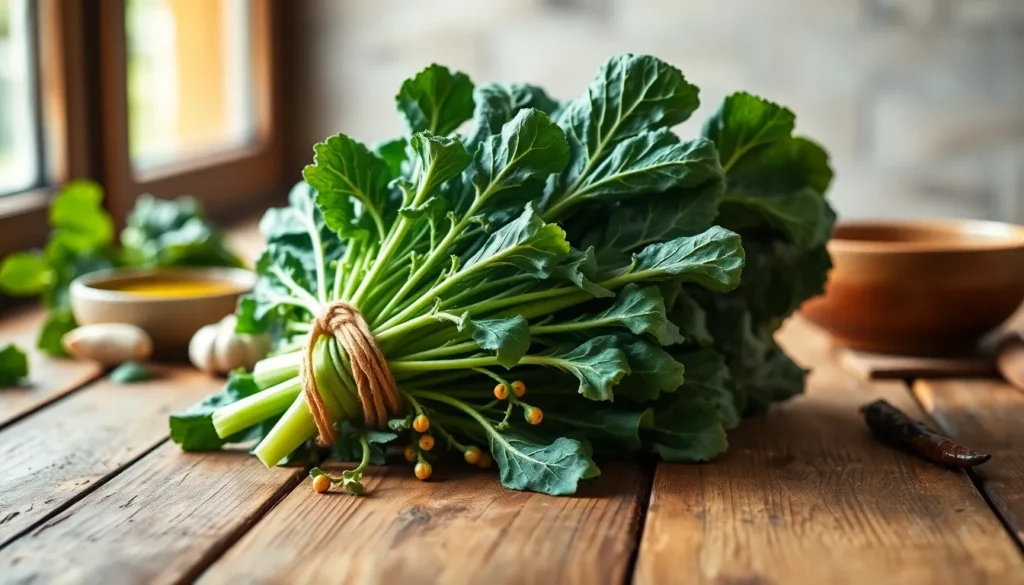
Broccoli rabe (Brassica rapa subsp. rapa), also known as rapini, is a leafy green vegetable that belongs to the turnip family. Despite its name, it is not a type of broccoli but rather a distinct species closely related to turnips and mustard greens. The plant produces small, broccoli-like florets, tender stems, and deeply lobed dark green leaves, all of which are edible. Its flavor is famously bitter, peppery, and slightly nutty—a characteristic that has made it a cornerstone of Southern Italian cuisine, particularly in the regions of Puglia, Campania, and Lazio.
While broccoli rabe does not hold a DOP (Denominazione di Origine Protetta) status, a specific variety known as Cima di Rapa IGP (Indicazione Geografica Protetta) is recognized by the European Union. This PGI designation applies to rapini grown in the provinces of Bari, Brindisi, Foggia, Lecce, and Taranto in Puglia, where traditional cultivation methods and local ecotypes are used. The production involves sowing in late summer or early autumn, harvesting the tender flowering tops before the buds fully open, and often hand-picking to ensure quality. The IGP status guarantees that the product originates from this specific geographic area and meets defined quality standards.
Historically, broccoli rabe has been cultivated in Italy since Roman times, though it gained prominence in the 18th and 19th centuries as a peasant food in the Mezzogiorno. Its resilience in poor soils and its ability to thrive in cool weather made it a reliable winter vegetable. Today, it is celebrated for its bold flavor and nutritional density—rich in vitamins A, C, and K, as well as calcium and iron.
Types & Grades
Broccoli rabe is classified primarily by harvest time and variety. The most common commercial grades are based on stem thickness, leaf-to-floret ratio, and bitterness level. Below is a table summarizing the main types:
| Type | Harvest Period | Characteristics | Typical Use |
|---|---|---|---|
| Sessantina (60-day) | Early autumn | Thin stems, many small florets, mild bitterness | Quick sautés, salads |
| Novantina (90-day) | Late autumn to winter | Thicker stems, larger leaves, more intense bitterness | Braises, pasta dishes |
| Cima di Rapa IGP | November to March | Uniform size, bright green, tender florets, balanced bitterness | Traditional Pugliese recipes |
| Wild Rapini (Rapini selvatico) | Spring | Smaller, more pungent, foraged | Specialty dishes, pesto |
In professional kitchens, grades are often determined by stem diameter: Fine (≤5 mm) for delicate preparations, Medium (5–8 mm) for general cooking, and Coarse (>8 mm) for long braises or stocks. The bitterness level can also be categorized as dolce (sweet, mild) or amaro (bitter, strong), with the latter being more traditional in Southern Italy.
How It’s Used in Cooking
Broccoli rabe’s assertive flavor requires careful handling. The most iconic preparation is Orecchiette con Cime di Rapa, a pasta dish from Puglia where the greens are blanched, then sautéed with garlic, anchovies, chili flakes, and olive oil, and tossed with handmade orecchiette. The bitterness of the rapini cuts through the richness of the pasta and oil, creating a perfect balance.
Other traditional uses include:
- Sautéed rapini – Blanched then quickly fried with garlic and peperoncino, served as a contorno (side dish) for grilled meats or sausages.
- Rapini in pizza – Used as a topping on white pizzas, often paired with ricotta or sausage.
- Rapini frittata – Chopped and folded into eggs with pecorino cheese.
- Rapini and bean soup – Combined with cannellini beans in a hearty winter minestra.
- Rapini pesto – Blanched leaves blended with almonds, garlic, and olive oil for a bitter twist on classic pesto.
Professional chefs often blanch the greens in salted boiling water for 2–3 minutes, then shock them in ice water to preserve color and reduce bitterness. The cooking water can be reserved for pasta or soups, as it carries some of the vegetable’s flavor.
How to Choose/Identify Authentic Broccoli Rabe
When selecting broccoli rabe, look for these authenticity cues:
- Appearance: Bunches should have firm, crisp stems; dark green, unblemished leaves; and compact, tightly closed florets. Avoid any yellowing or wilting.
- Smell: A fresh, slightly peppery aroma. Any mustiness indicates age.
- Texture: Stems should snap cleanly when bent. If they are limp or rubbery, the vegetable is past its prime.
- Labeling: For authentic Italian rapini, look for the IGP Cima di Rapa logo or indication of origin from Puglia. Supermarket produce may be labeled simply as “broccoli rabe” or “rapini” without geographic indication.
- Seasonality: Peak season is from November to March. Off-season imports may be less flavorful.
- Organic certification: While not required, organic farming often yields more intense flavor due to stress-induced compounds.
For commercial buyers, request certificates of origin and ask suppliers about the specific variety (e.g., Sessantina vs. Novantina) to match the intended culinary application.
Substitutes
If broccoli rabe is unavailable, several Italian greens can serve as substitutes, each with a different flavor profile:
- Broccoli (Calabrese) – Milder and sweeter; use the florets and peeled stems. Not a direct substitute for bitterness but works in pasta dishes if you add a pinch of mustard greens.
- Turnip greens – Closest in bitterness and texture. Blanch and sauté similarly. They are a traditional substitute in many Southern Italian households.
- Kale (cavolo nero or curly) – Less bitter but hearty. Use in soups or braises; add a squeeze of lemon to mimic acidity.
- Mustard greens – More pungent and spicy. Use sparingly, and blanch twice to reduce heat.
- Dandelion greens – Very bitter, similar to wild rapini. Excellent for sautéing with garlic and chili.
When substituting, adjust cooking times and seasoning. For example, if using kale, add a dash of red wine vinegar to replicate the tanginess of broccoli rabe.
Conclusion
Broccoli rabe is a uniquely bitter, nutrient-dense green that has shaped the culinary identity of Southern Italy. From its PGI-protected Cima di Rapa in Puglia to its versatile use in pasta, sides, and soups, this vegetable rewards those who embrace its bold character. When selecting, prioritize freshness and origin; when cooking, balance its bitterness with fat, salt, and acid. Understanding its varieties and substitutes ensures that even when authentic rapini is out of season, the spirit of Italian cooking can be maintained.
FAQ
Is broccoli rabe the same as broccoli?
No. Broccoli rabe (rapini) is a different species (Brassica rapa) related to turnips and mustard greens, while common broccoli (Brassica oleracea) is a cabbage relative. Rapini has a much more bitter, peppery flavor and produces smaller florets and more leaves.
How do you reduce the bitterness of broccoli rabe?
Blanching the greens in salted boiling water for 2–3 minutes, then shocking them in ice water, helps mellow the bitterness. Cooking with fat (olive oil), salt, and acidic ingredients like lemon juice or vinegar also balances the flavor.
What is the best substitute for broccoli rabe in Italian recipes?
Turnip greens are the closest substitute in terms of bitterness and texture. For a milder option, use broccoli florets with a handful of arugula. Kale or mustard greens can also work with adjustments to cooking time and seasoning.
Leave a Reply