
Short Answer
What Is Aranciata? Italian Beverage Explained
Aranciata (pronounced ah-rahn-CHAH-tah) is a sparkling, non‑alcoholic orange soft drink originating in Italy. Unlike many commercial orange sodas, authentic Italian aranciata is made with real orange juice, natural flavors, and carbonated water, often with a balanced sweetness and a distinct bitter note from the fruit’s zest. It is typically served chilled as a refreshing beverage, either on its own or as a mixer. The drink is deeply rooted in Italian café culture and is a common sight at bars, restaurants, and family gatherings across the country.
Origin & History
The history of aranciata begins in the early 20th century, when Italian entrepreneurs began bottling carbonated fruit beverages. The first commercial aranciata is widely credited to the San Pellegrino company, which launched its version in 1932. However, the concept of sweetened, sparkling orange drinks existed earlier in small soda fountains. The drink gained popularity as a non‑alcoholic alternative to wine and aperitifs, especially in the post‑war years. A popular myth claims that aranciata was invented by a pharmacist in Naples who mixed orange juice with carbonated water for medicinal purposes, but no solid evidence supports this. What is certain is that by the 1950s, aranciata had become a national icon, with brands like Fanta (originally created in Germany during WWII) later entering the market but never surpassing the authentic Italian versions. Today, aranciata is protected by no official denomination, but its identity is tied to the use of real oranges, often from Sicily.
What’s In It
Authentic aranciata contains a short list of core ingredients:
- Carbonated water – the base that gives the drink its fizz.
- Fresh orange juice (or concentrated) – typically from Tarocco, Navel, or Valencia oranges.
- Sugar – for sweetness, though some artisanal versions use less.
- Natural orange flavor – often from essential oils of the peel.
- Citric acid – to balance sweetness and preserve freshness.
- Optional: bitter orange extract – in aranciata amara varieties.
Preparation involves blending juice with carbonated water and sweeteners, then bottling under pressure. Unlike American orange sodas that rely on artificial flavors and high‑fructose corn syrup, Italian aranciata emphasizes a more natural, less sweet profile. It is distinct from spremuta d’arancia (fresh‑squeezed orange juice) and gassosa (a generic Italian soda).
Regional Variations
While aranciata is enjoyed nationwide, regional preferences and local brands create subtle differences. The table below compares three major areas:
| Region | Characteristic | Popular Brand | Flavor Profile |
|---|---|---|---|
| Sicily | Uses local blood oranges (Tarocco), often with a deeper color and more intense flavor. | San Pellegrino Aranciata Rossa | Sweet with a hint of tartness; less bitter. |
| Naples (Campania) | Preference for a drier, more bitter style, sometimes with added lemon. | Fabbri, Neri | Balanced sweet‑bitter, higher carbonation. |
| Rome (Lazio) | Often served as a mixer in cocktails or with a slice of lemon; lighter sweetness. | San Pellegrino (standard) | Clean, crisp, moderate sweetness. |
Additionally, Piedmont produces artisanal versions using local oranges, and Lombardy has a tradition of serving aranciata with a splash of Campari for a low‑alcohol aperitivo.
How It’s Traditionally Eaten
Though aranciata is a beverage, it is consumed in specific contexts. It is not a course in a meal but rather a refreshment (bibita) enjoyed at any time. Common occasions include:
- As an aperitivo – served before a meal, often with olives or chips.
- With a snack – paired with a pastry (cornetto) at breakfast or a panino at lunch.
- At parties and festivals – a non‑alcoholic option for all ages.
- As a mixer – in cocktails like the Spritz Aranciata (with Prosecco and Aperol).
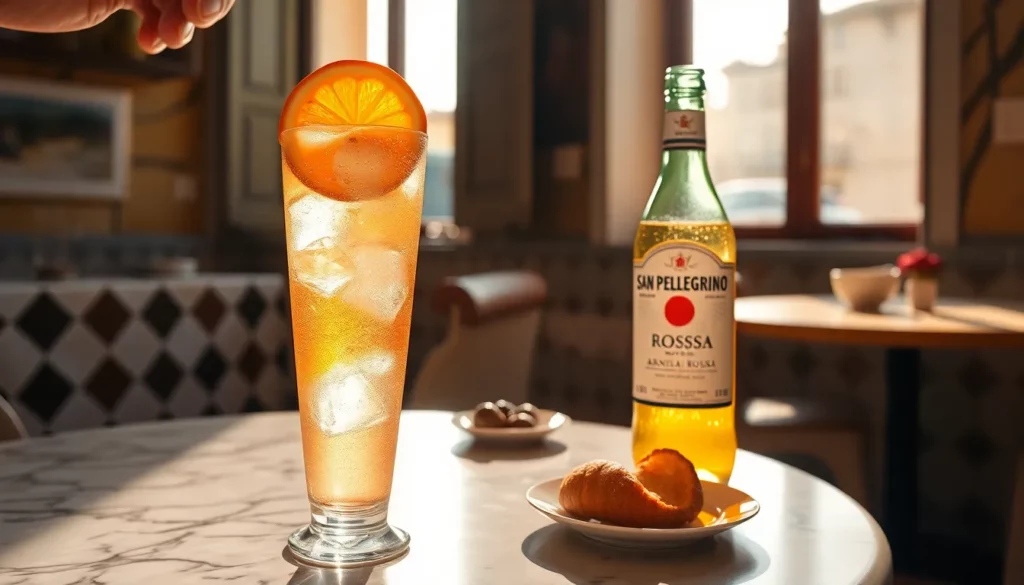
It is typically served in a tall glass with ice and a slice of orange. In summer, it is a common thirst‑quencher. Unlike wine, it is not paired with specific dishes, but its citrus notes complement light seafood or salads.
Common Mistakes / What It’s Not
Many misconceptions surround aranciata, especially outside Italy:
- It is not Fanta. Fanta is a German‑born brand that uses artificial flavors and colorings; authentic aranciata uses real juice.
- It is not a dessert. Though sweet, it is a soft drink, not a dessert course.
- It is not alcoholic. Standard aranciata is non‑alcoholic; aranciata amara may contain a trace of alcohol from natural flavorings, but it is negligible.
- It is not the same as orange juice. It is carbonated and sweetened, unlike fresh spremuta.
- It is not a regional specialty of only one area. While Sicily is famous for blood oranges, aranciata is made and consumed throughout Italy.
“Aranciata is to Italy what cola is to America – a ubiquitous, beloved refreshment that carries a sense of national identity. But it is far more honest in its ingredients.” – Giuseppe Ricci, Italian food historian
Where to Try It / What to Order
To experience authentic aranciata, visit Italy and look for these options:
- At a bar (caffè) – order “un’aranciata” and specify if you want rossa (red) or amara (bitter).
- In Sicily – try artisanal brands like San Pellegrino Aranciata Rossa or local producers such as Ficacci.
- In Naples – seek out Neri Aranciata for a drier, more traditional taste.
- At Italian festivals – often sold in glass bottles from street vendors.
- Outside Italy – specialty Italian grocery stores or online retailers carry San Pellegrino, Lurisia, or Fabbri brands.
Ordering tip: If you want a less sweet version, ask for “aranciata amara” (bitter orange soda). For a cocktail, request “Spritz con aranciata”.
Related Dishes
- Spremuta d’Arancia (Fresh Orange Juice)
- Gassosa (Italian Lemon Soda)
- Limonata (Italian Lemonade)
- Chinotto (Bitter Italian Soda)
- Italian Aperitivo Cocktails
FAQ
Is Aranciata the same as Fanta?
No. Fanta is a German‑born brand that typically uses artificial flavors and colors, while authentic Italian aranciata is made with real orange juice and natural ingredients. The taste and quality are distinct.
What is the difference between Aranciata and Aranciata Amara?
Standard aranciata is sweet and mildly tangy. Aranciata amara (bitter) contains additional bitter orange extract, resulting in a more complex, less sweet flavor often used as an aperitivo or mixer.
Is Aranciata alcoholic?
No, standard aranciata is non‑alcoholic. Some artisanal versions may contain trace amounts of alcohol from natural flavorings, but it is negligible and not considered an alcoholic beverage.
Can I find Aranciata outside Italy?
Yes, many Italian grocery stores and online retailers sell San Pellegrino, Lurisia, and other brands. Look for glass bottles for the most authentic experience.
What is the best way to serve Aranciata?
Serve it well‑chilled, over ice, with a slice of fresh orange. For a cocktail, mix with Prosecco and a splash of Aperol for a Spritz Aranciata.
Leave a Reply