
Short Answer
What It Is
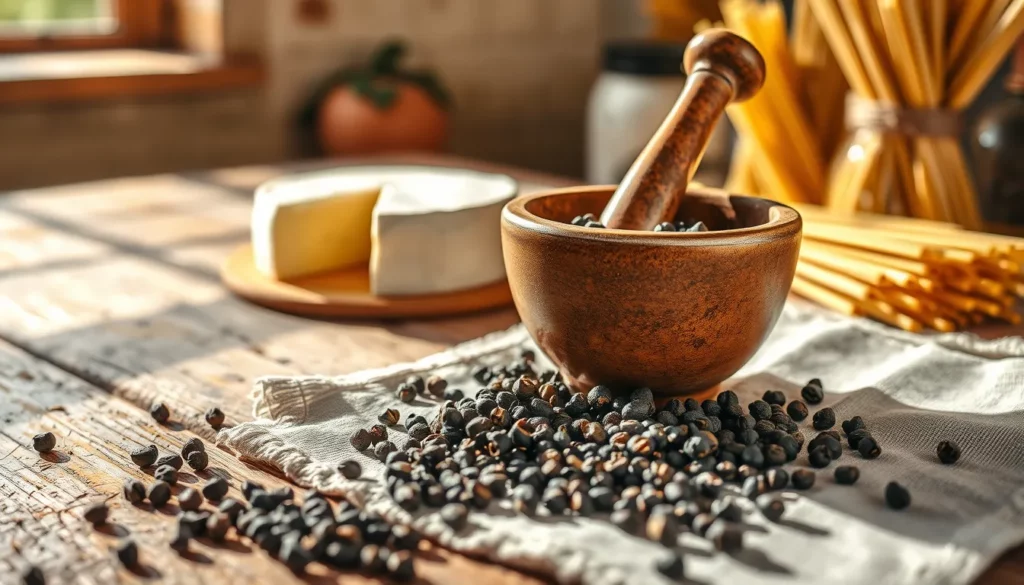
PEPE NERO, known globally as black pepper, is the dried fruit of the vine Piper nigrum. While not native to Italy, its history is deeply intertwined with Italian cuisine, arriving via Venetian trade routes from the Malabar Coast of India as early as the 6th century. The spice became a symbol of wealth and sophistication, and its use in Italian cooking has been documented since Roman times. Today, PEPE NERO is a cornerstone of Italian gastronomy, prized for its pungent heat and complex aroma.
Italy does not produce PEPE NERO domestically; the finest grades are imported from India, Vietnam, Brazil, and Indonesia. However, Italian culinary tradition has elevated this spice to an art form, particularly in central Italy where it is used whole or coarsely ground in iconic dishes. There is no DOP or PGI certification for PEPE NERO itself, but some Italian preparations that heavily feature it, such as Cacio e Pepe, are recognized as traditional specialties.
Types & Grades
PEPE NERO is classified by origin, size, and processing method. The most esteemed grades come from the Malabar Coast of India, with Tellicherry being the gold standard. Below is a table of common grades and their characteristics:
| Grade | Origin | Characteristics | Typical Use |
|---|---|---|---|
| Tellicherry Garbled Special Extra Bold (TGSEB) | India (Kerala) | Large, uniform berries; high piperine content; complex floral and citrus notes | Fine dining, finishing dishes |
| Tellicherry Extra Bold (TEB) | India (Kerala) | Slightly smaller than TGSEB; robust flavor | General cooking, grinding |
| Malabar Garbled (MG) | India (Kerala) | Medium-sized; earthy and pungent | Everyday use, spice blends |
| Lampong | Indonesia (Sumatra) | Small, wrinkled; mild heat with woody notes | Marinades, long cooking |
| Sarawak | Malaysia | Light color; fruity and mild | Light sauces, seafood |
| Vietnamese | Vietnam | High piperine; very pungent; often used in blends | Bulk grinding, commercial use |
In addition to origin, PEPE NERO can be aged (e.g., aged Tellicherry) for up to two years, which mellows the heat and develops deeper, more resinous flavors. Aged black pepper is highly prized in Italian kitchens for dishes where a less aggressive heat is desired.
How It’s Used in Cooking
In Italian cuisine, PEPE NERO is not merely a seasoning but a defining ingredient. Its application varies by region and dish:
Classic Roman Pastas
- Cacio e Pepe – A simple yet iconic dish from Rome, made with pecorino romano, pasta water, and a generous amount of coarsely ground PEPE NERO. The pepper provides both heat and texture.
- Pasta alla Gricia – Similar to cacio e pepe but with guanciale; the pepper cuts through the richness of the cured pork.
- Spaghetti all’Amatriciana – While tomato-based, black pepper is essential for balancing the sweetness of the tomatoes and the saltiness of pecorino.
Meat and Fish
- Bistecca alla Fiorentina – A thick T-bone steak from Tuscany, seasoned only with salt and a heavy crust of PEPE NERO after grilling.
- Peposo – A Tuscan beef stew where black pepper is the dominant spice, used in large quantities to tenderize and flavor the meat.
- Baccalà alla Vicentina – Salt cod cooked with milk, onions, and a generous amount of black pepper.
Cheese and Cured Meats
PEPE NERO is often used to coat aged cheeses like Pecorino or Parmigiano-Reggiano, and is a common addition to salumi such as finocchiona and soppressata. The spice’s antimicrobial properties also aid in preservation.
“Il pepe nero è il re delle spezie in cucina italiana – senza di esso, molti piatti perderebbero la loro anima.” – Anonymous Italian chef
How to Choose/Identify Authentic PEPE NERO
To ensure you are buying high-quality PEPE NERO, follow these guidelines:
- Buy whole peppercorns – Pre-ground pepper loses volatile oils quickly and may contain fillers. Grind fresh for each use.
- Check origin – Look for specific origins like Tellicherry (India) or Lampong (Indonesia). Avoid generic “black pepper” without provenance.
- Examine appearance – Authentic PEPE NERO should have uniform, dark brown to black berries with a slight wrinkling. Shiny or overly smooth berries may indicate inferior quality or adulteration.
- Smell and taste – High-quality pepper has a pungent, floral aroma with hints of citrus and pine. Taste a single berry: it should be intensely hot but not bitter.
- Look for certifications – While no DOP exists for black pepper, some producers carry organic or fair-trade labels. For Italian preparations, ensure the pepper is not irradiated or treated with chemicals.
- Storage – Keep in an airtight container away from light and heat. Whole peppercorns can last up to three years; ground pepper should be used within six months.
Substitutes
While no substitute perfectly replicates PEPE NERO, Italian cuisine offers several alternatives for specific contexts:
- White Pepper (Pepe Bianco) – Made from the same berry but with the outer skin removed. It has a milder, more earthy heat and is used in light-colored sauces (e.g., besciamella) to avoid black specks.
- Green Pepper (Pepe Verde) – Unripe berries preserved in brine or freeze-dried. It has a fresh, slightly fruity flavor and is used in sauces for game or fish.
- Pink Pepper (Pepe Rosa) – Not true pepper but the berry of Schinus molle. It offers a sweet, floral heat and is used in modern Italian cuisine for garnish or in combination with black pepper.
- Long Pepper (Pepe Lungo) – A close relative of black pepper, with a more complex, slightly sweet heat. It was common in medieval Italian cooking and is now experiencing a revival.
For dishes like Cacio e Pepe, no substitute is truly adequate; the unique pungency of PEPE NERO is irreplaceable.
Conclusion
PEPE NERO is far more than a simple spice in Italian cuisine – it is a historical artifact, a flavor cornerstone, and a mark of culinary authenticity. From the bustling spice markets of medieval Venice to the minimalist perfection of a Roman pasta dish, black pepper continues to define the Italian palate. By understanding its grades, uses, and quality markers, you can elevate your cooking and honor a tradition that spans millennia.
FAQ
Is PEPE NERO produced in Italy?
No, Italy does not cultivate Piper nigrum. All PEPE NERO used in Italian cuisine is imported, primarily from India, Vietnam, and Indonesia. However, Italy has a long history of pepper trade and culinary mastery.
What is the best PEPE NERO for Cacio e Pepe?
For Cacio e Pepe, use a high-quality Tellicherry Extra Bold or TGSEB grade. The large, aromatic berries provide a robust flavor and pleasant texture when coarsely ground. Fresh grinding is essential.
How should I store PEPE NERO to maintain freshness?
Store whole peppercorns in an airtight container away from light, heat, and moisture. A cool, dark pantry is ideal. Whole pepper retains quality for up to three years; ground pepper should be used within six months.

Leave a Reply