Short Answer
What It Is
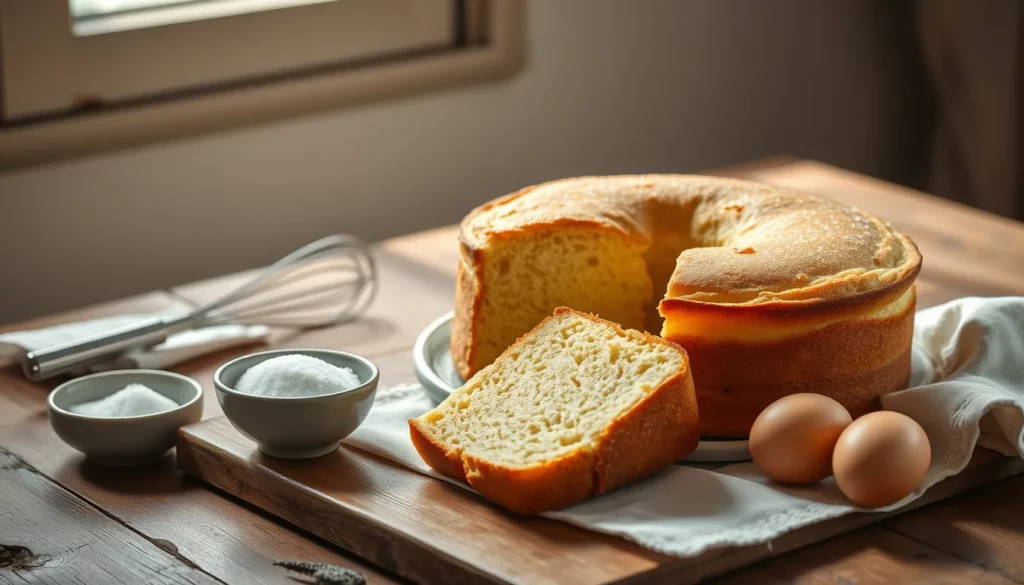
Pan di Spagna (literally “bread of Spain”) is a classic Italian sponge cake made from a simple batter of eggs, sugar, and flour, with no added fat or leavening agents other than the air incorporated during whisking. Its name is a historical curiosity: despite the reference to Spain, the cake is believed to have originated in Italy during the Renaissance, possibly inspired by Spanish biscuit techniques brought to the Kingdom of Naples. The first documented recipe appears in the 18th-century cookbook Il Cuoco Galante by Vincenzo Corrado, who described a light, dry cake suitable for layering with creams and liqueurs.
Unlike many modern sponge cakes, authentic Pan di Spagna relies entirely on the mechanical incorporation of air—achieved by whisking eggs (often whole, sometimes separated) with sugar until thick and pale, then gently folding in sifted flour. The result is a fine, even crumb with a delicate structure that absorbs syrups and custards without becoming soggy. It is not a DOP or PGI product, as it is a basic preparation rather than a geographically protected ingredient. However, its production is governed by traditional Italian pastry-making standards, and many artisanal bakeries and pastry shops (pasticcerie) still make it by hand.
Types & Grades
Pan di Spagna is not aged or graded like cheese or cured meats, but it does have several recognized variations based on ingredients and intended use. The table below outlines the main types:
| Type | Key Characteristics | Common Uses |
|---|---|---|
| Classic (Pan di Spagna Bianco) | Eggs, sugar, flour; no butter or oil; very light and dry | Base for tiramisù, zuppa inglese, charlotte russe |
| Pan di Spagna al Cacao | Replaces 10–20% of flour with unsweetened cocoa powder | Chocolate versions of layered cakes, sachertorte adaptations |
| Pan di Spagna con Fecola | Uses potato starch (fecola) instead of part of the flour for extra tenderness | Delicate pastries, rolled cakes (roulade) |
| Pan di Spagna all’Olio | Adds a small amount of olive oil or seed oil for moisture | Modern variations, gluten-free adaptations |
| Pan di Spagna Senza Glutine | Made with rice flour or cornstarch; no wheat flour | Gluten-free desserts, celiac-friendly pastries |
In professional kitchens, Pan di Spagna is often categorized by its density and moisture content. A well-made sponge should have a uniform crumb, a golden crust, and a springy texture. Commercial versions may include stabilizers or emulsifiers, but purists insist on the traditional four-ingredient formula.
How It’s Used in Cooking
Pan di Spagna is the foundation of many iconic Italian desserts. Its neutral flavor and absorbent texture make it ideal for soaking in syrups, liqueurs, or coffee, and for layering with rich fillings. Key applications include:
- Tiramisù – Layers of Pan di Spagna (or savoiardi biscuits) soaked in espresso and layered with mascarpone cream. While savoiardi are more common, some versions use thin slices of sponge.
- Zuppa Inglese – A trifle-like dessert with layers of Pan di Spagna soaked in Alchermes liqueur, alternating with custard and chocolate cream.
- Cassata Siciliana – A Sicilian cake where Pan di Spagna is soaked in liqueur, filled with ricotta, candied fruit, and marzipan.
- Charlotte Russe – A molded dessert lined with ladyfingers or sponge cake and filled with Bavarian cream.
- Rolled Cakes (Roulades) – Thin sheets of Pan di Spagna are rolled around fillings like jam, chocolate, or chestnut purée.
- Base for Petit Fours – Cut into small shapes, soaked, and topped with icing or ganache.
In professional pastry, Pan di Spagna is valued for its stability. It can be sliced horizontally into thin layers, frozen, and used weeks later without losing quality. Many pastry chefs prefer to bake it a day ahead to allow the crumb to set, making it easier to cut and soak.
How to Choose/Identify Authentic Pan di Spagna
For home cooks and professionals seeking authentic Pan di Spagna, the following cues indicate quality:
- Ingredient list – Authentic versions contain only eggs, sugar, and flour (plus optional cocoa or starch). Avoid products with hydrogenated fats, artificial flavors, or excessive preservatives.
- Texture – A true Pan di Spagna should be light, dry to the touch, and spring back when pressed. It should not feel greasy or dense.
- Color – The crust is pale golden; the interior is creamy white (or light brown for cocoa versions).
- Origin – Look for products from Italian artisanal bakeries or brands that specify “Pan di Spagna tradizionale.” Supermarket versions often contain added oil or leavening agents.
- Packaging – If pre-sliced, the slices should be uniform and not crumble excessively. Vacuum-packed sponges may have a longer shelf life but can be denser.
When buying from a pasticceria, ask if the cake was made that day. Fresh Pan di Spagna has a subtle eggy aroma and a clean, sweet taste. Stale sponge becomes dry and crumbly, though it can still be used for trifles or bread pudding.
Substitutes
In Italian cooking, several alternatives can replace Pan di Spagna depending on the recipe:
- Savoiardi (Ladyfingers) – The most common substitute for tiramisù and zuppa inglese. They are drier and more absorbent, so reduce soaking time.
- Pasta Biscotto (Biscuit Sponge) – A French génoise or Italian biscotto base, which is similar but often includes butter. Use in a 1:1 ratio for layered cakes.
- Pan di Spagna Senza Glutine – For gluten-free needs, use a commercial gluten-free sponge or make one with rice flour.
- Pandispagna (Spanish equivalent) – In Spain, a similar cake called bizcocho is used; it may include oil or yogurt, making it moister.
When substituting, consider the moisture content. Pan di Spagna is intentionally dry to absorb syrups; a moister cake may become soggy. For recipes that do not require soaking (e.g., simple layered cream cakes), a denser sponge like pound cake can work.
“Il Pan di Spagna è la tela bianca del pasticcere.” – Anonymous Italian pastry chef
(“Pan di Spagna is the blank canvas of the pastry chef.”)
In summary, Pan di Spagna is a versatile, essential component of Italian pastry. Its simplicity belies its importance: mastering this sponge is a rite of passage for any serious baker. Whether you buy it from a trusted pasticceria or make it at home, understanding its characteristics will elevate your desserts.
FAQ
Is Pan di Spagna the same as génoise?
Not exactly. Both are sponge cakes, but génoise typically includes melted butter, while traditional Pan di Spagna uses only eggs, sugar, and flour. Pan di Spagna is drier and more absorbent, making it ideal for soaking in syrups.
Can I use Pan di Spagna for tiramisù instead of ladyfingers?
Yes, but the texture will differ. Pan di Spagna absorbs liquid more slowly than savoiardi, so you may need to adjust soaking time. Some traditional tiramisù recipes use thin layers of sponge cake.
Why is it called 'bread of Spain' if it's Italian?
The name likely reflects the historical influence of Spanish cuisine in the Kingdom of Naples during the 16th–18th centuries. It may also refer to a type of biscuit brought by Spanish traders, which Italian bakers adapted into a lighter cake.
Leave a Reply