Short Answer
What It Is
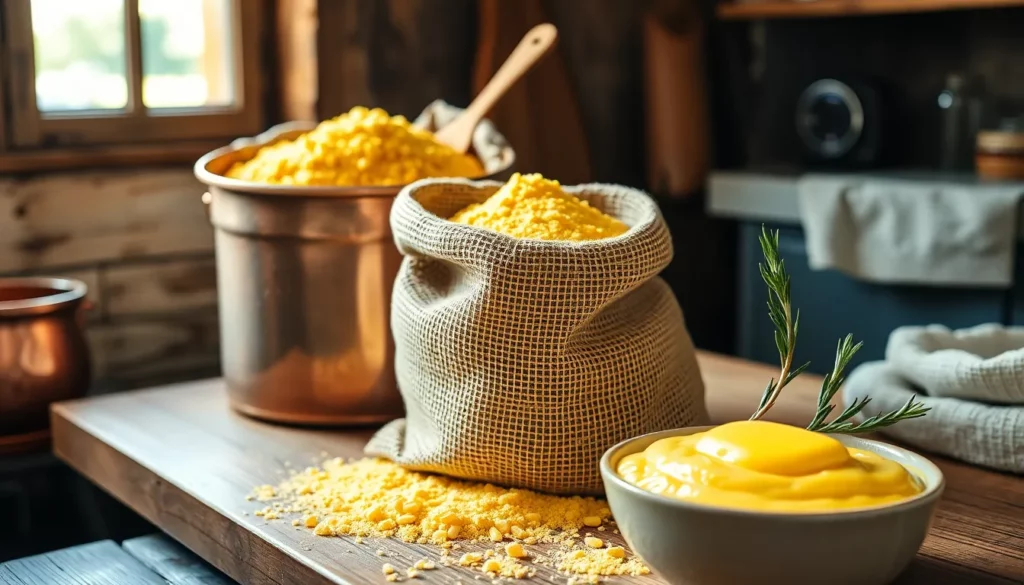
Corn flour is a finely ground flour obtained from the endosperm of maize (Zea mays). In Italian culinary tradition, it is known as farina di mais and is the foundational ingredient for polenta, a staple of Northern Italian cuisine. The production process involves drying and milling dent corn varieties, which are rich in starch and have a distinct yellow colour. The finest grades are sifted to remove the germ and bran, yielding a smooth, powdery texture.
Italy boasts two Protected Designation of Origin (DOP) polenta products: Polenta di Bergamo (from the Bergamo province) and Polenta della Valcamonica. These DOP certifications guarantee that the corn is grown in specific regions, using traditional varieties (e.g., Nostrano dell’Isola for Bergamo), and milled according to strict protocols. While not all corn flour is DOP, these designations represent the highest standard of authenticity and traceability.
Historically, maize was introduced to Europe after Columbus’s voyages and became a crucial crop in the Po Valley by the 17th century. Polenta was originally made from chestnut flour, but corn gradually replaced it due to higher yields. Today, corn flour is a pantry essential across Italy, used not only for polenta but also for thickening sauces, dusting pizza peels, and in gluten‑free baking.
Types & Grades
Italian corn flour is classified primarily by grind size and intended use. The table below summarises the main grades:
| Grade | Grind Size | Typical Use | Example |
|---|---|---|---|
| Fioretto (fine) | Very fine, like wheat flour | Polenta istantanea (instant polenta), baking, thickening | Molino Rosso Fioretto |
| Bramata (coarse) | Medium‑coarse, gritty | Traditional polenta (slow‑cooked) | Polenta di Bergamo DOP |
| Integrale (wholemeal) | Coarse, includes germ and bran | Rustic polenta, higher fibre | Farina di mais integrale |
| Stellina (very fine) | Extra‑fine, almost powdery | Gluten‑free cakes, biscuits | Molino Spadoni Stellina |
Within the DOP categories, aging is also a factor. Polenta di Bergamo is often aged for at least 12 months to develop a deeper flavour and improve texture. Non‑DOP corn flour may be sold fresh or aged, but the aging process is less regulated.
How It’s Used in Cooking
Corn flour is indispensable in Italian cuisine. Its primary role is in polenta, a creamy porridge that can be served soft (as a side dish) or allowed to cool and solidify, then sliced and grilled or fried. Traditional polenta requires slow stirring for 40–60 minutes, while instant varieties (fioretto) cook in 5–10 minutes.
Beyond polenta, corn flour is used for:
- Thickening sauces and soups – a slurry of corn flour and cold water is added to broths and ragùs for a silky finish.
- Gluten‑free baking – combined with other flours (e.g., rice flour, potato starch) to create cakes, cookies, and breads.
- Coating for fried foods – light dusting on fish, vegetables, or meat before frying yields a crisp crust.
- Dusting pizza peels and baking surfaces – prevents dough from sticking without adding wheat flour.
- Desserts – used in pastiera napoletana (Neapolitan Easter tart) and budino di polenta (polenta pudding).
A signature dish is Polenta e Osei (polenta with small birds) from Bergamo, though today it is often made with game or sausage. Another classic is Polenta con Funghi (polenta with mushrooms), a hearty autumn dish.
“La polenta è il pane dei poveri, ma il suo sapore è da re.” – Traditional Italian saying
How to Choose/Identify Authentic CORNFLOUR
For commercial buyers and home cooks seeking authentic Italian corn flour, consider these cues:
- Look for DOP or IGP labels – Polenta di Bergamo DOP and Polenta della Valcamonica DOP are the gold standards. The packaging will bear the EU DOP logo.
- Check the origin – Authentic Italian corn flour is milled in Italy, often from locally grown maize. Look for “Prodotto in Italia” or specific regional names.
- Examine the grind – For traditional polenta, choose bramata (coarse) or fioretto (fine) depending on desired cooking time. Instant polenta is labelled “istantanea”.
- Colour and aroma – High‑quality corn flour has a bright yellow colour and a sweet, nutty aroma. Dull or pale flour may be old or adulterated.
- Packaging date – Freshness matters. Corn flour can go rancid if stored too long, especially wholemeal varieties. Look for a “best before” date within 12 months of milling.
- Certifications – Besides DOP, look for organic (Bio) certifications or Slow Food Presidia for artisanal producers.
For bulk purchasing, request a sample to test colour, texture, and taste. Authentic corn flour should not have any off‑odours or bitterness.
Substitutes
While corn flour is unique, several Italian substitutes can be used depending on the application:
- Farina di grano saraceno (buckwheat flour) – Used in polenta taragna (a mix of buckwheat and corn flour) from Valtellina. It adds a nutty, earthy flavour and is naturally gluten‑free.
- Farina di riso (rice flour) – A common gluten‑free substitute for thickening and baking. It produces a lighter texture but lacks the distinct corn flavour.
- Semola di grano duro (durum wheat semolina) – For polenta‑like dishes, semolina can be cooked similarly to create a creamy porridge (e.g., in Sardinian fregola). Not gluten‑free.
- Farina di castagne (chestnut flour) – Historically used before maize arrived. It yields a sweet, dense polenta, often paired with ricotta or mushrooms.
Each substitute changes the flavour and texture, so choose based on the dish’s requirements. For thickening, rice flour or potato starch are neutral alternatives.
In conclusion, corn flour is a cornerstone of Italian gastronomy, offering versatility from rustic polenta to delicate pastries. Understanding its types, authenticity markers, and substitutes empowers cooks to use it with confidence and respect for tradition.
FAQ
Is corn flour the same as cornstarch?
No. In Italian cuisine, corn flour (farina di mais) is ground from whole maize kernels and contains protein, fibre, and fat. Cornstarch (amido di mais) is a pure starch extracted from the endosperm, used primarily for thickening. They are not interchangeable in polenta.
What is the best corn flour for authentic polenta?
For traditional polenta, choose a coarse grind (bramata) from a DOP region like Polenta di Bergamo. For quick polenta, use fioretto (fine grind) labelled 'istantanea'. Always look for Italian origin and a recent milling date.
Can I use corn flour if I have celiac disease?
Yes, pure corn flour is naturally gluten‑free. However, always check the packaging for potential cross‑contamination if you are highly sensitive. Many Italian brands are certified gluten‑free.

Leave a Reply