
Short Answer
What It Is
Basilico Genovese DOP (Denominazione di Origine Protetta) is a protected designation of origin basil cultivated exclusively in the Italian region of Liguria, primarily in the provinces of Genoa, Imperia, Savona, and La Spezia. This aromatic herb, scientifically known as Ocimum basilicum L., has been grown in the Mediterranean for millennia, but the specific Genovese variety was refined over centuries in the mild, coastal microclimate of the Italian Riviera. The DOP status, granted by the European Union in 2005, ensures that every leaf bearing the label is grown, harvested, and processed according to strict disciplinary standards that preserve its unique sensory profile: a sweet, slightly peppery flavor with notes of mint, clove, and anise, and a delicate, non-bitter finish.
The production method is labor-intensive. Seeds of certified cultivars—such as ‘Genovese Gigante’ or ‘Genovese Profumato’—are sown in well-drained, sandy-loam soils enriched with organic matter. Plants are spaced to allow air circulation, reducing fungal diseases. Irrigation is regulated to avoid water stress, and harvesting occurs by hand when the plant reaches 10–15 cm in height, typically from May to September. Leaves are cut with stems intact to preserve freshness, then quickly cooled to 4°C. For DOP certification, the basil must be processed within 24 hours of harvest, either sold fresh or preserved in salt or extra virgin olive oil. The entire supply chain is traceable from field to consumer.
“Basilico Genovese DOP is not just an herb; it is the soul of Ligurian cuisine, a living testament to the region’s agricultural heritage.” — Consorzio del Basilico Genovese DOP
Types & Grades
While Basilico Genovese DOP is a single protected product, it is available in several commercial forms, each suited to different culinary applications. The table below outlines the main types and their characteristics.
| Type | Description | Typical Use |
|---|---|---|
| Fresh Whole Leaves | Harvested with stems, sold in bunches or clamshells. Leaves are bright green, tender, and highly aromatic. Shelf life: 3–5 days at 4°C. | Pesto alla Genovese, salads, garnishes, infused oils. |
| Preserved in Salt | Leaves layered with coarse sea salt in jars. The salt draws out moisture while concentrating flavor. Shelf life: up to 12 months. | Winter cooking, sauces, soups, and stews where fresh basil is unavailable. |
| Preserved in Oil | Leaves submerged in extra virgin olive oil, often with a touch of salt. The oil absorbs the basil’s aroma. Shelf life: 6–9 months. | Drizzling over bruschetta, pasta, or grilled vegetables; as a base for dressings. |
| Dried Basil (Non-DOP) | Dried leaves are not eligible for DOP status because the drying process alters the volatile oils. However, some producers offer dried Genovese basil for convenience. | Herb blends, dry rubs, long-cooking sauces (though flavor is significantly diminished). |
Within the fresh category, there are no official “grades” like in cheese or wine, but quality is judged by leaf size, color uniformity, absence of blemishes, and intensity of aroma. The DOP disciplinary requires that leaves be harvested before flowering, as flowers reduce essential oil content and introduce bitterness.
How It’s Used in Cooking
Basilico Genovese DOP is the cornerstone of Ligurian cuisine and a key ingredient in many Italian classics. Its sweet, aromatic profile pairs best with simple preparations that let the herb shine.
Pesto alla Genovese
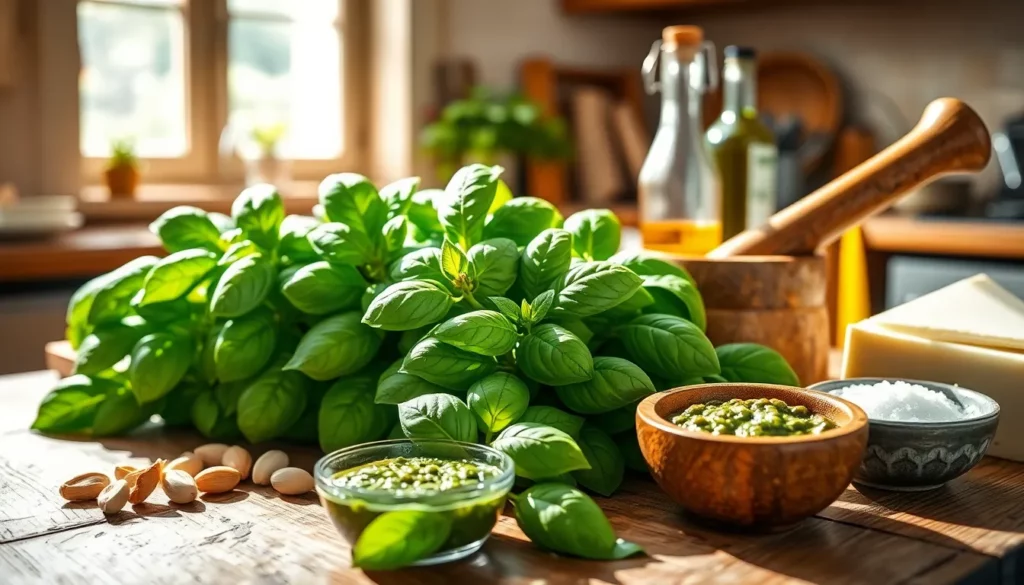
The most iconic use is Pesto alla Genovese, a raw sauce made by pounding fresh basil leaves with garlic, pine nuts, coarse salt, and Parmigiano-Reggiano or Grana Padano, then emulsifying with extra virgin olive oil. The mortar and pestle method is traditional, but food processors are common in modern kitchens. The key is to avoid overheating the basil, which causes discoloration and bitterness. Pesto is served with trofie, trenette, or linguine, often with a spoonful of cooking water to loosen the sauce.
Other Traditional Applications
- Caprese Salad: Sliced fresh mozzarella, ripe tomatoes, and basil leaves drizzled with olive oil and balsamic vinegar. The basil provides a fresh counterpoint to the creamy cheese and acidic tomatoes.
- Focaccia Genovese: A soft, olive-oil-rich flatbread often topped with coarse salt and fresh basil leaves before baking. The basil infuses the bread with its aroma.
- Minestrone alla Genovese: A hearty vegetable soup finished with a spoonful of pesto stirred in just before serving, adding depth and freshness.
- Infused Oils and Vinegars: Fresh basil leaves are steeped in extra virgin olive oil or white wine vinegar for a few weeks to create aromatic condiments for salads and marinades.
- Seafood Pairings: Ligurian cooks often add whole basil leaves to steamed mussels, clams, or fish stews during the last minute of cooking, allowing the herb to release its volatile oils without overcooking.
“In Liguria, basil is not a garnish; it is the protagonist. A single leaf can transform a dish from ordinary to sublime.” — Anna Gosetti della Salda, Italian food historian
How to Choose/Identify Authentic Basilico Genovese DOP
For chefs and home cooks seeking the genuine article, look for the following cues:
- DOP Label: The official EU logo (a yellow-and-red sunburst) and the words “Basilico Genovese DOP” must appear on the packaging. The producer’s name and lot number are also required.
- Leaf Appearance: Genovese leaves are medium-sized (3–6 cm), slightly cupped, with a smooth, bright green surface and a pointed tip. They are not as large as Thai basil leaves nor as small as Greek basil.
- Aroma: Authentic Genovese basil has a sweet, complex fragrance with hints of anise and clove. If it smells grassy or bitter, it is likely a different variety or has been stored too long.
- Origin Statement: The label should clearly state “Prodotto in Liguria” (Produced in Liguria). Some non-DOP basil may be labeled “Basilico Genovese” but without the DOP mark; this is not guaranteed to be from Liguria.
- Freshness Indicators: Leaves should be firm, not wilted, with no black spots or yellowing. The stems should be moist and green, not dry or woody.
- Price: DOP basil is typically more expensive than generic basil due to the strict production standards and limited growing area. If the price seems too low, authenticity is questionable.
When buying preserved forms (salt or oil), check that the basil inside is still vibrant green and that the oil or salt is clear and free of off-odors. The DOP label applies only to the basil itself, not to the preserving medium, but reputable producers will use high-quality ingredients.
Substitutes
If Basilico Genovese DOP is unavailable, several Italian and non-Italian alternatives can approximate its flavor, though none perfectly replicate its complexity.
- Basilico Napoletano (Italian Large-Leaf Basil): A close relative grown in Campania. It has larger, more wrinkled leaves and a slightly milder, less sweet flavor. It works well in cooked dishes but may lack the intensity needed for raw pesto.
- Basilico Greco (Greek Basil): A compact, small-leaf variety with a peppery, almost spicy note. It is better suited for salads and garnishes than for pesto, as its flavor is more pungent.
- Thai Basil (Horapha): Has a strong anise-licorice flavor and purple stems. It can be used in Southeast Asian dishes but will overpower Italian recipes. Not recommended for pesto.
- Lemon Basil: A hybrid with a distinct citrus aroma. It can add a refreshing twist to seafood or salads but is not a substitute for Genovese basil in traditional preparations.
- Dried Basil (any variety): While convenient, dried basil loses most of its volatile oils and develops a hay-like flavor. It is acceptable only in long-cooked sauces where fresh basil would be added at the end.
For the most authentic results, especially in Pesto alla Genovese, seek out fresh Basilico Genovese DOP. If that is impossible, a combination of fresh Italian large-leaf basil and a tiny pinch of dried mint can mimic some of the original’s sweetness and complexity.
Conclusion
Basilico Genovese DOP is far more than a common herb; it is a protected cultural treasure that embodies the terroir of Liguria. Its unique flavor, shaped by centuries of selective cultivation and strict DOP regulations, makes it indispensable for authentic Italian dishes like Pesto alla Genovese. By understanding how to identify genuine DOP basil and knowing suitable substitutes, cooks can honor the tradition even when the original is out of reach. Whether used fresh, preserved, or as an infusion, this basil elevates simple ingredients into memorable meals.
FAQ
What is the difference between Basilico Genovese DOP and regular basil?
Basilico Genovese DOP is a specific variety of sweet basil (Ocimum basilicum) that must be grown in Liguria according to strict regulations. It has a sweeter, more complex flavor with notes of mint and anise, and lacks the bitterness often found in other basil varieties. Regular basil may be grown anywhere and can vary widely in taste and aroma.
How should I store fresh Basilico Genovese DOP to keep it fresh?
Store fresh basil at 4°C (refrigerator) with the stems in a glass of water and a plastic bag loosely covering the leaves. Change the water every two days. Alternatively, wrap the leaves in a damp paper towel inside a sealed container. Do not wash until ready to use, as excess moisture accelerates spoilage.
Can I use dried basil for Pesto alla Genovese?
No, dried basil is not suitable for authentic Pesto alla Genovese. The drying process destroys the volatile oils that give fresh basil its characteristic aroma and flavor. For a true pesto, always use fresh Basilico Genovese DOP or, if unavailable, another fresh sweet basil variety.

Leave a Reply