
Short Answer
What Is Ruspante? Italian Rustic Dish Explained
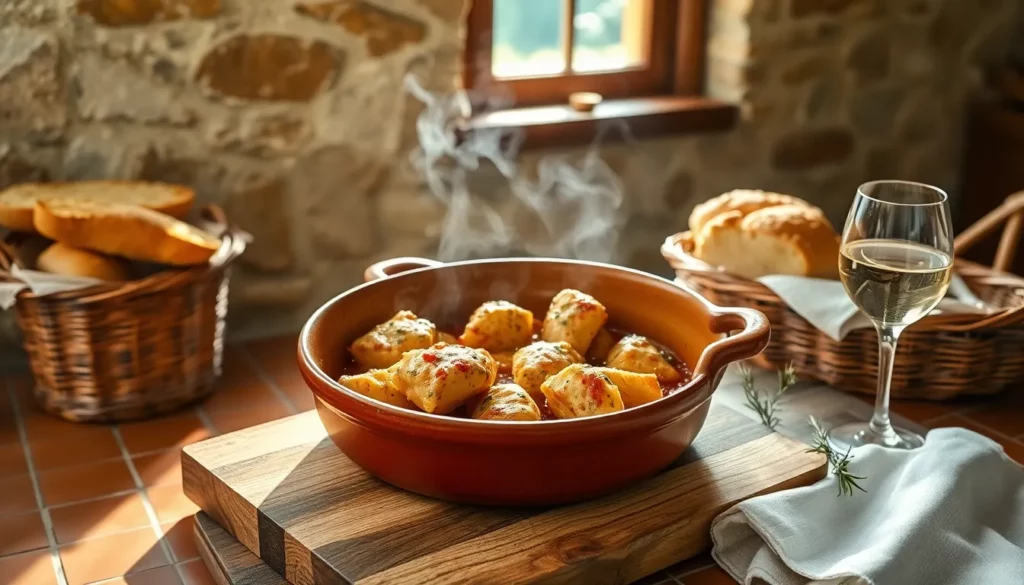
Ruspante is a rustic Italian dish that celebrates the simplicity and depth of free-range poultry, most commonly chicken (pollo ruspante). The term “ruspante” itself derives from the Italian verb ruspare, meaning “to scratch”—a reference to chickens that scratch the earth for food. This dish is a cornerstone of cucina povera (“poor kitchen”), the Italian tradition of transforming humble, locally sourced ingredients into robust, satisfying meals. Typically, Ruspante involves slow-cooking chicken with white wine, tomatoes, garlic, rosemary, sage, and sometimes olives or capers, resulting in tender meat and a richly flavored sauce. It is most closely associated with the regions of Tuscany, Umbria, and Lazio, where free-range poultry farming has deep historical roots.
Origin & History
The origins of Ruspante are firmly planted in the rural landscapes of central Italy, particularly in the hills of Tuscany and Umbria. Historical records from the 18th century mention pollo ruspante as a prized ingredient among peasant families who raised chickens for eggs and meat. The dish itself emerged as a practical way to cook older, tougher birds that required long, gentle simmering to become tender. Unlike the quick-cooking methods used for young chickens, Ruspante was a Sunday or feast-day meal, prepared in a large pignatta (earthenware pot) over a wood fire. A popular anecdote tells of Tuscan farmers who would add a handful of wild herbs gathered from the countryside, giving each family’s version a unique character. While no single inventor is credited, the dish evolved organically across central Italy, with each region adding its own twist. It was not until the 20th century that Ruspante gained recognition beyond rural communities, thanks to the revival of traditional Italian cooking by food writers like Pellegrino Artusi, who included a recipe for pollo ruspante in umido in his 1891 cookbook La Scienza in Cucina e l’Arte di Mangiar Bene.
What’s In It
The core ingredients of Ruspante are simple but demand quality. The star is pollo ruspante—a free-range chicken with firmer, more flavorful meat than battery-farmed birds. Other essential components include:
- White wine (often a dry Tuscan Trebbiano or Orvieto) for deglazing and acidity.
- Tomatoes (fresh or canned San Marzano) for a light, savory sauce.
- Aromatics: garlic, onion, rosemary, sage, and sometimes bay leaf.
- Olive oil (extra virgin) for browning.
- Vegetables: carrots, celery, and occasionally potatoes or mushrooms.
- Optional additions: black olives, capers, or a splash of vinegar for brightness.
Preparation involves browning the chicken pieces in olive oil, then slowly simmering them in a covered pot with wine, tomatoes, and herbs for 1.5 to 2 hours. The result is a sauce that is neither too thick nor too thin, perfect for sopping up with crusty bread. Ruspante is often confused with Pollo alla Cacciatora (hunter-style chicken), but the latter typically uses red wine and mushrooms, while Ruspante emphasizes white wine and a lighter herb profile. Another similar dish, Brasato al Barolo, is a beef braise, not poultry.
Regional Variations
Ruspante varies notably across central Italy, reflecting local ingredients and traditions. The table below highlights key differences:
| Region | Key Characteristics | Distinctive Ingredients |
|---|---|---|
| Tuscany | Simple, herb-forward; often includes cavolo nero (black kale) in the sauce. | Rosemary, sage, white wine (Vernaccia), and a touch of tomato paste. |
| Umbria | Richer, with black truffle shavings or olive oil infused with truffle. | Black truffles, garlic, and sometimes a splash of Sagrantino wine. |
| Lazio | More tomato-forward, with the addition of pecorino romano grated on top. | San Marzano tomatoes, pecorino cheese, and wild mint. |
| Marche | Uses verdicchio wine and includes green olives and capers. | Green olives, capers, and lemon zest. |
These variations demonstrate how Ruspante adapts to local produce while maintaining its rustic soul.
How It’s Traditionally Eaten
Ruspante is served as a secondo piatto (main course) in the traditional Italian meal structure, following a primo (pasta or soup) and contorno (side dish). It is often accompanied by polenta, crostini, or simply a slice of pane toscano (unsalted bread) to soak up the sauce. A side of spinaci saltati (sautéed spinach) or fagioli all’uccelletto (beans with sage) complements the dish. On special occasions, such as Festa della Repubblica or family gatherings, Ruspante might be paired with a robust red wine like Chianti Classico. For everyday meals, it is a comforting one-pot dish that embodies the Italian ideal of cucina casalinga (home cooking).
Common Mistakes / What It’s Not
Many American-Italian adaptations misrepresent Ruspante. Common errors include:
- Using battery-farmed chicken: The dish relies on the intense flavor of free-range birds; conventional chicken yields a bland result.
- Overcooking the sauce: Ruspante should have a light, brothy sauce, not a thick, heavy ragu.
- Adding too many herbs: The balance is delicate; rosemary and sage should complement, not overpower.
- Serving it with pasta: While the sauce can be used on pasta, traditionally Ruspante is a main course with bread or polenta.
Ruspante is not a tomato-heavy stew like Pizzaiola, nor is it a fried chicken dish. It is a slow-braised preparation that respects the integrity of the poultry.
Where to Try It / What to Order
To experience authentic Ruspante, visit trattorias and agriturismi (farm stays) in central Italy. In Tuscany, seek out Osteria del Cinghiale in Florence or Ristorante La Torre in Siena. In Umbria, Taverna del Lupo in Gubbio offers a truffle-infused version. In Lazio, Trattoria da Cesare in Rome serves a classic Roman-style Ruspante. When ordering, ask for pollo ruspante in umido (braised free-range chicken) and specify your preference for white wine or tomato base. Many menus list it simply as Pollo Ruspante. For travelers, the Sagra del Pollo Ruspante in the town of San Casciano dei Bagni (Tuscany) is a September festival dedicated to this dish.
Related Dishes
FAQ
What does 'ruspante' mean in Italian?
Ruspante literally means 'scratching' and refers to free-range chickens that scratch the ground for food. It also describes the rustic, farm-fresh quality of the dish.
Is Ruspante the same as Pollo alla Cacciatora?
No. While both are braised chicken dishes, Pollo alla Cacciatora typically uses red wine and mushrooms, whereas Ruspante uses white wine and a lighter herb profile. The cooking technique and regional origins also differ.
Can I make Ruspante with regular supermarket chicken?
It is not recommended. The dish relies on the robust flavor and firmer texture of free-range chicken. Supermarket chicken may become mushy and lack depth. If necessary, increase cooking time and add extra herbs.
What wine pairs best with Ruspante?
A dry white wine from the same region, such as Tuscan Trebbiano or Verdicchio, is traditional. For red wine lovers, a light Chianti Classico complements the dish without overpowering it.
Is Ruspante a holiday dish?
Historically, it was a Sunday or feast-day meal due to the long cooking time and the use of a whole chicken. Today, it is enjoyed both as everyday comfort food and for special gatherings.
Leave a Reply