Short Answer
What Is Panforte (di Siena), or (Sienese)? Italian Dessert Explained
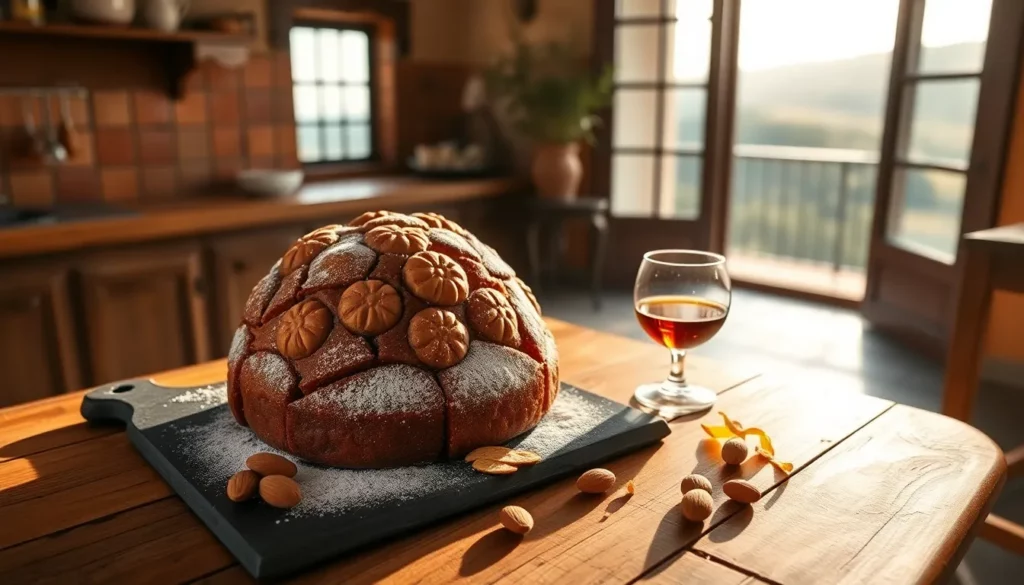
Panforte (di Siena), often simply called Panforte, is a dense, chewy fruit and nut cake originating from the city of Siena in Tuscany, Italy. It is a traditional Italian dessert made with honey, almonds, candied citrus peel, and a blend of warm spices such as cinnamon, nutmeg, and cloves. Unlike typical fruitcakes, Panforte contains no butter or milk, relying on honey as both sweetener and binder. The cake is typically dusted with powdered sugar and served in thin slices. Its name derives from the Latin panis fortis meaning “strong bread,” a reference to its robust flavor and long shelf life. Panforte is especially associated with Christmas celebrations but is enjoyed year-round as a specialty of Sienese pastry shops.
Origin & History
Panforte’s history stretches back to the 13th century in Siena, a wealthy Tuscan city-state known for its trade routes and spice markets. The earliest documented version was called panpepato (peppered bread), a simple mixture of flour, honey, and black pepper—a precious spice at the time. Over the centuries, as Siena’s merchants imported exotic ingredients from the East, the recipe evolved to include almonds, candied fruits, and a wider array of spices. By the 16th century, Panforte had become a symbol of Sienese confectionery, often given as a gift to visiting dignitaries. A popular legend claims that Panforte was invented for a local noblewoman’s wedding, but historical records show it was already a staple of medieval monasteries, where honey preserved the cake for months. The modern version, known as Panforte Margherita, was created in 1879 to honor Queen Margherita of Savoy, replacing the black pepper with a more delicate vanilla and citrus profile. Today, Panforte is protected by a Prodotto Agroalimentare Tradizionale (PAT) designation, ensuring its authentic production in the province of Siena.
What’s In It
Authentic Panforte is made from a short list of high-quality ingredients: almonds (whole or roughly chopped), candied orange and citron peel, honey, sugar, flour, and a precise blend of spices—typically cinnamon, coriander, cloves, nutmeg, and sometimes black pepper or vanilla. The preparation involves heating honey and sugar to a specific temperature, then mixing in the nuts, fruit, and spices before folding in the flour. The batter is pressed into a shallow pan lined with rice paper (ostia) and baked at a low temperature until set. The result is a dense, chewy texture that is neither cake nor candy but something in between. Panforte is often confused with panpepato, a similar but spicier cake from Umbria and Lazio, or with mandorlato, a Venetian nougat-like confection. However, Panforte’s defining characteristics are its use of honey as the primary sweetener, its lack of butter or eggs, and its signature dusting of powdered sugar.
Regional Variations
While Panforte is quintessentially Sienese, similar fruit-and-nut cakes exist across Italy, each with distinct traits:
| Region | Name | Key Differences |
|---|---|---|
| Tuscany (Siena) | Panforte | Honey-based, candied citrus, almonds, spices; dusted with powdered sugar. Two main types: Panforte Margherita (mild, with vanilla) and Panforte Nero (dark, with black pepper and cocoa). |
| Umbria / Lazio | Panpepato | Similar but often includes hazelnuts, walnuts, and more black pepper; sometimes coated in chocolate. Less sweet, more pungent. |
| Veneto | Mandorlato | Nougat-like, made with honey, egg whites, and almonds; no flour or candied fruit. Chewy but lighter, often cut into bars. |
| Sicily | Cuccidati (or Buccellati) | Fig-filled cookies, not a cake. Dried figs, almonds, citrus, and spices wrapped in a shortcrust pastry. Different texture and shape. |
These variations highlight how local ingredients and traditions shape similar concepts. Panforte remains the most refined and historically significant of the group.
How It’s Traditionally Eaten
Panforte is not a breakfast or everyday dessert; it is a special-occasion treat, most commonly served during the Christmas holidays. In Siena, it is often enjoyed as a dolce (dessert) after a festive meal, accompanied by a glass of Vin Santo (a sweet Tuscan dessert wine) or a strong espresso. The cake is sliced very thinly—about ¼ inch thick—because of its intense flavor and dense texture. It can also be served as a snack with tea or as a gift wrapped in decorative paper. In modern Italian households, Panforte is sometimes crumbled over gelato or used in pastry fillings, but the traditional way is simply to savor it on its own. Because of its long shelf life (up to several months when stored properly), it was historically a staple for travelers and soldiers.
Common Mistakes / What It’s Not
Many American-Italian misconceptions surround Panforte. First, it is not a fruitcake in the Anglo-American sense: it contains no butter, eggs, or alcohol-soaked dried fruits. The candied fruits are citrus peels, not raisins or cherries. Second, Panforte is not a soft, fluffy cake; it is dense and chewy, almost like a firm granola bar. Third, it is not a modern invention—its roots are medieval. Fourth, do not confuse it with panettone (a yeasted bread from Milan) or pandoro (a buttery cake from Verona). Finally, authentic Panforte should not contain chocolate chips, artificial flavors, or excessive sugar; the real version relies on honey and natural candied fruit for sweetness. When buying, look for the PAT label or a producer from Siena to ensure authenticity.
Where to Try It / What to Order
To experience authentic Panforte, visit Siena, especially during the Christmas season. Historic pastry shops like Pasticceria Nannini (founded 1879) and Pasticceria Bini offer both Panforte Margherita and Panforte Nero. Many shops allow tasting before purchase. Outside Italy, look for Italian specialty stores or online retailers that import directly from Siena. When ordering, specify “Panforte di Siena” to avoid imitations. For a true pairing, order a glass of Vin Santo or a sweet Moscadello di Montalcino. If visiting during December, the Siena Christmas market features numerous stalls selling artisanal Panforte wrapped in festive paper. For a DIY experience, many Italian cooking schools in Tuscany offer Panforte-making classes.
Related Dishes
FAQ
Is Panforte the same as fruitcake?
No. Panforte is denser, contains no butter or eggs, uses honey as the sweetener, and features candied citrus peel rather than raisins or alcohol-soaked fruits. It is also much spicier and less moist than typical Anglo-American fruitcake.
Can I make Panforte without candied fruit?
Traditional Panforte relies on candied orange and citron peel for flavor and texture. Omitting them would change the character significantly. However, some modern variations substitute dried figs or apricots, but these are not authentic.
What wine pairs with Panforte?
Vin Santo is the classic pairing. Other options include Moscadello di Montalcino, Passito di Pantelleria, or a sweet Marsala. For a non-alcoholic choice, strong espresso or spiced tea works well.
How long does Panforte last?
Stored in a cool, dry place wrapped in wax paper or foil, Panforte can last up to 3–4 months. It does not require refrigeration.
Is Panforte gluten-free?
Traditional Panforte contains wheat flour, so it is not gluten-free. However, some artisanal producers offer gluten-free versions using rice flour or other alternatives.
Leave a Reply