
Short Answer
What It Is
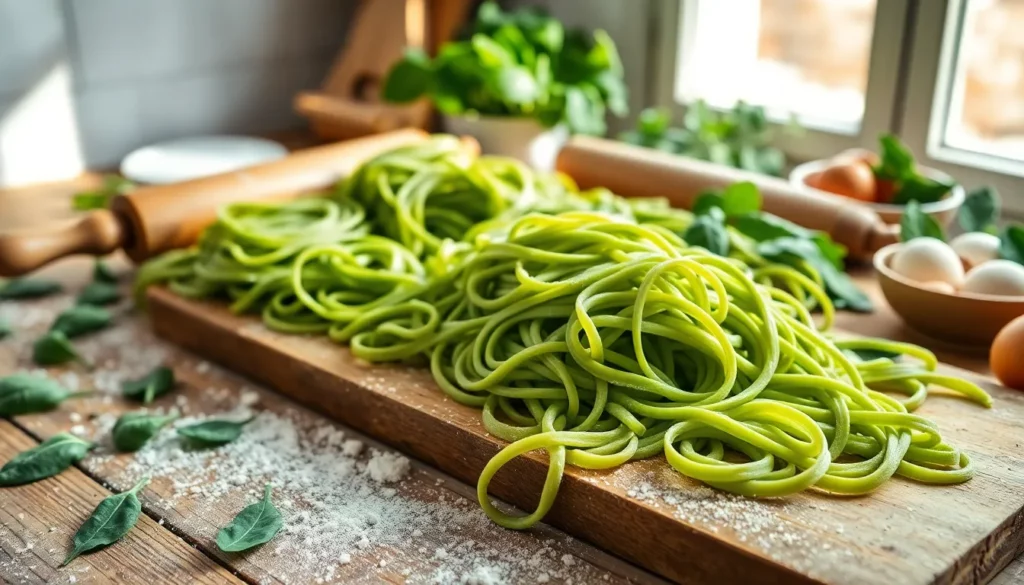
Pasta Verde (Italian for “green pasta”) is a type of pasta whose characteristic colour comes from the incorporation of leafy green vegetables—most commonly spinach—into the dough. Unlike plain pasta, which relies solely on durum wheat semolina or flour and eggs, Pasta Verde is enriched with a purée of blanched spinach, giving it a delicate vegetal flavour and a soft, tender texture. The practice of colouring pasta with vegetables dates back to the Renaissance, when Italian cooks began experimenting with natural pigments to create visually striking dishes for noble tables. Today, Pasta Verde is a staple of pasta fresca (fresh pasta) traditions, particularly in the northern regions of Emilia-Romagna, Liguria, and Piedmont, where fresh egg pasta is most prevalent.
While there is no specific DOP (Denominazione di Origine Protetta) or PGI (Indicazione Geografica Protetta) status for “Pasta Verde” as a generic term, certain regional green pastas are protected under broader designations. For example, Pasta all’Uovo from Emilia-Romagna, which often includes spinach, can be labelled under the PGI “Pasta di Gragnano” if produced in that area, though the green variant is not separately certified. The production method involves mixing finely chopped or puréed spinach (or other greens such as nettles, chard, or basil) with eggs and flour to form a homogeneous dough. The dough is then rolled, cut into shapes, and either used fresh or dried. The chlorophyll in the greens not only imparts colour but also adds a subtle earthy sweetness and a boost of nutrients, making Pasta Verde a favourite among chefs seeking both aesthetics and flavour.
Types & Grades
Pasta Verde is not a single product but a category that encompasses several variations based on the greens used, the ratio of vegetables to flour, and the drying process. The following table outlines the main types and their characteristics:
| Type | Greens Used | Texture & Flavour | Common Shapes | Typical Use |
|---|---|---|---|---|
| Spinach Pasta Verde | Spinach (fresh or frozen) | Soft, tender; mild, slightly sweet | Tagliatelle, fettuccine, lasagne sheets | Classic green pasta for ragù, cream sauces |
| Nettle Pasta Verde | Stinging nettle leaves | Firmer, more rustic; herbaceous, mineral | Pappardelle, gnocchi, orecchiette | Pairing with wild mushrooms, butter, sage |
| Basil Pasta Verde | Fresh basil leaves | Fragrant, slightly peppery; delicate | Linguine, trenette, trofie | Pesto, light seafood sauces |
| Mixed Greens Pasta Verde | Chard, kale, parsley, or a blend | Varies; often more robust and earthy | Fettuccine, pappardelle, farfalle | Hearty vegetable ragù, baked pasta |
In terms of grades, Pasta Verde is primarily classified by its moisture content and intended shelf life:
- Fresh Pasta Verde – Made with eggs and fresh greens, it has a high moisture content (around 30%) and must be refrigerated and consumed within a few days. It offers the most tender texture and vibrant colour.
- Dried Pasta Verde – Produced with durum wheat semolina and dehydrated greens (or spinach powder), it has a lower moisture content (around 12%) and a longer shelf life. The colour is less intense, and the flavour is more subdued, but it holds up better in soups and baked dishes.
- Artisanal Pasta Verde – Small-batch production using traditional methods, often with organic eggs and locally sourced greens. These products may be labelled “fatto a mano” (handmade) and are prized for their superior taste and texture.
How It’s Used in Cooking
Pasta Verde is a versatile ingredient that shines in both traditional and contemporary Italian cuisine. Its mild, vegetal flavour pairs well with a wide range of sauces, from rich meat ragùs to light olive oil and herb dressings. The following are signature dishes that rely on Pasta Verde:
- Lasagne Verdi alla Bolognese – A classic from Emilia-Romagna, where layers of green lasagne sheets alternate with Bolognese ragù, béchamel, and Parmigiano-Reggiano. The spinach pasta adds a subtle sweetness that balances the savoury meat sauce.
- Tagliatelle Verdi con Pesto – In Liguria, green tagliatelle are often served with pesto alla Genovese, a sauce made from basil, pine nuts, garlic, Parmigiano, and olive oil. The combination of two green elements creates a harmonious, herbaceous dish.
- Pappardelle Verdi ai Funghi – Wide green pappardelle tossed with sautéed wild mushrooms (porcini, chanterelles), garlic, thyme, and a splash of cream. The earthy nettle or spinach pasta complements the mushrooms’ umami.
- Gnocchi Verdi – While not strictly pasta, green gnocchi made with spinach and potato are a beloved variant, often served with butter and sage or a light tomato sauce.
“La pasta verde non è solo un colore, è un modo per portare l’orto in tavola.” – Traditional Italian saying (Green pasta is not just a colour, it’s a way to bring the garden to the table.)
Chefs also use Pasta Verde as a visual counterpoint in multi-coloured pasta dishes, such as pasta tricolore (green, white, and red) for patriotic or festive presentations. When cooking, fresh Pasta Verde requires only 2–4 minutes in salted boiling water, while dried versions need 8–12 minutes. To preserve the colour, avoid overcooking and shock the pasta in cold water if using it in a cold salad.
How to Choose/Identify Authentic Pasta Verde
For commercial buyers and home cooks alike, selecting authentic Pasta Verde involves evaluating several key factors:
- Ingredient List – Authentic Pasta Verde should list spinach (or another green vegetable) as a primary ingredient, not just artificial colouring (e.g., “spinach powder” or “chlorophyll”). Avoid products with added dyes like E141 or E100.
- Colour – Real Pasta Verde has a natural, slightly uneven green hue, often with tiny specks of the vegetable. An unnaturally bright or uniform green may indicate artificial colourants.
- Texture – Fresh Pasta Verde should feel supple and slightly moist, not dry or brittle. Dried versions should have a matte finish and a slight roughness that helps sauces adhere.
- Origin – Look for pasta made in Italy, especially from regions known for fresh pasta (Emilia-Romagna, Lombardy, Piedmont). Labels like “Prodotto in Italia” or “Prodotto in Emilia-Romagna” are good indicators.
- Certifications – While no DOP exists for Pasta Verde, some producers carry voluntary certifications such as “IGP” (if part of a protected pasta like Pasta di Gragnano) or “Biologico” (organic). These add a layer of quality assurance.
- Packaging – For fresh pasta, check the use-by date and ensure the package is refrigerated. Dried pasta should be stored in a cool, dark place and have a clear production date.
When purchasing for a restaurant or retail, consider the intended use: fresh Pasta Verde is ideal for delicate, quick-cooking dishes, while dried versions are better for long-simmered sauces or mail-order distribution.
Substitutes
If Pasta Verde is unavailable, several Italian alternatives can provide a similar colour or flavour profile:
- Pasta all’Uovo (Plain Egg Pasta) – The most straightforward substitute. It lacks the green colour but has a similar rich, tender texture. Use it in any recipe where the visual element is not critical.
- Pasta con Spinaci Secchi – Dried pasta made with spinach powder. It offers a milder green colour and a slightly more pronounced vegetal taste than fresh Pasta Verde. Good for long-simmered dishes.
- Pasta al Nero di Seppia – Black squid ink pasta. While not green, it provides a dramatic colour contrast and a briny flavour that works well with seafood sauces. Use when you want a striking visual alternative.
- Pasta di Semola di Grano Duro – Standard durum wheat pasta. It is the most neutral substitute and can be used in any application, though it lacks the tenderness of egg-based green pasta.
- Homemade Green Pasta – For those with time, making Pasta Verde from scratch using fresh spinach or nettles is the best substitute, as it allows full control over colour and flavour.
When substituting, consider the cooking time and sauce pairing. For example, a delicate pesto may be overwhelmed by a strong nettle pasta, while a hearty ragù can stand up to any green variant.
In conclusion, Pasta Verde is a vibrant and historically rich ingredient that embodies the Italian philosophy of using simple, natural elements to elevate everyday cooking. Whether you choose fresh or dried, spinach or nettle, this green pasta adds both visual appeal and subtle flavour to a wide array of dishes. By understanding its production, types, and authenticity cues, you can confidently select and use Pasta Verde to bring a touch of Italian garden tradition to your table.
FAQ
What is Pasta Verde?
Pasta Verde is a type of Italian pasta that is naturally coloured green by incorporating puréed spinach or other leafy greens into the dough. It can be fresh or dried and is known for its mild, vegetal flavour and tender texture.
Is Pasta Verde healthy?
Pasta Verde can be a healthier option than plain pasta because it includes vegetables, which add fibre, vitamins (such as vitamin A and K), and antioxidants like chlorophyll. However, the nutritional value depends on the specific recipe and serving size.
How do I make Pasta Verde at home?
To make Pasta Verde at home, blanch fresh spinach, squeeze out excess water, and purée it. Mix the purée with eggs and flour (or semolina) to form a dough, then roll and cut into desired shapes. Cook fresh pasta in salted boiling water for 2–4 minutes.

Leave a Reply