Short Answer
What It Is
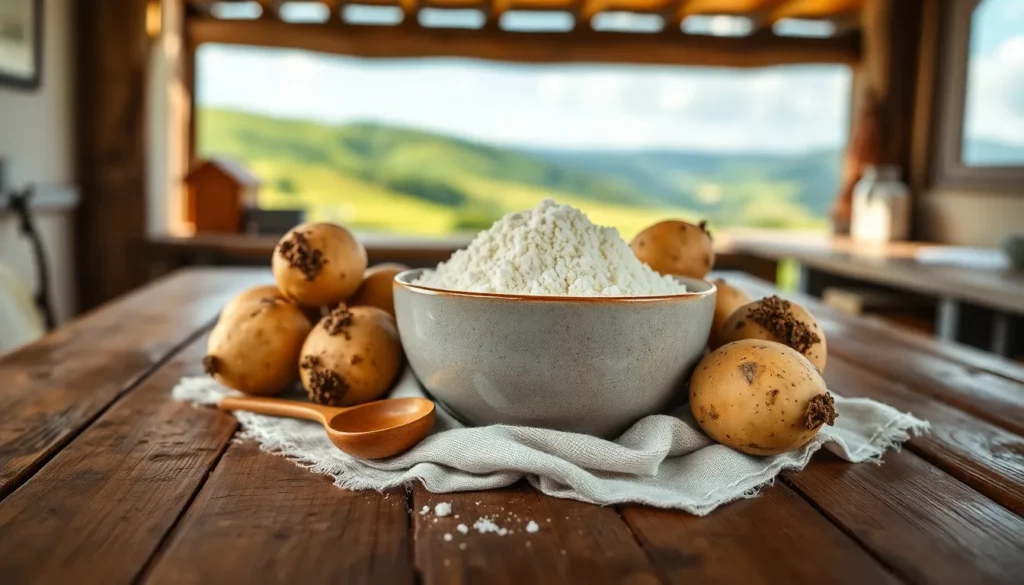
Fecola (pronounced FEH-ko-lah) is the Italian word for starch, but in culinary contexts it most commonly refers to fecola di patate—potato starch. This fine, white powder is extracted from the tubers of the potato plant (Solanum tuberosum) through a process of washing, grinding, and centrifugal separation. Unlike wheat flour, fecola is naturally gluten-free and prized for its neutral flavor and exceptional thickening power.
The production of fecola has deep roots in Italian agriculture, particularly in the Sila plateau of Calabria, where the cool climate and mineral-rich volcanic soils yield potatoes with a high starch content. Since 2005, Fecola di patate della Sila has held Indicazione Geografica Protetta (IGP) status, a European certification that guarantees the product is entirely produced within the designated region using traditional methods. The IGP designation protects both the quality and the cultural heritage of this ingredient, which has been a staple in Italian kitchens for centuries.
The extraction process begins with washing and peeling the potatoes, followed by grating them into a pulp. The starch is then separated from the fibers through repeated washing and sedimentation. After drying, the resulting powder is sifted to achieve a uniform, silky texture. The entire process is water-intensive and requires careful temperature control to preserve the starch’s functional properties.
Types & Grades
Fecola is available in several grades and types, each suited to different culinary applications. The table below summarizes the most common classifications:
| Type | Source | Granulation | Best Use |
|---|---|---|---|
| Fecola di patate (fine) | Potato | Very fine, silky | Sauces, soups, gluten-free baking |
| Fecola di patate (extra fine) | Potato | Ultra-fine, almost powdery | Desserts, delicate creams, baby food |
| Fecola di mais (cornstarch) | Corn | Fine, slightly coarser | Thickening puddings, custards, Asian dishes |
| Fecola di tapioca | Cassava root | Fine to medium | Gluten-free breads, chewy textures |
| Fecola di riso (rice starch) | Rice | Very fine | Light sauces, gluten-free pastries |
Within the IGP category, Fecola di patate della Sila is further graded by purity and moisture content. Professional chefs often seek out extra bianca (extra white) grades for their superior brightness and neutral taste. Organic certifications are also common, reflecting the region’s commitment to sustainable agriculture.
How It’s Used in Cooking
Fecola is a versatile thickener and binder in Italian cuisine. Its ability to form a clear, glossy gel at relatively low temperatures makes it ideal for delicate sauces and fruit-based desserts. Here are the most iconic applications:
Traditional Sauces and Soups
In brodo (broth-based soups) and sughi (meat or vegetable sauces), a slurry of fecola and cold water is stirred in at the end of cooking to achieve a velvety consistency without clouding the liquid. This technique is essential for minestrone and passato di verdure.
Gnocchi di Patate
Perhaps the most famous use of fecola is in gnocchi di patate. While many recipes call for all-purpose flour, a small proportion of fecola (typically 10–20% of the total flour) yields lighter, more tender gnocchi that hold their shape better during cooking. The starch absorbs excess moisture from the potatoes, reducing the need for additional flour.
Desserts and Creams
Italian pastry chefs rely on fecola for crema pasticcera (pastry cream), budino (pudding), and gelato. Its neutral flavor allows the primary ingredients—eggs, milk, vanilla—to shine. In torta della nonna, fecola is used to thicken the custard filling, ensuring a silky slice.
Gluten-Free Baking
As a gluten-free starch, fecola is a key component of many Italian gluten-free flour blends. Combined with rice flour and xanthan gum, it mimics the structure of wheat in cakes, cookies, and bread. The IGP fecola from Sila is particularly prized for its consistent performance in professional gluten-free formulations.
“La fecola è l’anima invisibile della cucina italiana: senza di lei, le salse non sarebbero vellutate e gli gnocchi non sarebbero soffici.” — Traditional saying among Calabrian cooks
How to Choose/Identify Authentic Fecola
For commercial buyers and discerning home cooks, selecting genuine fecola—especially the IGP variety—requires attention to several cues:
- Look for the IGP seal: Authentic Fecola di patate della Sila IGP will display the European PGI logo and a lot number traceable to the producer. The packaging often includes the words “Prodotto in Italia” and the specific region “Sila”.
- Check the color: High-quality potato starch is pure white with no yellow or gray tinge. Any discoloration may indicate impurities or improper drying.
- Feel the texture: Rub a small amount between your fingers. Authentic fecola should feel silky and smooth, not gritty. It should not clump excessively when dry.
- Read the ingredient list: The only ingredient should be “fecola di patate” or “potato starch”. Avoid products with added anti-caking agents or preservatives.
- Verify the origin: While generic potato starch is widely available, the IGP product is exclusively from the Sila plateau in Calabria. If the label says “Prodotto in Italia” but not “della Sila”, it may still be Italian but not IGP-certified.
- Test the thickening power: Mix 1 tablespoon of fecola with 2 tablespoons of cold water, then stir into 1 cup of simmering liquid. Authentic fecola should thicken quickly and form a clear, glossy gel without lumps.
Substitutes
When fecola is unavailable, several Italian-approved substitutes can be used, each with specific considerations:
- Amido di mais (cornstarch): The most common substitute. It thickens at a slightly higher temperature and produces a less glossy finish. Use a 1:1 ratio, but expect a slightly opaque result.
- Amido di tapioca (tapioca starch): Excellent for gluten-free baking and chewy textures. It creates a more elastic gel than fecola, making it ideal for mochi-like desserts but less suitable for delicate sauces.
- Farina di riso (rice flour): A good alternative for thickening soups and stews, though it requires longer cooking to eliminate raw taste. Use 1.5 times the amount of fecola called for.
- Arrowroot: While not traditional in Italy, arrowroot starch behaves similarly to fecola and is often used in modern Italian cuisine for its neutral flavor and clear gel. Use a 1:1 ratio.
Each substitute alters the final texture and appearance, so chefs should test proportions when adapting recipes. For IGP-specific applications, such as gnocchi or pastry cream, fecola remains the gold standard.
Conclusion
Fecola, particularly the IGP-certified Fecola di patate della Sila, is a testament to Italy’s dedication to ingredient quality and tradition. From its origins in the volcanic soils of Calabria to its essential role in sauces, gnocchi, and desserts, this humble starch elevates both rustic and refined dishes. By understanding its types, uses, and authenticity markers, cooks can harness the full potential of fecola and bring a touch of Italian culinary mastery to their kitchens.
FAQ
What is fecola and how is it different from regular potato starch?
Fecola is the Italian term for starch, but in culinary contexts it almost always refers to potato starch. The key difference is that authentic Italian fecola, especially the IGP variety from Sila, is produced using traditional methods and specific potato varieties, resulting in a finer texture and more neutral flavor than generic potato starch.
Is fecola gluten-free?
Yes, fecola (potato starch) is naturally gluten-free. It is a popular ingredient in gluten-free baking and cooking, often used in combination with other gluten-free flours to improve texture and binding.
How should I store fecola?
Store fecola in an airtight container in a cool, dry place away from direct sunlight. Properly stored, it can last up to two years. Avoid moisture, as it can cause clumping and reduce thickening power.
Leave a Reply