
Short Answer
What It Is
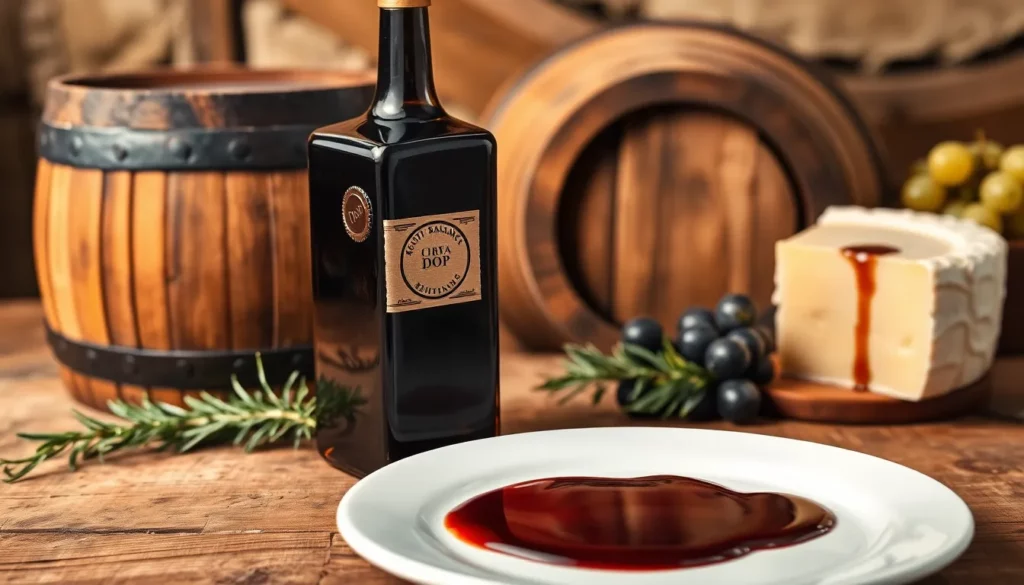
Aceto Balsamico Tradizionale is a premium Italian vinegar produced exclusively in the provinces of Modena and Reggio Emilia, Emilia-Romagna. It is made from cooked grape must (mosto cotto) of local varieties such as Trebbiano and Lambrusco, which is then aged for a minimum of 12 years in a series of wooden barrels (batteria) made from different woods—oak, chestnut, cherry, ash, mulberry, and juniper. The aging process concentrates the must, developing a complex, sweet-sour flavor and a syrupy, dark brown consistency. The product is protected by the European Union’s Denominazione di Origine Protetta (DOP) status, ensuring that only vinegar produced according to strict traditional methods in the designated regions can bear the name Aceto Balsamico Tradizionale. Two distinct DOPs exist: Aceto Balsamico Tradizionale di Modena DOP and Aceto Balsamico Tradizionale di Reggio Emilia DOP, each with its own consortium and slightly different aging requirements.
“The balsamic vinegar of Modena is not a condiment; it is a meditation.” – Italian food writer
Types & Grades
Authentic Aceto Balsamico Tradizionale is classified by age, with each grade reflecting a minimum aging period. The following table outlines the official grades recognized by the DOP consortia:
| Grade | Minimum Aging | Characteristics |
|---|---|---|
| Affinato (or “Giovane”) | 12 years | Balanced sweet-sour, fluid but syrupy, with fruity and woody notes. |
| Vecchio | 25 years | Thicker, more intense, with deeper caramel, dried fruit, and spice aromas. |
| Extra Vecchio | 25+ years (often 30–50) | Extremely dense, almost syrupy, with complex balsamic, leather, and oak notes; very limited production. |
In addition to the DOP grades, there are other balsamic products:
- Condimento Balsamico – Not DOP, but often made with similar methods; may include wine vinegar and caramel; variable quality.
- Aceto Balsamico di Modena IGP – A protected geographical indication product that includes wine vinegar and must, aged for a shorter period; more affordable and widely available.
- Industrial Balsamic – Mass-produced, often with added thickeners and artificial colors; not recommended for authentic cooking.
How It’s Used in Cooking
True Aceto Balsamico Tradizionale is best used raw or in minimal cooking to preserve its delicate aromas. Traditional Italian applications include:
- On Parmigiano-Reggiano – A few drops on aged cheese enhance both flavors.
- With strawberries or vanilla gelato – The sweet-sour contrast is a classic dessert pairing.
- Drizzled over grilled meats or fish – Adds depth without overpowering.
- In risotto – A splash at the end brightens the dish.
- As a finishing glaze – Reduced balsamic (often from IGP) is used for glazes, but traditional vinegar is too precious to boil down.
Signature dishes: Risotto alla zucca con aceto balsamico (pumpkin risotto), Tagliata di manzo (sliced beef steak) with balsamic drizzle, and Pere al vino rosso con aceto balsamico (pears in red wine).
How to Choose/Identify Authentic ACETO
When purchasing Aceto Balsamico Tradizionale, look for these authenticity cues:
- DOP seal – The official EU logo and the consortium’s stamp (e.g., “Consorzio Aceto Balsamico Tradizionale di Modena”).
- Bottle shape – Modena DOP uses a square, squat bottle; Reggio Emilia DOP uses a tulip-shaped bottle. Both are sealed with a wax cap and numbered.
- Ingredients list – Only “cooked grape must” (mosto d’uva cotto) should appear. No wine vinegar, caramel color, thickeners, or preservatives.
- Aging statement – Look for “Affinato” (12 years) or “Vecchio” (25 years). Some bottles indicate the year of the first barrel.
- Price – Authentic DOP balsamic is expensive (€30–€100+ for 100 ml). Extremely cheap bottles are not traditional.
- Color and viscosity – It should be dark brown, glossy, and syrupy, but not artificially thick.
Avoid products labeled simply “Balsamic Vinegar of Modena” (IGP) if you seek the traditional DOP experience. The IGP version is a different product, though still quality if from reputable producers.
Substitutes
If authentic Aceto Balsamico Tradizionale is unavailable, consider these genuine Italian substitutes:
- Aceto Balsamico di Modena IGP – The closest alternative; use in cooking or dressings where the vinegar will be reduced or mixed. It lacks the complexity of the DOP but is still a quality product.
- Aceto di Vino (Wine Vinegar) – For acidity in vinaigrettes or marinades, a good red or white wine vinegar works. Add a touch of honey or sugar to mimic sweetness.
- Aceto di Mele (Apple Cider Vinegar) – Provides fruity acidity; suitable for salads or deglazing, but not for traditional balsamic applications.
- Reduction of wine vinegar and sugar – Simmer red wine vinegar with sugar until syrupy; this creates a balsamic-style glaze, though it lacks the barrel-aged complexity.
Each substitute serves a different purpose: IGP balsamic for authenticity, wine vinegar for acidity, and reductions for glazes. For raw finishing, only the DOP traditional balsamic delivers the full sensory experience.
In summary, Aceto Balsamico Tradizionale is a unique, artisanal product that embodies the culinary heritage of Emilia-Romagna. Its DOP protection ensures authenticity, while its aging grades offer a range of intensities. Use it sparingly to elevate simple dishes, and always verify the seal and ingredients when purchasing. Whether drizzled on cheese or stirred into risotto, this liquid gold transforms everyday cooking into a celebration of Italian tradition.
FAQ
What is the difference between Aceto Balsamico Tradizionale and regular balsamic vinegar?
Aceto Balsamico Tradizionale is a DOP-protected product made only from cooked grape must and aged for at least 12 years in wooden barrels. Regular balsamic vinegar (often labeled as Aceto Balsamico di Modena IGP) includes wine vinegar, may contain caramel color, and is aged for a shorter period. The traditional version is thicker, more complex, and significantly more expensive.
Can I cook with expensive aged Aceto Balsamico Tradizionale?
It is best used raw or as a finishing touch. Cooking or reducing it can destroy the delicate aromas developed over decades. For cooking, use a younger Affinato or a quality IGP balsamic instead.
How should I store Aceto Balsamico Tradizionale?
Store it in a cool, dark place away from direct sunlight and heat. The bottle should be kept tightly sealed. Unlike wine, it does not improve after bottling, but it can last for years if stored properly.



Leave a Reply