
Short Answer
What Is Abbacchio? Italian Lamb Explained
Abbacchio is a celebrated culinary specialty originating from the Lazio region of Italy, specifically associated with the city of Rome. It refers exclusively to the meat of young lambs, typically suckling lambs slaughtered between one and two months of age, weighing no more than eight kilograms. Unlike generic lamb, Abbacchio is protected by the Indicazione Geografica Protetta (IGP) designation, ensuring strict adherence to traditional breeding and feeding standards. The meat is renowned for its tenderness, delicate flavor, and pale pink color, resulting from a diet consisting primarily of maternal milk and grazing on the natural pastures of the Roman countryside. Key ingredients in its preparation often include rosemary, garlic, white wine, and vinegar, creating a aromatic profile that defines Roman Easter cuisine.
Origin & History
The history of Abbacchio is deeply intertwined with the pastoral traditions of the Roman Campagna, the expansive countryside surrounding Rome. Its origins date back to Ancient Roman times, where sheep farming was a dominant economic activity due to the region’s volcanic soil and lush grasslands. Historical records suggest that lamb was a staple protein for both the patrician class and common citizens, often sacrificed during religious festivals. The term Abbacchio itself is believed to derive from the Latin agnus (lamb) or potentially from the dialectal phrase ab bacchio, referring to the staff used by shepherds. Throughout the Middle Ages, the transhumance practice, where herds moved seasonally between mountains and plains, solidified the supply chain for high-quality lamb in Rome. By the 19th century, Abbacchio had become synonymous with Easter celebrations, symbolizing renewal and sacrifice. In 2009, the European Union granted Abbacchio Romano IGP status, legally protecting its production methods and geographical origin to preserve its authenticity against industrial imitation.
What’s In It
The core ingredient of Abbacchio is the young lamb itself, specifically breeds such as the Sopravissana or Bagnolese raised within the Lazio region. The preparation nuances depend on the cut, but the flavor profile remains consistent. Traditional recipes emphasize simplicity to highlight the quality of the meat. Common aromatics include fresh rosemary, garlic, salt, and black pepper. Liquid elements often involve dry white wine and vinegar, which help tenderize the meat and cut through the richness of the fat. It is crucial to differentiate Abbacchio from Agnello, which refers to older lamb (usually over two months) with a stronger, gamier flavor and darker meat. While Agnello is common throughout Italy, Abbacchio is strictly a Roman designation. Furthermore, it is not to be confused with goat meat or mutton, which are significantly tougher and possess distinct flavor profiles unsuitable for traditional Abbacchio recipes.
Regional Variations
While Abbacchio is quintessentially Roman, preparations vary slightly within Lazio and neighboring regions. The following comparison highlights how lamb dishes differ across central and southern Italy:
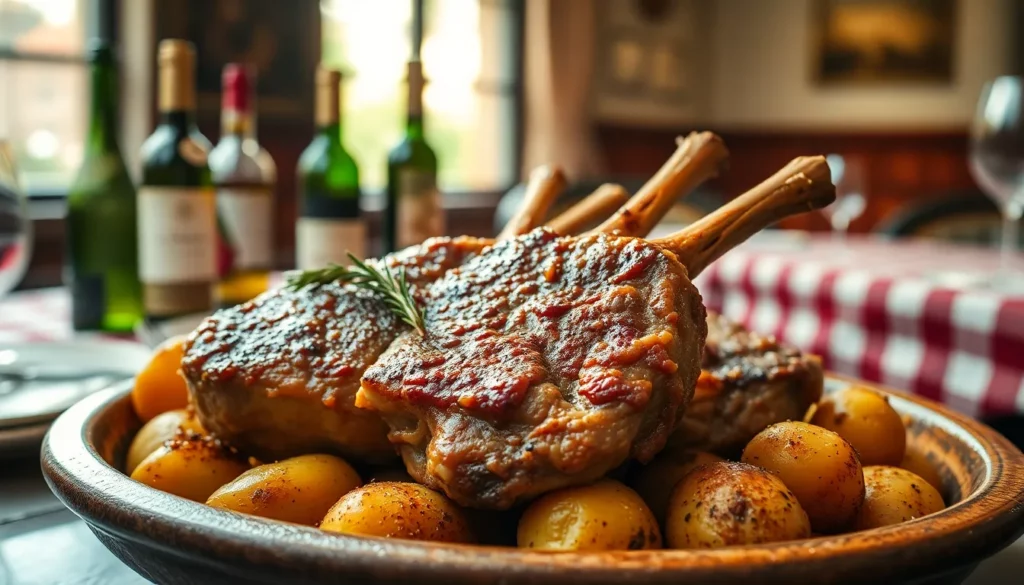
- Rome (Lazio): Focuses on Abbacchio al Forno (oven-roasted) with potatoes or Abbacchio a Scottadito (grilled chops). The seasoning is minimal, relying on rosemary and garlic.
- Abruzzo: Lamb is often cooked in a ragù sauce served over pasta or prepared alla brace (charcoal grilled) with spicy peppers, reflecting a more robust mountain cuisine.
- Sicily: Lamb dishes frequently incorporate sweet and sour elements, such as raisins, pine nuts, and cinnamon, showcasing Arab influences distinct from the herbal Roman style.
- Sardinia: Known for Agnello roasted over myrtle wood fires, imparting a smoky flavor profile different from the wine-based braising of Lazio.
How It’s Traditionally Eaten
In the traditional Italian meal structure, Abbacchio is served as a secondo, or second course, following the primo (pasta or rice). It is rarely eaten as an everyday meal due to the cost and significance of the meat; instead, it is reserved for special occasions, most notably Easter Sunday (Pasqua). Family gatherings center around the roasting of the lamb, often accompanied by roasted potatoes (patate al forno) or bitter greens like chicory to balance the richness. Wine pairings typically include robust reds from the Lazio region, such as Cesanese del Piglio or Frascatti Superiore. In trattorias, Abbacchio a Scottadito is served sizzling hot, named so because the chops are meant to be eaten with hands, burning the fingers slightly in the process.
Common Mistakes / What It’s Not
There are several misconceptions regarding Abbacchio, particularly among international audiences. First, it is not mutton; mutton comes from sheep over two years old and has a tough texture unsuitable for this dish. Second, it is not a pasta dish; while lamb ragù exists, Abbacchio refers to the meat course itself. Third, American-Italian interpretations often overload the dish with heavy tomato sauces or oregano, which masks the delicate flavor of the young lamb. Authentic Roman preparation avoids heavy tomato bases for Abbacchio, preferring white wine and herbs. Additionally, substituting older lamb for true Abbacchio results in a chewier, gamier experience that violates the IGP standards. Cooks should avoid overcooking; the meat should remain juicy and pink internally.
Where to Try It / What to Order
For travelers seeking authentic Abbacchio, Rome is the primary destination. Historic trattorias in the Trastevere, Testaccio, and Monti neighborhoods are renowned for serving traditional recipes. Establishments like Trattoria Da Enzo or Flavio al Velavevodetto are highly recommended. During the Easter period, local markets and butchers (macellerie) display fresh Abbacchio prominently. When ordering, look for Abbacchio Romano IGP on the menu to ensure authenticity. For a complete experience, order Abbacchio al Forno con Patate for a hearty meal or Abbacchio a Scottadito for a tactile, social dining experience. Festivals such as the Sagra dell’Abbacchio in various Lazio towns offer opportunities to taste the dish prepared by local masters.
Related Dishes
Quick Facts
| Fact | Detail |
|---|---|
| Origin year | Ancient Roman Era (Codified 2009 IGP) |
| Primary region | Lazio (Rome) |
| Key ingredient | Milk-fed Lamb (max 2 months) |
| Typical serving size | 200-300 grams per person |
| Seasonality | Year-round, peak at Easter |
FAQ
Q: Is Abbacchio the same as Agnello?
A: No. Abbacchio refers specifically to suckling lamb under two months old from Lazio, while Agnello is older lamb found throughout Italy.
Q: Can I substitute beef?
A: No. The delicate flavor and texture of young lamb are central to the dish; beef will alter the taste and cultural integrity.
Q: How long does it keep?
A: Cooked Abbacchio should be consumed within 2 days if refrigerated; it does not freeze well due to the high moisture content of young meat.
Leave a Reply