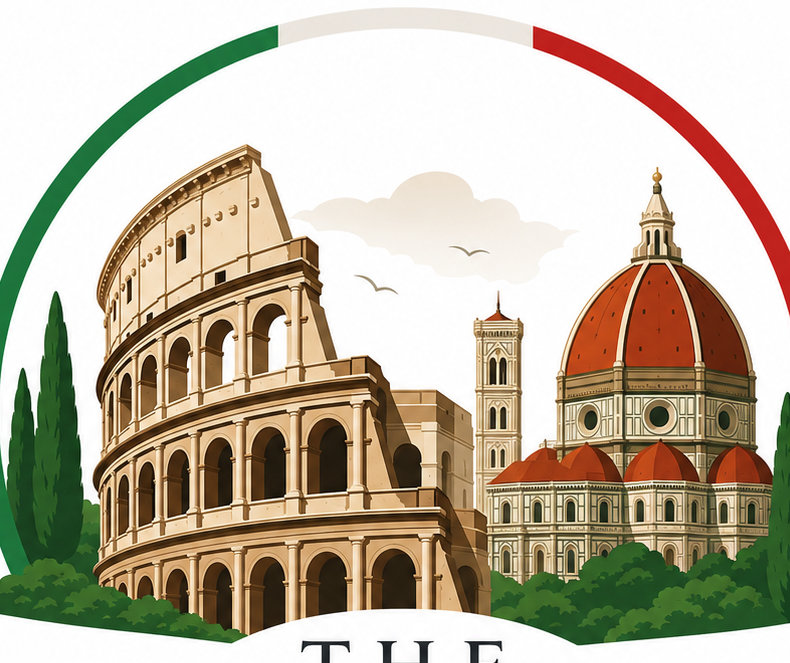
Short Answer
Overview
The Italian Renaissance (c. 1300–1600) was a watershed epoch that reshaped Western civilization. Originating in the city‑states of Tuscany, particularly Florence, it marked a revival of classical antiquity, a radical re‑orientation toward human potential, and an unprecedented flourishing of the visual arts, literature, and scientific inquiry. Powered by the wealth of mercantile families, the intellectual vigor of humanist scholars, and the competitive patronage of rival courts, the Renaissance spread northward, leaving an indelible imprint on politics, religion, and the very way Europeans imagined the world.
Chronological Timeline
| Date | Event |
|---|---|
| 1300‑1320 | Proto‑Renaissance poetry of Dante Alighieri (“Divine Comedy”) establishes a vernacular literary tradition. |
| 1348 | The Black Death decimates Italy’s population, prompting social upheaval and new labor dynamics. |
| 1375‑1385 | Humanist scholarship flourishes under Coluccio Salutati and Francesco Bruni in Florence. |
| 1401 | Birth of Lorenzo de’ Medici, future patron of arts and political stabilizer of Florence. |
| 1420‑1440 | Masaccio’s frescoes at Brancacci Chapel introduce linear perspective. |
| 1453 | Fall of Constantinople brings Greek scholars and manuscripts to Italy, enriching humanist study. |
| 1469‑1492 | Leonardo da Vinci apprentices in Verrocchio’s workshop, later producing “The Last Supper” (1498). |
| 1494‑1498 | French invasion of Italy triggers the Italian Wars, reshaping political alliances. |
| 1503‑1506 | Michelangelo sculpts “David,” epitomizing High Renaissance ideals. |
| 1517 | Martin Luther’s theses initiate the Reformation, indirectly affecting Renaissance patronage. |
| 1527 | Sack of Rome marks the end of the High Renaissance; Mannerism emerges. |
| 1545‑1563 | Council of Trent codifies Counter‑Reformation, influencing artistic themes. |
| 1600 | Transition to Baroque style signals the close of the Renaissance period. |
Key Events
- 1302 – Florence adopts the Ordinances of Justice, limiting aristocratic power and fostering a civic environment conducive to artistic commissions.
- 1434 – Brunelleschi completes the dome of Santa Maria del Fiore, pioneering engineering and perspective.
- 1450 – Introduction of the printing press to Italy (Venice), accelerating the diffusion of humanist texts.
- 1492 – Completion of the “Mona Lisa” by Leonardo da Vinci, exemplifying psychological portraiture.
- 1512 – Pope Julius II commissions Michelangelo’s Sistine Chapel ceiling, merging theology with artistic innovation.
Influential Figures
- Francesco Petrarch (1304–1374) – Father of humanism; his Latin letters revived classical rhetoric.
- Lorenzo de’ Medici (1449–1492) – Florentine ruler and patron who supported Botticelli, Michelangelo, and Leonardo.
- Leonardo da Vinci (1452–1519) – Polymath whose notebooks merged art, anatomy, and engineering.
- Michelangelo Buonarroti (1475–1564) – Sculptor, painter, and architect whose works defined the High Renaissance aesthetic.
- Niccolò Machiavelli (1469–1527) – Political theorist whose “The Prince” reflected the pragmatic realism of Renaissance statecraft.
Cultural & Societal Impact
The Renaissance reconfigured European thought in several interlocking ways. In art, the mastery of linear perspective, chiaroscuro, and anatomical accuracy produced a new visual language that celebrated both the divine and the human. Literature shifted from Latin to vernacular tongues, fostering national identities; Dante, Petrarch, and Boccaccio set precedents for modern narrative forms. Scientific inquiry, exemplified by the meticulous observations of Leonardo and the astronomical calculations of Galileo (who inherited the Renaissance spirit of empirical challenge), laid groundwork for the Scientific Revolution. Politically, the emergence of the modern statecraft model—exemplified by Machiavelli’s realism—reflected a move away from medieval feudal legitimacy toward secular governance based on merit and public welfare. Finally, the patronage system, wherein wealthy families and papal courts financed artistic production, created a market-driven cultural economy that would echo into the modern era.
Legacy and Modern Relevance
“The Renaissance is not a period of history; it is a way of seeing the world that still informs our imagination.” – Giorgio Vasari, *Lives of the Most Excellent Painters, Sculptors, and Architects* (1550)
Conclusion
The Italian Renaissance stands as a crucible of transformation: a synthesis of classical learning, innovative technique, and bold individualism that reshaped art, science, and politics. Its reverberations are evident in contemporary education, museum curation, and even in the entrepreneurial spirit that fuels modern creative economies. By studying its complex tapestry—its triumphs, its tensions, and its enduring questions—we gain insight not only into the past but also into the perennial human quest to understand and reinvent the world.
FAQ
What distinguishes the Italian Renaissance from the Northern Renaissance?
The Italian Renaissance originated in city‑states with a direct inheritance of Roman antiquity, emphasizing visual art, humanist scholarship, and patronage. The Northern Renaissance, while sharing humanist ideas, was more focused on religious reform, print culture, and incorporated Gothic artistic traditions.
Why is Florence considered the cradle of the Renaissance?
Florence combined a thriving banking economy (the Medici), a republican civic structure that encouraged public debate, and a concentration of scholars and artists. This unique mix created fertile ground for the experimentation and patronage that defined early Renaissance achievements.
Did the Renaissance affect everyday life for ordinary Italians?
Yes. The spread of printed books increased literacy; new artistic commissions decorated churches and public spaces; and humanist ideas gradually filtered into education, influencing curricula in convent schools and later secular academies, thereby reshaping cultural expectations across social strata.
Leave a Reply