Short Answer
| Fact | Detail |
|---|---|
| Capital | Milan |
| Population | ≈ 27.8 million (2023) |
| Area | ≈ 120,800 km² |
| Major Cities | Milan, Turin, Venice, Bologna, Genoa, Verona, Brescia, Padua, Trieste, Bolzano |
| Bordering Regions | Switzerland, Austria, France, Slovenia, Central Italy (Tuscany, Marche, Lazio) |
Geography & Landscape
Northern Italy stretches from the snow‑capped peaks of the Alps and the Apennine foothills to the shimmering waters of the Adriatic, Ligurian and Tyrrhenian seas. The region encompasses the fertile Po Valley, Europe’s most intensively cultivated plain, which runs east‑west from the Alps to the Adriatic and supports a dense network of rivers, canals and vineyards. To the north, the Alpine arc creates dramatic passes such as the Stelvio and the Brenner, fostering centuries‑old trade routes between Italy and the rest of Europe. The sub‑Alpine lakes—Como, Garda, Maggiore—are renowned for their micro‑climates, supporting both Mediterranean and Alpine flora.
Climate varies markedly: the Po Valley experiences humid continental conditions with hot, humid summers and fog‑laden winters, while the Ligurian coastline benefits from a mild Mediterranean climate year‑round. The Alpine sector records a typical Alpine climate, with heavy snowfall that sustains world‑class ski resorts like Cortina d’Ampezzo and Val Gardena. These geographic contrasts underpin the region’s agricultural diversity, from rice paddies in the flatlands to alpine dairy farms producing iconic cheeses such as Grana Padano and Asiago.
History
Northern Italy has been a crucible of European civilization since antiquity. In Roman times, the area formed the heart of Cisalpine Gaul, a strategic corridor linking the empire’s capital with the trans‑Alpine frontiers. The fall of Rome gave way to Lombard, Frankish and later Holy Roman Empire dominion, embedding a distinct Germanic cultural layer that survives in dialects and legal traditions. During the Middle Ages, powerful city‑states such as Milan, Venice, Genoa and Florence (though technically central) emerged as maritime and banking powerhouses, competing for control of trade routes across the Mediterranean and the North Sea.
The Renaissance saw Northern Italy become a laboratory for artistic innovation, with patrons like the Sforza and the Gonzaga commissioning works from Leonardo da Vinci, Titian and Veronese. The region was also a hotbed of early industrialization; the Po Valley’s textile mills and later the automotive hub of Milan propelled Italy into the modern age. In the 19th century, the Risorgimento leveraged Northern Italy’s economic clout to unify the peninsula, culminating in the proclamation of the Kingdom of Italy in 1861. The twentieth century brought both world wars, with the Alpine front witnessing fierce battles, and a post‑war economic miracle that transformed the region into Europe’s most prosperous area. For a broader view of Italy’s past, see the History pillar.
Major Cities & Towns
- Milan – Italy’s financial capital, famed for fashion, design and the majestic Duomo; explore more on the Milan city guide.
- Turin – Former royal seat of the House of Savoy, renowned for Baroque architecture and the iconic Mole Antonelliana.
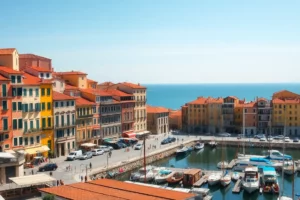
- Venice – The lagoon city of canals, palazzi and St. Mark’s Square; a UNESCO World Heritage masterpiece.
- Bologna – Home to the oldest university in the world, celebrated for its porticoes and culinary tradition.
- Genoa – A historic maritime republic with a bustling harbor and the striking Aquarium of Genoa.
- Verona – Shakespeare’s Verona, known for the Roman arena and the romantic balcony of Juliet.
- Padua – A university city famous for the Scrovegni Chapel frescoes by Giotto.
- Trieste – A cosmopolitan port at the crossroads of Latin, Slavic and Germanic cultures.
Food & Culture Specific to the Region
Northern Italian cuisine diverges sharply from its southern counterpart, emphasizing butter, rice, polenta and rich cheeses over olive oil and tomatoes. Signature dishes include risotto alla Milanese (saffron‑infused rice), pesto alla Genovese (basil, pine nuts, Parmesan and olive oil), and the hearty bagna cauda dip of Piedmont. The region also produces world‑renowned wines such as Barolo, Prosecco, and Amarone, each reflecting distinct terroirs.
Cultural festivals showcase this culinary wealth: the Festa del Redentore in Venice, the Alba International White Truffle Fair in Piedmont, and the Eurochocolate in Perugia (though technically Umbria, it draws Northern visitors). Traditional crafts persist in the Alpine valleys, where woodcarving, lace‑making and the art of cheese‑aging remain integral to community identity. For a deeper dive into regional gastronomy, visit the Cuisine guide.
What the Region Is Known For
Beyond food, Northern Italy is synonymous with industry, design, and high culture. Milan leads global fashion weeks, while the region hosts automotive giants such as Fiat in Turin and luxury car makers in Modena (Emilia‑Romagna). The area is a cradle of artistic movements: the Venetian School, Lombard Renaissance, and the Futurist avant‑garde all originated here. Dialects are equally varied—Lombard, Piedmontese, Venetian, Ligurian and German‑speaking varieties in South Tyrol—each preserving medieval linguistic traits.
Annual events draw international crowds: the Venice Film Festival, the Salone del Mobile in Milan, and the Trento Film Festival** for documentary cinema. UNESCO World Heritage sites pepper the landscape, from the historic centre of Verona to the Alpine “Dolomites” mountain range, recognized for their geological uniqueness and breathtaking vistas.
Visiting Northern Italy
The optimal time to visit depends on interests: late spring (May‑June) offers mild weather for city strolling and lake cruises, while September‑October provides harvest festivals and optimal wine‑tasting conditions. Winter attracts ski enthusiasts to the Alps, especially in the Val di Fassa and the Aosta Valley.
Transportation is exceptionally developed. High‑speed rail (Frecciarossa, Italo) links Milan, Turin, Bologna and Venice in under three hours, while regional trains serve smaller towns. Major airports in Milan (Malpensa, Linate), Venice (Marco Polo) and Bologna provide international connections. For intra‑regional travel, a rental car is handy in the valleys, but dense public‑transport networks often make driving unnecessary.
Travel tips: purchase a regional rail pass for cost‑effective journeys, respect local dining customs (e.g., “aperitivo” before dinner), and remember that many Alpine villages have limited Wi‑Fi, encouraging a digital detox. Pack layered clothing to adapt to rapid climate changes between plains and mountains.
FAQ
Is Northern Italy the same as Central Italy?
No. Northern Italy comprises the Alpine and Po Valley regions such as Lombardy, Veneto and Piedmont, while Central Italy includes Tuscany, Umbria and Lazio. Each macro‑region has distinct geography, culture and culinary traditions. See our Central Italy guide for details.
What language/dialect is spoken in Northern Italy?
Standard Italian is spoken nationwide, but Northern Italy hosts a variety of regional dialects: Lombard, Piedmontese, Venetian, Ligurian and German‑speaking varieties in South Tyrol. These dialects preserve medieval linguistic traits and are still used in everyday conversation, especially in rural areas.
Do I need a car to explore Northern Italy?
A car is useful for reaching Alpine villages and lake districts where public transport is limited, but major cities are well‑served by high‑speed trains and regional buses. Many travelers combine rail for city hops and rent a car only for countryside excursions.
Leave a Reply