Short Answer
Getting There
Pisa serves as a major transport hub for Tuscany, making it highly accessible for international and domestic travelers. The primary arrival point is Pisa International Airport (Galileo Galilei), located just a few kilometers from the city center. Direct shuttle buses and taxis connect the airport to the central train station, Pisa Centrale, typically taking under ten minutes. For those arriving by rail, Pisa Centrale is a key stop on the main line connecting Rome, Florence, and La Spezia. Direct high-speed and regional trains run frequently from Florence Santa Maria Novella, with journey times averaging around one hour. Travelers coming from Rome should expect a trip of approximately three hours, often requiring a change in Florence depending on the service selected. Direct connections from Milan are available but take longer, usually exceeding three hours. Bus services also operate from major Italian cities, though trains are generally preferred for comfort and reliability. Always verify current schedules and platform information with official rail operators before departure, as timetables can change seasonally.
Getting Around
The historic center of Pisa is compact and largely pedestrian-friendly, making walking the most efficient way to explore major sights. The area between the train station and the Piazza dei Miracoli is flat and well-signposted. Local buses operated by the regional transit authority cover wider areas and connect the center to outer neighborhoods and the airport. Tickets should be purchased in advance at tabacchi shops or validated upon boarding to avoid fines. Taxis are available at designated ranks near the station and the tower, but ride-hailing services may have limited availability compared to larger metros. Cycling is a popular option, with bike rentals available throughout the city and dedicated paths along the Arno River. Visitors planning to drive should be aware of strict Limited Traffic Zones (ZTL) in the historic center. Cameras enforce these restrictions heavily, and fines are common for unauthorized entry. Parking is available in designated lots outside the ZTL, such as near the station or the Pietratonda area, from which visitors can walk or take a shuttle to the tower. For most tourists, a car is unnecessary within the city limits and may complicate the visit due to parking constraints and traffic regulations.
Best Time to Visit
The ideal time to visit Pisa depends on your tolerance for crowds and heat. Spring (April to June) and early autumn (September to October) offer the most pleasant weather, with mild temperatures suitable for walking and lower rainfall. These periods coincide with peak tourist seasons, so expect larger crowds at the Leaning Tower and higher accommodation rates. Summer (July and August) brings intense heat and significant congestion, particularly in August when many locals leave for holidays, potentially reducing the authenticity of the dining scene. However, summer evenings are lively, and daylight hours are long. Winter (November to March) is quiet and cooler, with occasional rain. While some attractions may have reduced hours, winter offers the advantage of shorter lines and lower prices, making it suitable for budget travelers and photographers seeking empty shots of the monuments. Major religious festivals occur around Easter and Christmas, drawing local crowds. Always check official attraction websites for specific holiday closures or special event schedules before finalizing travel dates.
Top Things to Do
Piazza dei Miracoli
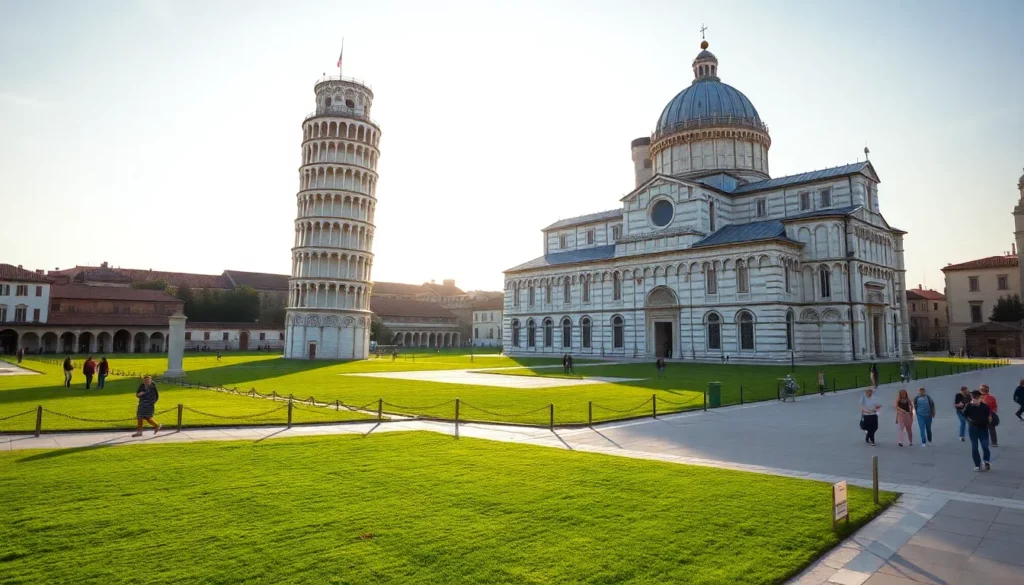
The Square of Miracles is the city’s UNESCO-listed heart, hosting the famous Leaning Tower, the Cathedral, the Baptistery, and the Camposanto. While the Tower is the main draw, the complex is a masterpiece of medieval architecture. Visitors should book tower climb slots in advance as they sell out quickly. The Cathedral entry is often free but may require a timed reservation during peak periods. This area suits all travelers, but those with mobility issues should note that cobblestones and tower stairs present challenges.
Piazza dei Cavalieri
Once the political center of medieval Pisa, this elegant square was redesigned in the 16th century under Cosimo I de’ Medici. It now houses the prestigious Scuola Normale Superiore. The Palace of the Caravan and the Church of Santo Stefano dei Cavalieri are architectural highlights. This spot is ideal for travelers interested in history and architecture who wish to escape the crowds of the Tower.
Lungarni
The streets lining the Arno River offer some of the most scenic walks in the city. The buildings reflect the wealth of Pisa’s maritime republic past. Evening strolls here are popular among couples and photographers. The view of the sunset over the river is a standout experience, particularly from the Ponte di Mezzo.
Museo dell’Opera del Duomo
Located behind the Cathedral, this museum houses original artworks and artifacts from the Piazza dei Miracoli complex, including sculptures removed from the facades for preservation. It provides essential context for understanding the artistry of the monuments. Art lovers and history buffs should allocate at least an hour here.
Keith Haring Mural
Titled “Tuttomondo,” this large-scale mural by American pop artist Keith Haring is painted on the wall of the Sant’Antonio Abate church near the train station. It is one of the few permanent public works by the artist in Europe. It is a quick, free stop that appeals to modern art enthusiasts and offers a contrast to the medieval surroundings.
Palazzo Blu
This cultural center hosts rotating art exhibitions and offers a permanent collection of paintings and furnishings. Located near the Arno, it provides a deep dive into Pisan and Italian art history. The rooftop terrace offers excellent views of the city. It is a good rainy-day option or for those seeking indoor cultural activities.
Orto Botanico
Managed by the University of Pisa, this is one of the oldest university botanical gardens in the world. It features a diverse collection of plants, greenhouses, and historic trees. It is a peaceful retreat for families and nature lovers seeking a quiet break from the urban bustle.
Mercato di Vettovaglie
The historic market building is a hub of local life, housing food stalls, shops, and occasional events. While the internal market hours vary, the surrounding area is lively and authentic. It is the best place to observe local daily routines and purchase regional food products.
Where to Eat
Pisan cuisine is rooted in Tuscan traditions, emphasizing simple, high-quality ingredients. Seafood is prominent due to the city’s coastal proximity, with dishes like caciucco (fish stew) being a regional specialty. Land-based specialties include trippa (tripe) and cecina, a thin chickpea flatbread often sold in bakeries and eaten as a snack. Meal times generally follow Italian norms, with lunch served from 12:30 PM to 2:30 PM and dinner starting around 7:30 PM. Many kitchens close between meals. Travelers should avoid restaurants immediately surrounding the Leaning Tower, as these often cater to tourists with inflated prices and lower quality. Instead, venture into the streets between the station and the river, or near Piazza delle Vettovaglie, for more authentic dining experiences. Wine pairings typically feature local Tuscan varieties such as Chianti or Vermentino. Tipping is not mandatory but leaving small change or rounding up the bill is appreciated for good service.
Where to Stay
Accommodation choices in Pisa depend largely on your itinerary and budget. First-time visitors often prefer staying near the Piazza dei Miracoli for immediate access to the main sights, though this area can be quiet at night and pricey. The Centro Storico, particularly the streets between the Tower and the Arno River, offers a balance of convenience, dining options, and atmosphere, making it suitable for couples and solo travelers. Budget travelers and those relying on public transport may find better value near Pisa Centrale station, where hostels and mid-range hotels are concentrated, though the immediate vicinity can be noisy. Families might prefer accommodations slightly further out near the Lungarni, where streets are wider and parks are accessible. Visitors with cars must ensure their hotel offers parking or is located outside the ZTL to avoid fines. Short-term rentals are available throughout the city but require careful verification of check-in procedures and local registration rules.
Suggested Itinerary
2-Day Highlights
Day 1: Arrive and settle in. Spend the morning at the Piazza dei Miracoli, climbing the Tower and visiting the Cathedral. Have lunch near Piazza delle Vettovaglie. In the afternoon, explore the Museo dell’Opera del Duomo and walk along the Lungarni. Enjoy dinner in the historic center.
Day 2: Visit Piazza dei Cavalieri and the Keith Haring Mural. Spend the late morning at the Palazzo Blu or the Botanical Garden. Use the afternoon for shopping or visiting the Mercato di Vettovaglie. Depart in the evening or stay for a night walk by the river.
4-Day Relaxed Stay
Day 1: Focus on the Piazza dei Miracoli complex. Take time to appreciate the Baptistery acoustics and the Camposanto frescoes. Relax with an evening stroll.
Day 2: Explore the city center museums and squares. Visit Palazzo Blu and the Knight’s Square. Enjoy a leisurely lunch by the Arno.
Day 3: Take a day trip to Lucca or the coast. Return to Pisa for a quiet dinner.
Day 4: Visit the Botanical Garden and any missed sights. Shop for local souvenirs like ceramic ware or food products. Depart after lunch.
Local Etiquette & Practical Tips
Visitors should dress modestly when entering religious sites; shoulders and knees must be covered in the Cathedral and Baptistery. Security checks are common at the Piazza dei Miracoli. Greetings usually involve a polite “Buongiorno” (Good day) or “Buonasera” (Good evening). While many people in tourism speak English, attempting basic Italian phrases is appreciated. Credit cards are widely accepted, but carrying some cash is advisable for small shops and markets. Beware of pickpockets in crowded tourist areas and on trains. The ZTL restrictions are strictly enforced by cameras; do not drive into historic zones without explicit permission from your hotel. Tap water is generally safe to drink from public fountains. Museums often close on Mondays, so plan accordingly. Accessibility varies; while the ground levels of most sites are accessible, historic buildings may lack elevators.
Day Trips from Pisa
Lucca: A walled medieval city located about 30 minutes away by train. It is perfect for cycling the ramparts and exploring compact historic streets. Ideal for a half-day or full-day trip.
Florence: The regional capital is roughly one hour away by direct train. Suitable for a full-day trip to see major Renaissance art and architecture, though it can be rushed.
Cinque Terre: The colorful coastal villages are accessible via direct regional trains, taking approximately one hour to the first village. Best enjoyed as a full-day excursion during warmer months.
Viareggio: A nearby seaside town known for its Liberty-style architecture and beaches. Great for a half-day relaxation or summer swim.
Volterra: A hilltop town famous for alabaster and Etruscan history. Requires a bus or car and is best suited for a full-day trip for history enthusiasts.
San Gimignano: Known for its medieval towers, this town is accessible by bus with a transfer. It is a popular full-day destination for photography and wine tasting.
FAQ
Is Pisa worth visiting?
Yes, Pisa offers significant historical architecture beyond the Tower, including museums, churches, and a lively university atmosphere, making it a worthwhile stop in Tuscany.
How many days do you need in Pisa?
Two days are sufficient to see the main sights and enjoy the city center, while four days allow for a relaxed pace and day trips to nearby towns like Lucca.
Is Pisa safe and walkable?
Pisa is generally safe and very walkable. The historic center is compact, but visitors should remain vigilant against pickpockets in crowded tourist areas and respect traffic zones.
Leave a Reply