
Short Answer
What It Is
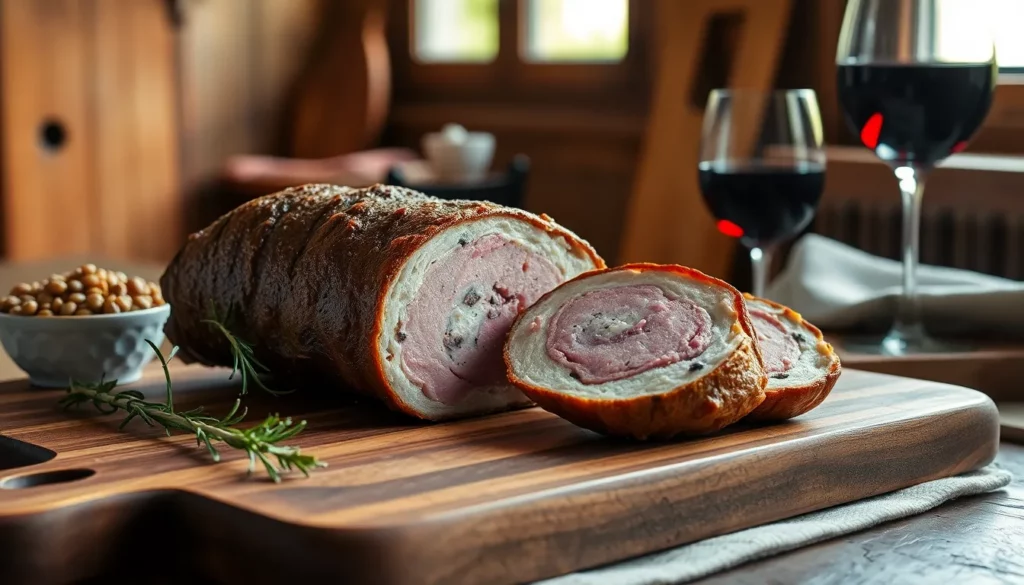
Zampone (pronounced dzam-POH-neh) is a traditional Italian pork product originating from the Emilia-Romagna region, specifically the province of Modena. It consists of a pig’s trotter (the foot) that has been deboned, stuffed with a mixture of ground pork, pork rind, fat, salt, pepper, and often spices like cinnamon, nutmeg, and cloves. The stuffed trotter is then tied, boiled, and sometimes lightly smoked. Zampone is typically sold either raw (fresh) or pre-cooked, and it is a staple of Italian New Year’s Eve celebrations, traditionally served with lentils to symbolize prosperity.
Since 1999, Zampone has been protected under the European Union’s Indicazione Geografica Protetta (IGP) scheme as Zampone Modena IGP. This certification ensures that the product is produced according to strict traditional methods within the designated geographical area, using pork from pigs born, raised, and slaughtered in specific regions of Italy (Emilia-Romagna, Lombardy, Veneto, Piedmont, and others). The IGP status guarantees authenticity and quality for consumers.
Types & Grades
Zampone is classified primarily by its preparation state and size. The main types are:
| Type | Description | Typical Weight | Common Use |
|---|---|---|---|
| Fresh (Crudo) | Raw, uncooked stuffed trotter. Requires boiling for 2–3 hours before serving. | 300–800 g | Traditional home cooking, often served with lentils or in broths. |
| Precooked (Cotto) | Fully cooked and vacuum-sealed. Only needs reheating (boil or microwave). | 300–500 g | Convenient for quick meals, still retains authentic flavor. |
| Artisan (Artigianale) | Small-batch production with higher meat-to-fat ratio, often hand-tied. May include additional spices or wine. | 400–700 g | Gourmet preparations, special occasions. |
Within these categories, grades are determined by the quality of the pork (e.g., free-range, heritage breed), the percentage of lean meat versus fat, and the complexity of the spice blend. Premium Zampone often uses pork from Suino Pesante (heavy pig) breeds, which are also used for Parmigiano-Reggiano and Prosciutto di Parma production.
How It’s Used in Cooking
Zampone is a versatile ingredient in Italian cuisine, celebrated for its rich, savory flavor and tender texture. Its most iconic use is in the New Year’s Eve tradition of serving Zampone con Lenticchie (Zampone with lentils). The lentils, which resemble coins, are believed to bring wealth and good fortune in the coming year.
Traditional Preparation
To prepare fresh Zampone, it must be boiled gently for 2–3 hours in water (or broth) until the skin is tender and the filling is cooked through. Precooked Zampone only requires reheating according to package instructions. The cooking liquid can be used as a base for soups or risotto.
Signature Dishes
- Zampone con Lenticchie – Sliced Zampone served over a bed of brown lentils cooked with garlic, rosemary, and tomato.
- Zampone in Brodo – Slices of Zampone served in a clear meat broth, often with tortellini or passatelli.
- Zampone con Polenta – Grilled or pan-fried Zampone slices alongside creamy polenta.
- Zampone Ripieno – The stuffing can be used as a filling for ravioli or as a topping for crostini.
“A tavola non si invecchia.” – Italian proverb meaning “At the table, one does not age.” Zampone embodies the convivial spirit of Italian feasts.
How to Choose/Identify Authentic Zampone
When purchasing Zampone, look for the following authenticity cues to ensure you are getting a high-quality, traditional product:
- IGP Label: The Zampone Modena IGP logo is the most reliable indicator. It guarantees the product was made according to strict specifications in the designated region.
- Ingredient List: Authentic Zampone should list pork (including the trotter), pork rind, fat, salt, pepper, and natural spices. Avoid products with artificial flavors, excessive preservatives, or added nitrites beyond the legal minimum.
- Appearance: The skin should be natural pig’s foot, not a synthetic casing. It should be firm, with a uniform shape. The filling should be compact and not crumbly.
- Weight: Traditional Zampone typically weighs between 300 and 800 grams. Very large or very small pieces may indicate industrial processing.
- Producer: Reputable producers include Consorzio Zampone e Cotechino Modena members such as Levoni, Negroni, Veroni, and Fratelli Beretta. Check for the consortium’s seal.
- Packaging: For precooked Zampone, vacuum-sealed packaging should be intact. Fresh Zampone is often sold wrapped in butcher paper or in a sealed bag.
Substitutes
If Zampone is unavailable, several Italian pork products can serve as substitutes, each with its own character:
- Cotechino Modena IGP – The closest substitute. Cotechino is a large pork sausage with a similar spiced filling, but encased in a synthetic or natural casing rather than a pig’s trotter. It is prepared and served in the same ways as Zampone.
- Cappello del Prete – A traditional stuffed pork product from the same region, shaped like a priest’s hat. It has a coarser texture and is often smoked.
- Salama da Sugo – A fermented, cured sausage from Ferrara, served cooked and mashed. It has a more intense, spicy flavor and is used in pasta sauces or as a spread.
- Luganega – A fresh, coiled pork sausage from Lombardy, milder in flavor. It can be used in lentil dishes but lacks the richness of Zampone.
For a non-pork alternative, consider lentil-based vegetarian versions that mimic the texture, though they are not traditional.
Conclusion
Zampone is more than a sausage; it is a symbol of Italian culinary tradition, regional identity, and festive celebration. Its IGP certification protects its heritage, while its versatility in dishes like Zampone con Lenticchie makes it a beloved ingredient. When selecting Zampone, prioritize authenticity markers such as the IGP label, natural ingredients, and reputable producers. Whether you choose fresh or precooked, this stuffed trotter brings a taste of Emilia-Romagna to your table.
FAQ
What is the difference between Zampone and Cotechino?
Both are traditional pork products from Modena, but Zampone is stuffed inside a pig’s trotter (foot), while Cotechino is encased in a synthetic or natural sausage casing. Their fillings are very similar, and both are often served with lentils.
How do I cook fresh Zampone?
Fresh Zampone should be boiled gently in water or broth for 2–3 hours. Prick the skin a few times to prevent bursting. It is done when the skin is tender and the internal temperature reaches at least 71°C (160°F). Precooked Zampone only needs reheating according to package instructions.
Is Zampone gluten-free?
Traditional Zampone is made from pork and spices, with no added grains, so it is naturally gluten-free. However, always check the label for any additives or fillers that may contain gluten, especially in industrial versions.




Leave a Reply